
Unbiased headlines. Facts, not spin.
Unbiased Headlines is an independently owned news organization. We bring you the facts, not opinions, written fresh from 110+ named sources. Sources linked so you can verify it yourself.
 energy
Major Story (7/10)
energy
Major Story (7/10)
Bessent Says Falling Oil Prices Depend on the Iran War, With Gas at $4.29 and Inflation at 3.7%
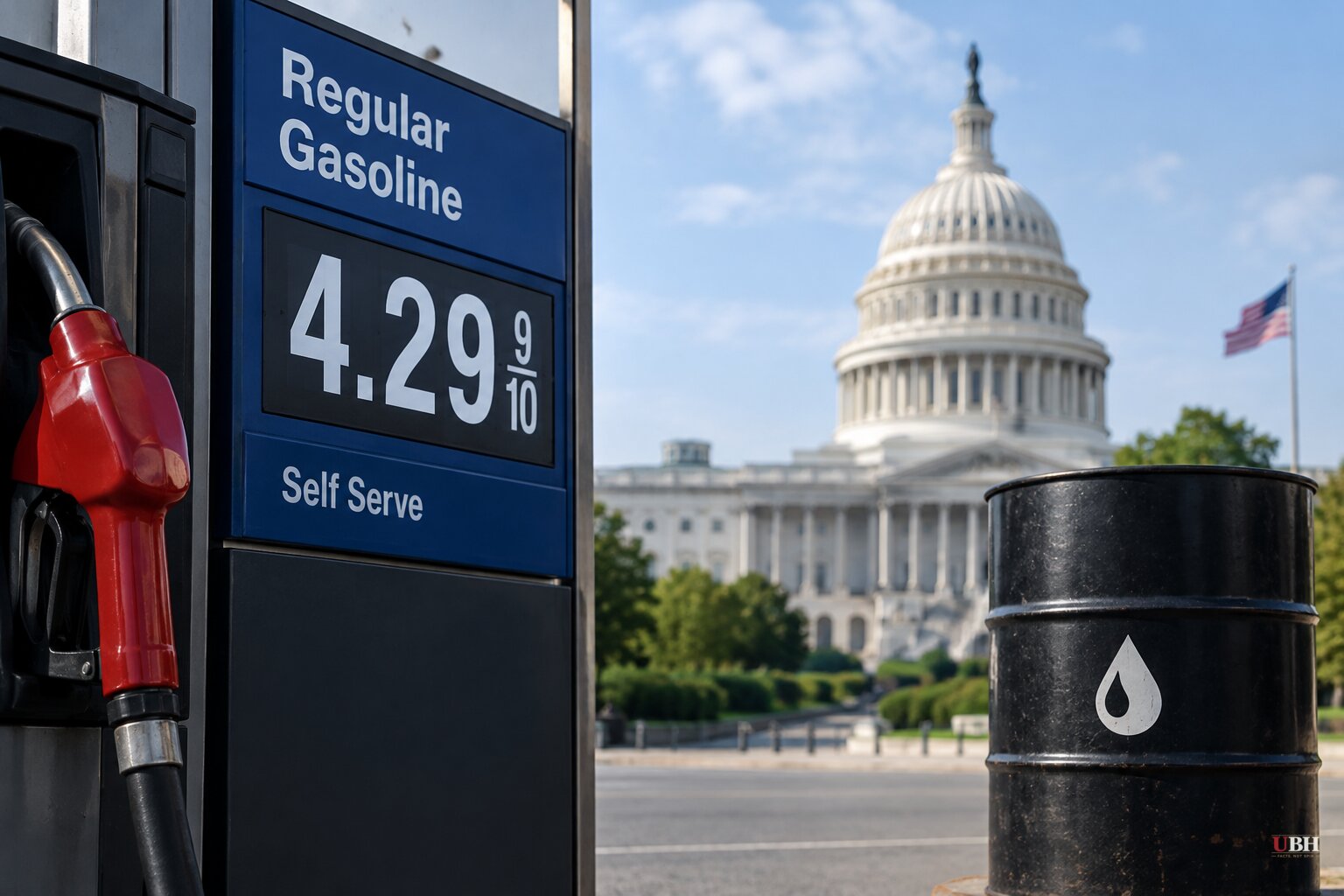
Nearly eight months into the Iran war, with midterms 16 days away, Treasury Secretary Scott Bessent spent Sunday, Oct. 18, defending the economy on three networks. His message: prices are high because of an energy shock, and they will fall when the conflict ends.
He would not say when that will be.
No timeline for lower prices
NBC's Kristen Welker asked whether oil prices could drop before the end of the year. "Well, again, it will depend on what happens with the Iran conflict," Bessent said.
The national average for gasoline was $4.29 on Sunday, according to AAA. It was about $2.98 when the war began. A Fox News poll released last week found 83 percent of Americans are concerned about gas prices.
Brent crude settled at $109.86 a barrel on Oct. 16, and West Texas Intermediate closed at $101.41, according to Reuters market data.
Energy Secretary Chris Wright said the administration has not broken its promise to lower gas prices, pointing out that they have eased in recent weeks.
What the September numbers show
The Bureau of Labor Statistics reported Wednesday, Oct. 14, that consumer prices rose 0.6% in September and 3.7% over 12 months. Inflation was 3% when Trump took office, as Welker noted.
Energy prices rose 5.2% in the month and 20.4% over the year. Gasoline jumped 9.1% in September and 34.2% year over year.
Bessent said "core inflation is down." BLS shows core CPI rose 0.3% in September and 2.6% over the year, up from 2.4% in August.
He also said "rents are down." BLS shows rent of primary residence up 0.2% for the month and 2.8% over 12 months. A separate Apartment List report put the national median asking rent 0.4% lower in September than a year earlier. The two measures track different things, and they point in opposite directions.
Some of his claims hold up. Grocery prices fell 0.1% in September and are up 1.8% over the year. Prescription drug prices fell 4.5% over 12 months, a record annual decline in that BLS series.
Bessent also said the administration will "own the economy." He cited roughly a million private-sector jobs this year and record household net worth. "This is an energy supply side shock. We will get to the other side of this," he said.
The Fed raised rates in September for the first time in more than three years, lifting the target range from 3.5%-3.75% to 3.75%-4.0%. It is expected to hold at its meeting later this month. Fed Chair Kevin Warsh has said he wants inflation back at 2%.
Bessent's two-week claim on Iran
On Fox's Sunday Morning Futures, Bessent told Larry Kudlow that only about 15 million barrels of Iranian oil remain on the water under the U.S. blockade. "Probably within the next two weeks, they are going to make their final deliveries of oil to China, and then they will have nothing," he said.
He dismissed Iran's offer to reopen the Strait of Hormuz within seven days. "The straits are open," Bessent said. Excluding Iranian oil, he put flows at 15 to 22 million barrels a day, against about 20 million before the conflict.
Iran's Foreign Minister Abbas Araghchi said Sunday the seven-day offer remains on the table. Trump told Axios the proposal is "what we would have maybe agreed to a year ago. They overplayed their hand." He added that talks could continue this week.
Trump also posted on Truth Social that Washington could "soon finish the job" unless Tehran changes course. Mohsen Rezaei, secretary of Iran's Supreme National Security Council, answered that Iran's forces have "prepared a more devastating plan than the 12- and 40-day wars."
The Treasury effort behind the blockade, Operation Economic Outcast, launched in late August. Treasury officials have engaged more than 50 countries on cutting ties with Tehran, with Jonathan Burke, assistant secretary for terrorist financing, traveling the Middle East and Europe to press the message.
Russia sanctions waiver
This weekend Trump waived Russian sanctions under the sanctions package named for the late Sen. Lindsey Graham. It came days after he struck a deal with the Kremlin to allow Russian diesel into the U.S. and global market. The deal drew condemnation from lawmakers in both parties.
Welker asked Bessent whether that amounts to rewarding a dictator who invaded Ukraine. Bessent said Trump "wants the killing to stop." He said the Graham bill "gives the president the flexibility, gives him 60 days to assess the situation."
He also asked why the U.S. should carry the burden while European countries still use Russian energy. And he noted that Biden did not revoke Russia sanctions before the transition in January 2025.
"No one has been tougher on Russian sanctions than President Trump," Bessent said, citing the October 2025 sanctions on Rosneft and Lukoil. On Thursday, Lukoil received an extension of a waiver letting its service stations outside Russia keep operating until April 2027.
Bessent also called Zelensky's suggestion that the U.S. could have restricted Ukraine's use of the Starshield satellite system "reckless" and untrue.
What to watch
The sanctions waiver starts a 60-day assessment window. Bessent's own two-week estimate for Iran's final oil deliveries to China runs to early November, around Election Day. Diesel is already at record highs. Whether Iran's oil actually runs dry on his schedule, and whether Tehran moves on the seven-day Hormuz offer, will be visible within weeks.
Sources used for this briefing
7 links from 7 independent newsrooms (syndicated copies of the same report count once)
These are the sources it draws on, linked so you can verify.


