
Unbiased headlines. Facts, not spin.
Unbiased Headlines is an independently owned news organization. We bring you the facts, not opinions, written fresh from 110+ named sources. Sources linked so you can verify it yourself.
 defense
Major Story (8/10)
Bahrain Says It Intercepted Iranian Drones for a Second Time in Three Days; Gulf States Condemn Attack
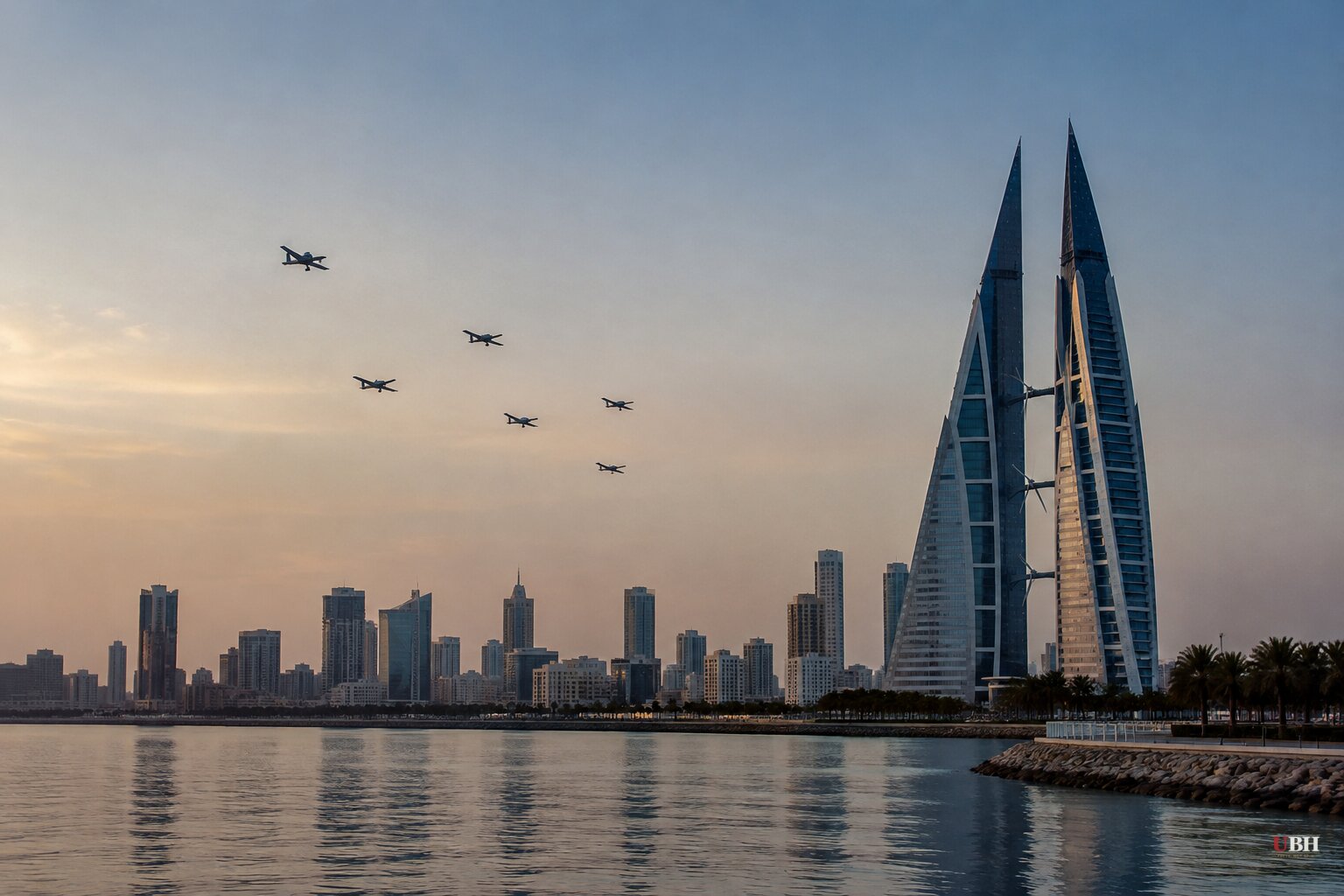
Since a two-drone attack on Bahrain at dawn on Friday, Nov. 13, Iran's Revolutionary Guard has come back for a second try. On Sunday, Nov. 15, Bahrain's Defense Force said its air defense systems intercepted and destroyed a fresh set of Iranian drones before they reached their targets.
Bahrain's Foreign Ministry said the IRGC explicitly claimed responsibility for both attacks. The ministry called Sunday's strike a "resumption of Iran's heinous aggression" against Bahrain and the region, in disregard of international law and the UN Charter.
What Iran and Bahrain each say
Iran's account differs on the target. The IRGC said in a statement carried by Iranian state broadcaster that it had targeted a US radar system at a base in Bahrain.
Bahrain describes the drones as destroyed in its airspace before Iran could achieve its goals. The Bahrain Defense Force called the attack a systematic hostile approach and said its air defense units remain on alert.
The IRGC has not offered evidence that anything was hit, and Bahrain's statements describe the drones as destroyed before reaching their targets. Bahrain's ministry praised the "efficiency, vigilance, and capability" of its forces.
Gulf and Arab states respond
The condemnations came fast and sounded alike.
Saudi Arabia's Foreign Ministry said the attacks "constitute a violation of international law and the principles of good neighborliness." It called for "an immediate halt to the blatant Iranian attacks on the countries of the region."
Qatar's Foreign Ministry said the continued attacks are "a dangerous escalation that will complicate efforts to contain the tension and undermine political and diplomatic endeavors."
Kuwait and the United Arab Emirates also condemned the attacks as a violation of Bahrain's sovereignty and international law. Egypt's Foreign Ministry said Gulf security is closely linked to Egypt's national security, and Cairo backed the steps Bahrain has taken to protect citizens and residents.
Jordan called the attacks a breach of international law and the UN Charter. Yemen's Foreign Ministry urged the international community to take firm action to stop them.
The Arab Parliament, meeting out of Cairo, called the strikes an "unacceptable escalation." It said Iran's resumption of what it called "criminal attacks" on the Gulf threatens regional stability.
None of the statements announces any concrete step beyond diplomatic condemnation and expressions of solidarity.
Washington's economic pressure on Tehran
The same day, Treasury Secretary Scott Bessent laid out the administration's pressure campaign on Fox News' "Sunday Morning Futures." No source links his remarks to the Bahrain attacks.
Bessent pointed to "Operation Economic Outcast," a Treasury-led financial and airline quarantine launched in late August. He called it "the greatest economic isolation in the history of the world against a single country."
He predicted Iran's economy will contract 25% between March 2026 and March 2027. That is Bessent's own projection, not an independent estimate.
He said ordinary Iranians face three-to-four-hour gasoline lines and a looming winter shortage of natural gas for home heating. He said the IRGC is growing increasingly alarmed.
Bessent also said he has received Iranian death threats over the sanctions. "We are squeezing them, and their death threats tell me that everything I'm doing is working," he said.
He declined to say whether there had been direct Iranian attempts on his life. He confirmed that he and his family moved from their Washington residence to a military base because of the threat level, saying "it's a high threat level for us to move."
Bessent blamed The Wall Street Journal for publishing a geolocated photograph of the home. He singled out editor-in-chief Emma Tucker, saying the paper authorized the image the day he bought the house. The Journal's response was not part of his remarks.
What is still open
The sequence is established by Bahrain's own account: one attack on Friday, Nov. 13, another on Sunday, Nov. 15. Both were attributed to the IRGC, which claimed them.
What remains unconfirmed is the IRGC's claim that it targeted a US radar system at a base in Bahrain. Bahrain says the drones were destroyed before reaching their targets. No US official is quoted on the radar claim.
The Gulf states are asking Iran to stop. Bahrain says its air defenses are on alert.
Sources used for this briefing
7 links from 7 independent newsrooms (syndicated copies of the same report count once)
These are the sources it draws on, linked so you can verify.


