
Unbiased headlines. Facts, not spin.
Unbiased Headlines is an independently owned news organization. We bring you the facts, not opinions, written fresh from 110+ named sources. Sources linked so you can verify it yourself.
 defense
Major Story (7/10)
Widow and Army Major Say Command Ignored Drone Threat Before Kuwait Strike That Killed Six U.S. Soldiers
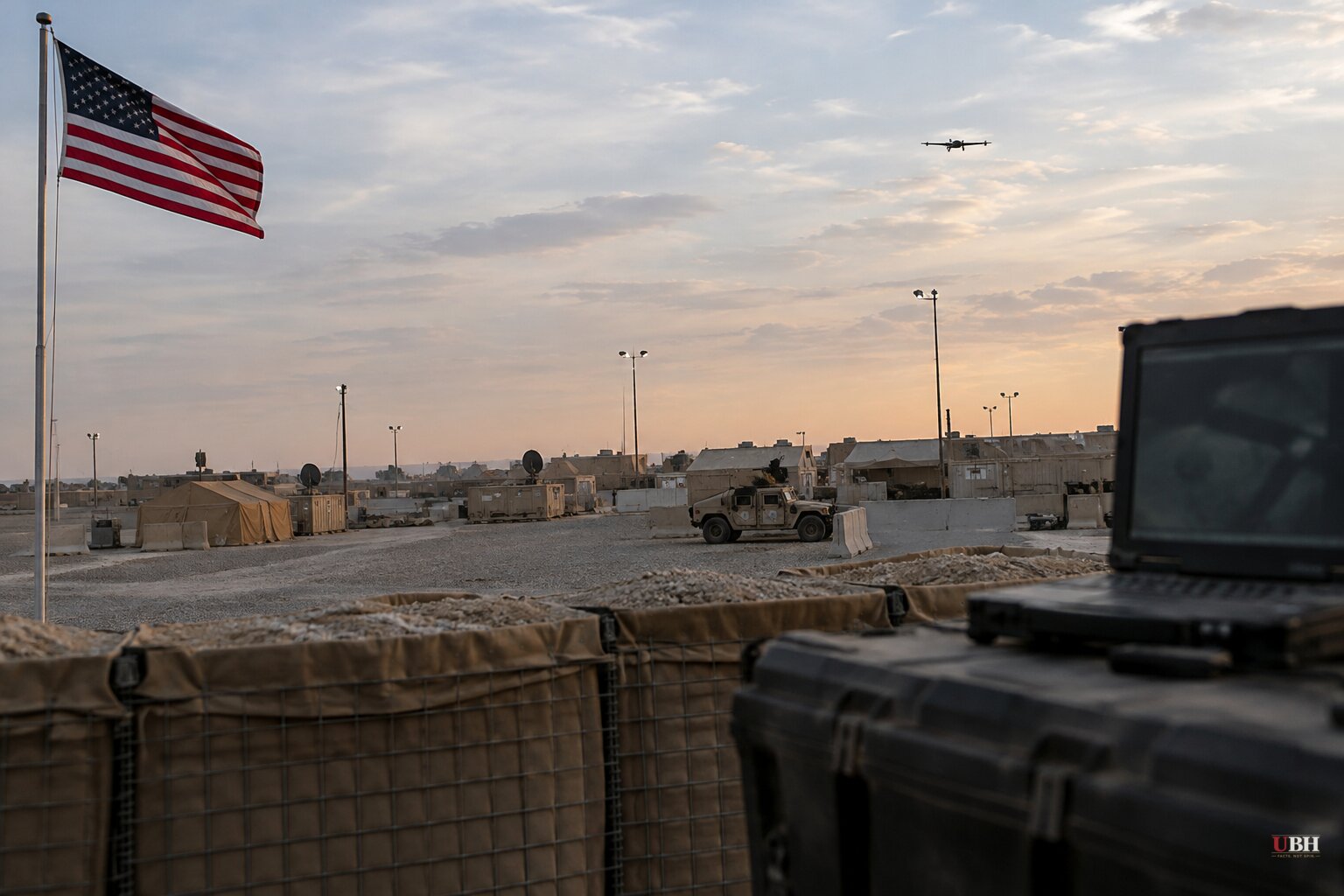
Six Americans were killed in the first 24 hours of the war with Iran when a drone hit an Army command post in Kuwait. It remains Iran's deadliest strike on the U.S. military. Now the families, and one officer who served with the unit, are asking why the soldiers were there at all.
The account comes from a 60 Minutes investigation that ran eight months. It centers on the Army Reserve's 103rd Sustainment Command, a logistics unit.
The families' accusation
Master Sgt. Nicole Amor was one of the six. Their flag-draped caskets were met at Dover Air Force Base in March by the president and top military leaders.
Her husband, Joey Amor, described her as "proud," "constant," "unwavering" and "dedicated." He has no kind words for her unit's leadership.
"I love those soldiers. And my wife loved those soldiers," he told 60 Minutes. "But the command of the 103rd has handled this so poorly. And if I'm being frank, it's on them. They killed my wife. They killed these soldiers. And it's not political. There are individuals in that command that made choices."
That is a grieving husband's accusation. No finding against any named officer has been presented.
Amor also raised a concern about the force going forward. "There are soldiers that are signing up now that are going to go," he said. "And they have to trust that what happened to my wife isn't gonna happen to them."
Pulled back, but not everyone
In the weeks before the war began, the Pentagon moved about 90% of its ground forces out of Kuwait and away from Iran, fearing retaliatory strikes.
Roughly 70 members of the 103rd went the other way. They were sent to Port Shuaiba, a small Army outpost about 65 miles from Iran.
Maj. Stephen Ramsbottom, the unit's deputy chief of operations and a combat veteran, told 60 Minutes the site was built for a different threat. "The protection that was there was to stop car bombs and threats like that," he said. "There was nothing there designed to protect from an aerial attack."
The warnings
Ramsbottom said the danger of a drone strike was well known. According to him, it was raised to the unit commander, Brig. Gen. Clint Barnes. He said he also warned Maj. Gen. John Hinson, the two-star general overseeing logistics for U.S. Central Command.
"I brought it up twice in various meetings, basically saying, 'Hey, I don't see how we're protected here,'" Ramsbottom said. "He said, 'We don't have to worry about protection.'"
Ramsbottom said that exchange is why he decided to speak publicly. Those are his recollections of meetings, and they are attributed to him alone.
What the Pentagon said at the time
On March 2, the day after the attack, Defense Secretary Pete Hegseth said the troops had been well protected and described the strike as an outlier.
"Every once in a while you might have one, unfortunately we call it a 'squirter,' that makes its way through," Hegseth said. "And in that particular case it happened to hit a tactical operations center that was fortified. But these are powerful weapons."
The two accounts do not line up. Hegseth described a fortified facility hit by a stray weapon. Ramsbottom described defenses aimed at car bombs, with nothing against aircraft or drones. Both statements concern the same site, and both come from officials with a stake in how the episode is understood.
The decision at the center
The basic facts are not in dispute. The Pentagon judged Kuwait dangerous enough to pull most ground troops out. A small logistics detachment stayed within about 65 miles of Iran. Six of its soldiers died on the first day of fighting.
The question families are now asking is who approved that posture and who was told it was exposed. Joey Amor says individuals in the 103rd's command made the choices. Ramsbottom says the warning went up at least two levels. Hegseth's public line was that the site was fortified.
What has not been laid out publicly is any formal accounting of those decisions, including whether Barnes, Hinson or anyone else will be asked to answer for the unit's placement and protection. That is the answer the Amor family and the other Gold Star families are still waiting to hear.
Sources used for this briefing
2 links from 2 independent newsrooms (syndicated copies of the same report count once)
These are the sources it draws on, linked so you can verify.


