
Unbiased headlines. Facts, not spin.
Unbiased Headlines is an independently owned news organization. We bring you the facts, not opinions, written fresh from 110+ named sources. Sources linked so you can verify it yourself.
 defense
Major Story (7/10)
Event date: November 9, 2026 ·
Democrats Signal They Will Block Hegseth's $1.5 Trillion Pentagon Budget After Midterm Wins
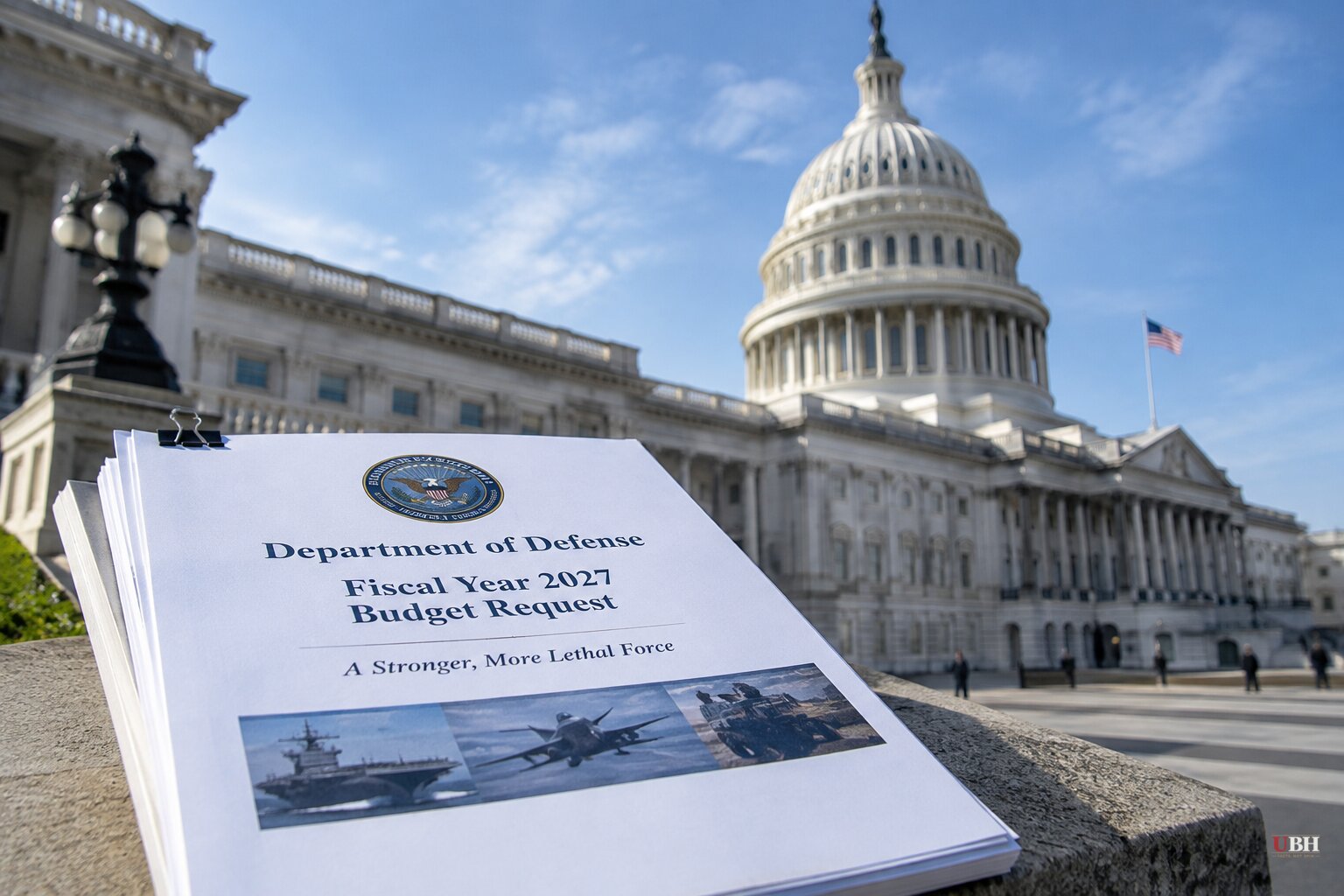
Since President Trump said in January that the 2027 military budget should hit $1.5 trillion, the request has run into the results of the Nov. 3 midterms. Democrats won majorities in the House and Senate, and the party that has to pass the money now says it will not.
The request breaks down as a $1.15 trillion base budget plus $350 billion sought through budget reconciliation. That second piece matters most. Reconciliation needs only a simple majority in the Senate, and it was already used to give the Pentagon more than $150 billion in extra funding for fiscal 2026.
What Democrats are saying
Rep. Adam Smith of Washington, the top Democrat on the House Armed Services Committee and its incoming chairman, put his position in writing after the election. "We must push for the development of a more realistic and sustainable approach to our national security — one that does not require a defense budget in excess of $1 trillion or one paid for with draconian cuts to critical domestic programs," he said.
Smith has also called for a probe of the Pentagon's dealings with defense contractors. In a Nov. 4 statement he said the committee's top priority in the 120th Congress will be "vigorous oversight" of the Defense Department and the administration. His list includes the Iran war, which he called illegal, "sweetheart deals and favoritism," and strikes on alleged drug boats in Latin America and the Caribbean.
The money at risk
The $1.5 trillion figure is more than 40% above current levels. Forecast International's Defense Security Monitor says the Democratic wins "effectively kill" the reconciliation bill in the new Congress. The Pentagon would lose access to roughly $113 billion in defense industrial base funding, including $49 billion tied to domestic sourcing of critical minerals.
Munitions take a major hit. The reconciliation package would have raised fiscal 2027 munitions funding to $76.3 billion, a 184.7% jump over fiscal 2026. That money was meant to rebuild stockpiles drained by years of transfers to Ukraine and by the Iran war, including Patriot, THAAD, SM-3 and SM-6 interceptors and hypersonic strike weapons.
The bill also carried $17 billion for a new Golden Dome for America Fund, the homeland missile defense program. A separate Iran supplemental request that includes munitions money has met resistance from Democrats who oppose the war.
The lame-duck window
Republicans technically have until the new Congress is seated in January to try to pass the reconciliation bill. Forecast International calls that unlikely. Some GOP lawmakers questioned before the election whether they had the votes, and the party has since lost political momentum.
Bloomberg reported Sunday that Republicans returning for the lame-duck session may lack the support or the will to push through the package, especially given the Iran war that cost some of them their seats. A CNN exit poll found a majority of midterm voters said the war and high gas prices factored into their votes.
The administration's case
Hegseth has not backed off. At the budget's release he said, "We are delivering on President Trump's commitment to expand American military dominance for decades to come. Previous administrations underinvested in our military while our enemies grew stronger and more dangerous." Before the election he said the Pentagon would keep fighting for the full $1.5 trillion.
Trump tied the number to tariff revenue. "Because of Tariffs, and the tremendous Income that they bring... we are able to easily hit the $1.5 Trillion Dollar number," he wrote. He has also argued that states should carry more domestic spending. "We're fighting wars. We can't take care of day care," he said.
Smith's objection is the reverse: that the number is unrealistic and that paying for it would mean deep domestic cuts. Both sides agree on the stakes. They disagree on whether $1 trillion is enough.
Hegseth's own standing
The budget fight is running alongside an effort in Congress to remove Hegseth. The House voted 211-204 to refer Rep. Thomas Massie's eight articles of impeachment to the Judiciary Committee, which stalls them for the rest of this Congress. Massie, a Kentucky Republican who lost his primary, said he will reintroduce them when the House returns unless Hegseth resigns. The charges include directing military operations without enough congressional approval and allowing extrajudicial killings without sufficient protection for civilians.
Pentagon spokesman Sean Parnell said Hegseth "will not back down or be deterred by politicians seeking to score partisan points or launch phony investigations where no wrongdoing exists." Parnell said Hegseth remains committed to leading the department until Trump's term ends. Hegseth has called the impeachment effort a "political spectacle."
War policy is also unsettled inside the White House. The Wall Street Journal, citing U.S. officials, reported that Vice President JD Vance and envoy Steve Witkoff favor diplomacy with Iran, while Hegseth and CENTCOM chief Adm. Brad Cooper favor renewed strikes. Secretary of State Marco Rubio and Treasury Secretary Scott Bessent reportedly prefer sanctions and the blockade.
Global spending keeps climbing
A smaller U.S. request would not slow the broader trend. Carlyle says defense spending across the G7 has reached 2.0% of GDP, the highest share in more than three decades. At the current pace it could reach 3.8%, or roughly $8 trillion in commitments. Carlyle's Adm. James Stavridis, a former NATO commander, wrote in September that the logic is the same everywhere: "if you cannot count on someone else to defend you... you build the capability yourself."
European Union defense spending was €418 billion ($461 billion) in 2025, about 2.2% of GDP, according to the Council of the European Union. It is projected to reach €454 billion ($500 billion), or 2.4%, this year. U.S. spending passed $1 trillion in fiscal 2026 and accounts for about a third of the world total.
The open question is the next two months. Congress is scheduled to be seated Jan. 3, 2027, and until then Republicans still control both chambers. Whether they bring the $350 billion reconciliation bill to a vote before then will show how much of Hegseth's request survives.
Sources used for this briefing
8 links from 8 independent newsrooms (syndicated copies of the same report count once)
These are the sources it draws on, linked so you can verify.


