
Unbiased headlines. Facts, not spin.
Unbiased Headlines is an independently owned news organization. We bring you the facts, not opinions, written fresh from 110+ named sources. Sources linked so you can verify it yourself.
 defense
Major Story (8/10)
ULA Vulcan Rocket Fails 10 Minutes Into Flight, Losing 40 Amazon Leo Satellites
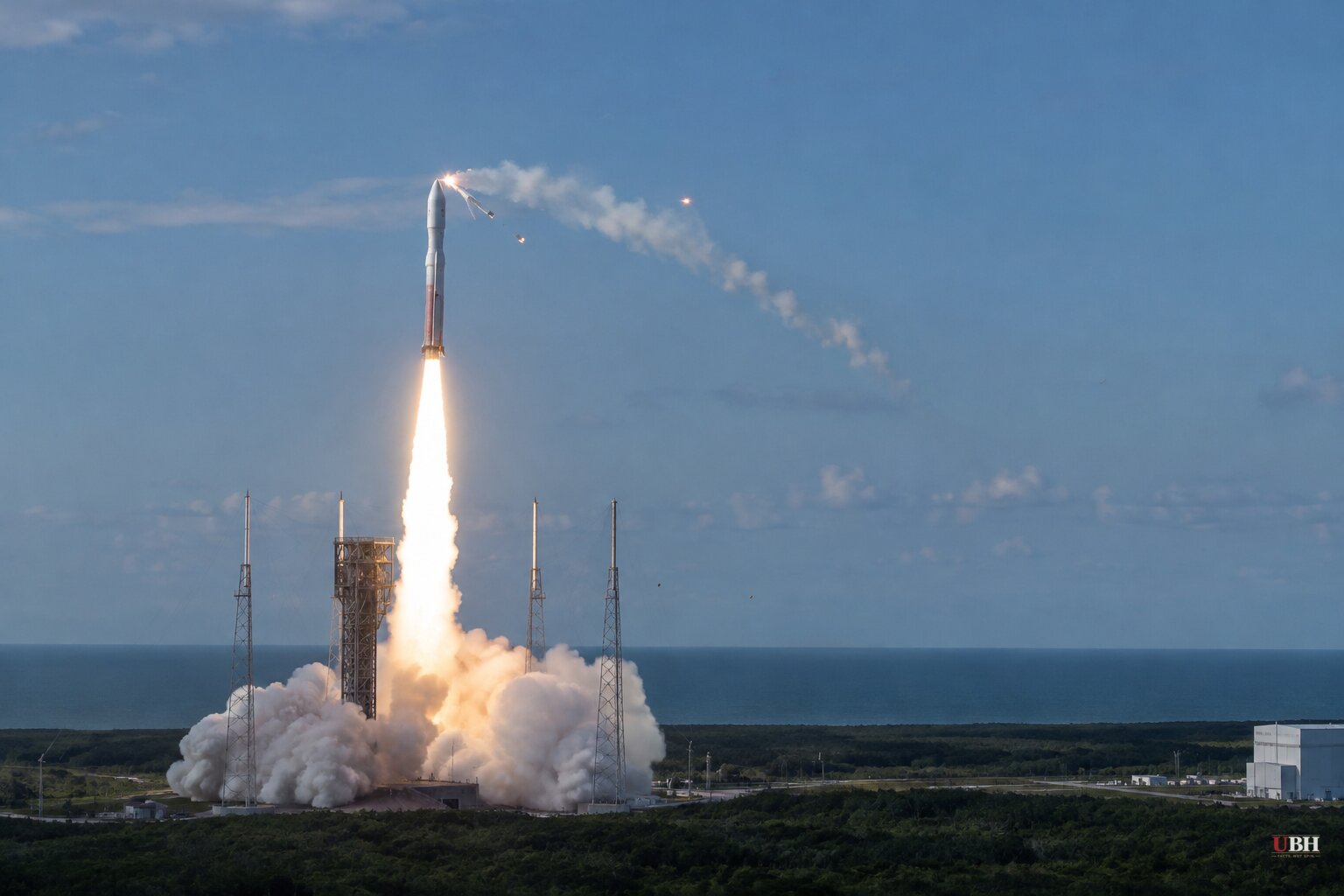
A United Launch Alliance Vulcan rocket failed to reach orbit today, Sunday, Nov. 15, and took 40 Amazon Leo broadband satellites with it.
The rocket lifted off from Space Launch Complex 41 at Cape Canaveral Space Force Station at 12:40 p.m. ET. About 10 minutes into the flight, ULA's launch director received data showing an anomaly. ULA said in a statement roughly 50 minutes after liftoff that the vehicle "failed to deliver the Amazon mission to orbit."
It is the first outright failure of a ULA rocket since Boeing and Lockheed Martin formed the company in 2006.
What the flight data shows so far
ULA has not said what went wrong. "Since the anomaly just occurred, we don't have any specific data yet to understand what occurred today," the company said. It also said: "Today, we did not meet that standard," referring to its benchmark of mission success.
The flight's sequence narrows the window. The six Northrop Grumman solid boosters appeared to perform normally and burned out less than two minutes after liftoff. Those boosters had been the source of nozzle problems on two earlier Vulcan flights.
The first stage's two Blue Origin BE-4 engines then carried the rocket on, but they appeared to fire longer than ULA's pre-launch timeline called for, according to Spaceflight Now's reporting.
The trouble came during the burn of the hydrogen-fueled Centaur upper stage, which was planned to last 12 minutes and 15 seconds. Spaceflight Now also reported that a telemetry-driven animation showed the Centaur making unusual orientation adjustments early in that burn. ULA has not tied any of this to a cause.
The launch also had a rough lead-up. It slipped two days, including a delay tied to a network communication issue between ground equipment and the rocket. The countdown then held with 20 seconds left to resolve a technical issue. Nobody has said whether either problem played a role.
A heavy bet on one rocket
This was only the fifth Vulcan flight and the first in nine months. ULA and Northrop Grumman spent that time working on the booster nozzle problems.
It was also the first of 38 Vulcan launches Amazon bought for its Leo constellation, the company's challenger to SpaceX's Starlink. Amazon Leo's director of launch systems, Melissa Wuerl, had called Vulcan the program's "primary workhorse over the next several years." Vulcan was slated to carry more than 1,500 of Amazon's first-generation satellites, more than any other rocket in the program.
Before today, Amazon had put 396 Leo satellites in orbit across 14 missions since April 2025. Today's flight would have raised that to 436. The constellation needs more than 3,300. The last successful launch was in July, when ULA flew the eighth and final Leo mission on its older Atlas 5.
Amazon had said the second Vulcan mission could fly within weeks of the first. That timeline now waits on ULA's investigation.
Amazon's other launch options are limited
Amazon has also booked 24 Leo launches on Blue Origin's New Glenn, 24 on Europe's Ariane 6 and 13 on SpaceX's Falcon 9. The New Glenn, however, has been waiting to fly again since a catastrophic on-pad explosion last May, which Spaceflight Now reported was traced to an oxygen valve problem in one of its seven BE-4 engines.
Amazon is not walking away from ULA. In a post on X, the company said: "There is risk with any launch, and that's especially true for inaugural missions like LV-01. ULA has been a trusted partner for Amazon, and we believe they'll learn from this mission and deliver on their long-term plans for Vulcan."
ULA said it would "work closely with our customer and other appropriate organizations to find the cause, determine the appropriate corrective action and return to flight as quickly as possible." It pledged transparency as the investigation proceeds.
What comes next
Under normal practice, a failure like this means a grounding while engineers review telemetry and implement fixes. Neither ULA nor Amazon has announced a return-to-flight date, and neither has disclosed what the lost satellites or the mission cost.
The open questions are specific. Did the longer first-stage burn and the Centaur's behavior share a cause or are they separate problems? And how long will it take ULA to answer, with Amazon's 38-flight Vulcan order and its Atlas 5 replacement plans both riding on the result?
Sources used for this briefing
8 links from 8 independent newsrooms (syndicated copies of the same report count once)
These are the sources it draws on, linked so you can verify.


