
Original briefings. Zero spin.
Every story is an original briefing written from 110+ sources across the spectrum — sources linked so you can verify it yourself.
 health
Notable (6/10)
September 8, 2026 at 12:32 PM
health
Notable (6/10)
September 8, 2026 at 12:32 PM
AstraZeneca's Tozorakimab Cuts COPD Flare-Ups Up to 43% in Late-Stage Trials, Company Raises Sales Forecast Past $5 Billion
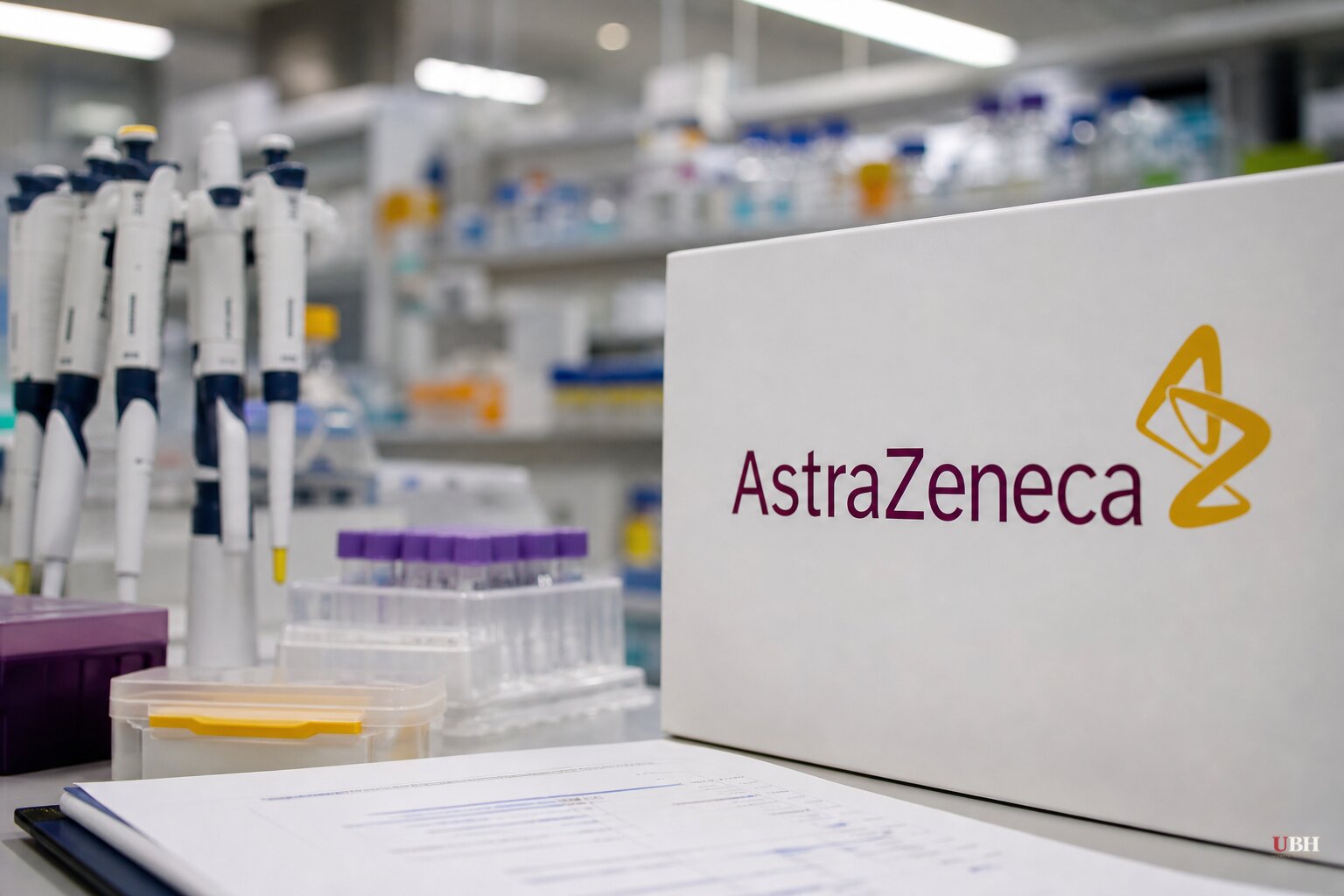
AstraZeneca released full results Tuesday from two late-stage clinical trials of tozorakimab, its experimental biologic drug for chronic obstructive pulmonary disease, according to CNBC. The data, published in the New England Journal of Medicine and presented at a European Respiratory Society conference, gave the company enough confidence to raise its own peak sales forecast for the drug to more than $5 billion a year.
The two trials, named OBERON and TITANIA, tested tozorakimab against a placebo on top of standard inhaled COPD treatment. In the primary population of former smokers, the drug cut moderate and severe flare-ups by 29% and 34% respectively compared to placebo, CNBC reported. In a broader group that included current and former smokers, the reductions were 30% and 29%.
A separate breakdown by blood eosinophil count, reported by CNBC and confirmed by mediabias.news's review of the underlying data, showed reductions ranging more widely: 23% in patients with counts below 150, 34% in those at or above 150, and 43% in those at or above 300. Mediabias.news noted that some outlets covering the story left out the specific former-smoker and broader-population figures entirely, focusing instead on the eosinophil breakdown or the topline sales number.
Tozorakimab works by blocking IL-33, a protein AstraZeneca says drives inflammation and mucus production in COPD patients. Administered once every four weeks, the drug is under priority review at the Food and Drug Administration, with approval expected in the first quarter of 2027, according to CNBC.
COPD affects an estimated 16 million to 26 million Americans, diagnosed and undiagnosed, and is the fifth-leading cause of death in the U.S., AstraZeneca said. Ruud Dobber, president of AstraZeneca's biopharmaceuticals unit, said in an interview with CNBC that "a large population of COPD patients can benefit from this new medicine."
CEO Pascal Soriot told CNBC the drug's appeal lies in reaching patients current options can't. Existing COPD biologics, Regeneron and Sanofi's Dupixent and GSK's Nucala, are limited to patients with elevated eosinophil counts. Soriot said only about 10% of eligible COPD patients currently receive a biologic, compared with 30% to 40% for asthma patients, calling the growth potential "very, very large."
Dr. Meilan Han, chief of pulmonary and critical care at University of Michigan Health and an investigator on the trials, told CNBC there remains "a huge number of patients who are not candidates for biologics with the current two approved drugs." Dobber said tozorakimab could "really change the treatment paradigm because of its broad utility," since it isn't restricted by eosinophil thresholds the way Dupixent and Nucala are.
One outlet, IndiaVision, reported the trials under the names "IMPACT and EXTEND" rather than the actual OBERON and TITANIA designations used by AstraZeneca and confirmed by CNBC and Bloomberg. IndiaVision also attributed the drug's mechanism to unspecified "key inflammatory pathways" without naming IL-33, the specific target every other outlet identified. Readers should treat the OBERON/TITANIA names and IL-33 mechanism as the accurate record.
The raised sales forecast feeds into AstraZeneca's broader target of $80 billion in total revenue by 2030, a goal the company has been building toward with a string of drug approvals across its portfolio, including a recent FDA accelerated approval for its breast cancer drug Etcamah. As of early Tuesday, ahead of the U.S. market open, AstraZeneca (AZN) shares were indicated around $161.70 in pre-market activity; this is a pre-market indication rather than a live or opening regular-session price, and it remains to be seen how the stock will react once trading begins and the COPD trial news is fully absorbed by the market.
The FDA's priority review decision, expected in the first quarter of 2027, will determine whether tozorakimab reaches the market at all, and on what label. Whether the drug's broader eligibility, unrestricted by eosinophil counts, translates into real-world prescribing gains over Dupixent and Nucala will depend on pricing, insurance coverage, and how aggressively AstraZeneca markets it to pulmonologists who currently reach for biologics in only one of every ten eligible COPD patients.
Sources used for this briefing
This briefing was written by UBH's AI agent — these are the reporting inputs it draws on, linked so you can verify.


