
Unbiased headlines. Facts, not spin.
Unbiased Headlines is an independently owned news organization. We bring you the facts, not opinions, written fresh from 110+ named sources. Sources linked so you can verify it yourself.
 health
Notable (5/10)
Event date: September 3, 2026 ·
health
Notable (5/10)
Event date: September 3, 2026 ·
Protein Demand Keeps Climbing as GLP-1 Use Grows, Fiber Gets Left Behind: New Data
Protein Demand Keeps Climbing as GLP-1 Use Grows, Fiber Gets Left Behind: New Data
The Numbers Behind 'Protein-Maxxing'
Americans want more protein than ever, and the data backs it up. Circana's Eating Patterns in America report found 48% of adults now say they want to add more protein to their diets, up seven percentage points from last year. That puts protein second only to vegetables on the list of foods Americans say they're not getting enough of, according to Circana.
The report, based on $1.8 trillion in tracked spending and 618 billion consumption occasions, ties much of the surge to the rise of GLP-1 weight-loss drugs. Circana found 8.5% of adults reported using a GLP-1 medication, up from 4.8% a year earlier. Among GLP-1 users specifically, 65% say they're actively seeking more protein, since the drugs suppress appetite and protein helps preserve muscle mass during rapid weight loss.
A separate analysis from SmartScout, examining 12 months of U.S. Amazon marketplace data through August 2026, put the number of Americans on Ozempic, Wegovy, Mounjaro or a competitor drug at over 9 million. The two figures come from different methodologies and aren't directly comparable, but both point the same direction: a fast-growing population of drug users with a specific, unusual shopping problem.
Why Muscle Loss Is Driving the Cart
Clinical research cited by SmartScout shows 25% to 40% of the weight lost on GLP-1 drugs comes from lean muscle mass rather than fat. A study presented at the Endocrine Society's annual meeting put the figure at roughly 40% for semaglutide users specifically. The standard clinical response: 1.2 to 1.6 grams of protein per kilogram of body weight daily, or roughly 90 to 120 grams for most adults, combined with resistance training.
The catch is that GLP-1 drugs cut appetite by 30% to 50% at the same time patients are told to eat more protein than they ever have. That's forced a shift toward liquid protein. SmartScout's data shows protein drink searches on Amazon gaining roughly 57,000 searches over 12 months while solid protein products lost 2,600. Core Power and Premier Protein now split 55% of the ready-to-drink category, and protein drink ads cost $9.72 per click on Amazon compared to 70 cents for cottage cheese ads.
Creatine is riding the same wave. SmartScout found it generates $720.8 million in annual Amazon revenue, up 90% year over year, with 620,729 monthly searches, the only metric in the firm's analysis that grew across every tracking window measured.
Grocery Aisles Are Rewriting Themselves
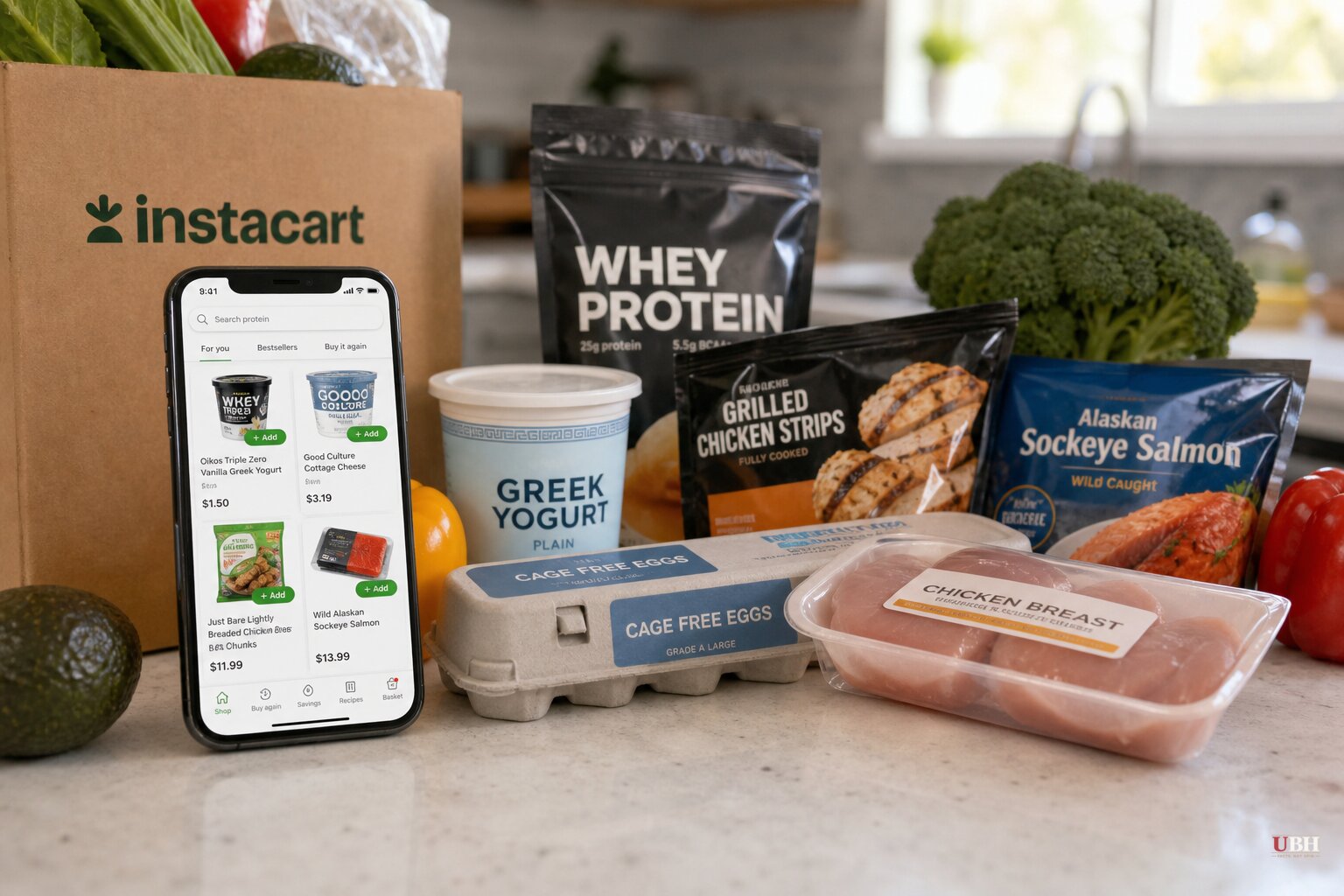
Instacart's own data, reported by KESQ, shows the trend showing up at checkout. Searches containing the word "protein" grew 12.7% year over year, while "fiber" searches, from a smaller base, grew 26.4%. Costco's chief financial officer said "anything protein right now is doing extremely well," and Meijer called fiber the "breakout nutrition goal for 2026" in a company release.
The product reformulations are substantial in scale. Cheerios Protein grew 157% year over year in share of the cereal category. Eggo Protein Waffles climbed 101%. Pop-Tarts Protein, a newer entry, jumped 542% in just six months. Idahoan Protein Potatoes gained 87% over the same window. Sweet potatoes, avocados, whole eggs, chicken breasts and Greek yogurt all posted single-to-double-digit share gains, according to Instacart's data.
Food service is chasing the same demand. Twelve percent of commercial foodservice meals are now labeled "high protein," growing 11% year over year, Circana found.
The Fiber Problem Nobody's Fixing
Americans are overshooting protein and badly missing fiber. Circana's report states adults consume nearly double the recommended daily protein but less than half the recommended fiber.
Daphene Altema-Johnson, a registered dietitian at the Johns Hopkins Center for a Livable Future, argued in a statement cited by Food Dive and The Independent that "the obsession with protein is actually driven by the perception that more protein equals better health," not necessarily by actual need. Protein needs vary by body weight and activity level, and most Americans already meet or exceed baseline requirements without supplementing.
That said, nobody's forcing anyone to buy Pop-Tarts Protein or a $9.72-per-click protein shake. This is consumers making choices, and companies competing to meet demand, which is exactly how a market is supposed to work. The fiber gap is real, and it's a personal-diet problem, not one that requires a government label mandate or a new regulatory push. It just requires people to eat more vegetables, which, per Circana, is still the single thing Americans say they want more of than anything else.
What's unresolved is whether the food industry's protein arms race is actually improving health outcomes for GLP-1 users or just monetizing a marketing trend. Innova Market Insights, cited by Food Dive, found only 5% of global food launches with a protein claim also carry a weight-management claim, suggesting most of this growth is riding consumer perception rather than targeted formulation for drug users. Whether that gap narrows, or whether "protein-maxxing" simply becomes this decade's version of low-fat and low-carb fads, is something Circana and Instacart will likely be tracking again next year.
Sources used for this briefing
7 links from 4 independent newsrooms (syndicated copies of the same report count once)
These are the sources it draws on, linked so you can verify.


