
Original briefings. Zero spin.
Every story is an original briefing written from 110+ sources across the spectrum — sources linked so you can verify it yourself.
 health
Major Story (7/10)
September 8, 2026 at 02:37 AM
health
Major Story (7/10)
September 8, 2026 at 02:37 AM
WMO Says Standard Air Quality Models May Undercount Wildfire Smoke Deaths by Up to 93%
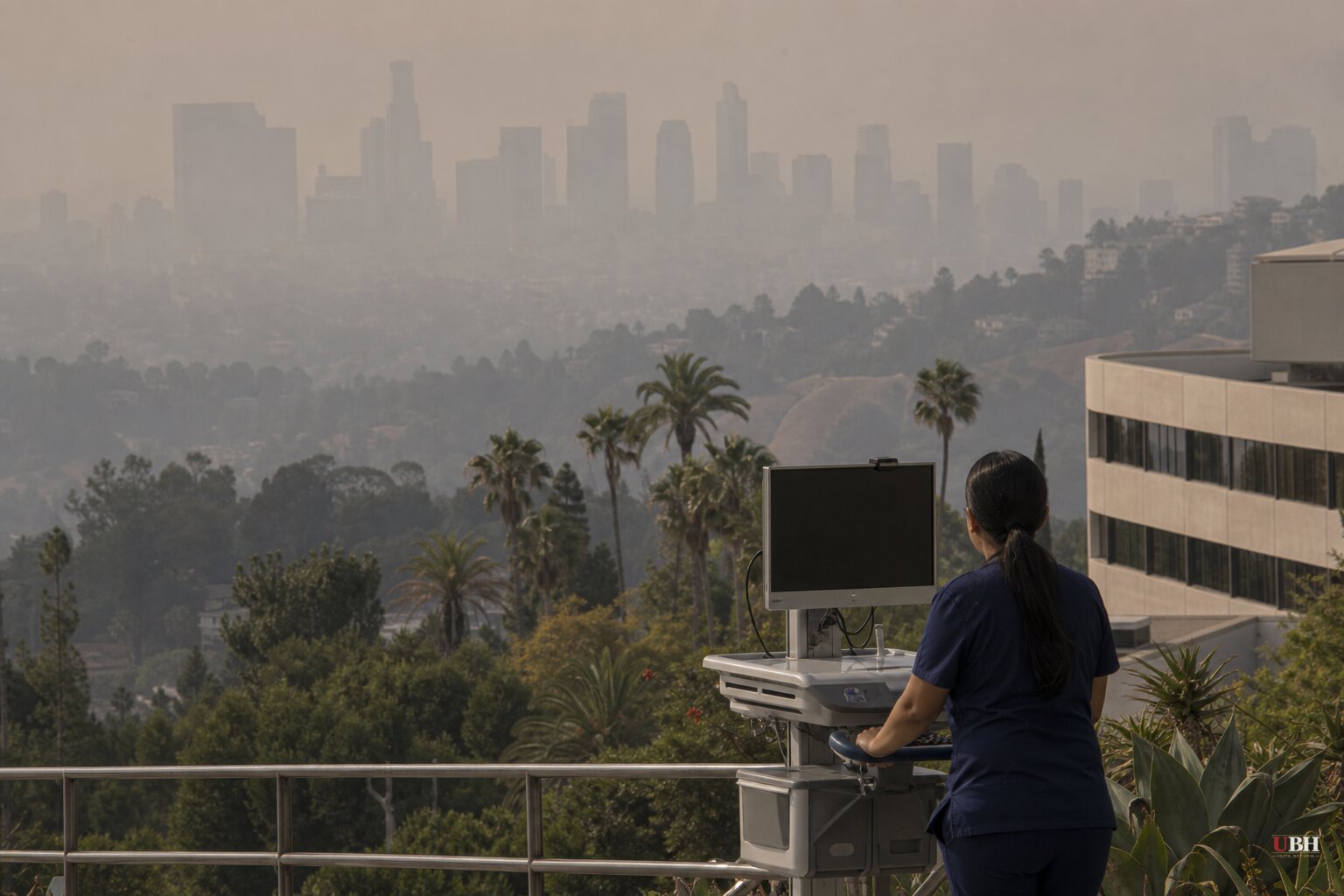
The World Meteorological Organization released its sixth annual Air Quality and Climate Bulletin on Monday, September 7, timed to the United Nations' International Day of Clean Air for Blue Skies. The headline finding: the risk models governments use to estimate deaths from air pollution may be badly miscalibrated for wildfire smoke.
Conventional models treat a microgram of wildfire smoke the same as a microgram of vehicle exhaust or factory emissions. The WMO bulletin says that's wrong. Wildfire particles carry more organic carbon and black carbon, more polycyclic aromatic hydrocarbons, and trigger more oxidative stress in the lungs than urban PM2.5 at the same mass concentration.
A 2021 study in Nature Communications, cited across the coverage, isolated wildfire-specific PM2.5 in Southern California and found respiratory hospitalizations rose 1.3% to 10% per 10-microgram increase in wildfire smoke, versus 0.67% to 1.3% for the same increase in non-wildfire PM2.5, according to Tech Times. That's a two-to-sevenfold gap in harm per microgram.
The 93% Number
The bulletin cites a European study covering 654 regions finding that standard risk models could undercount wildfire-attributable deaths by as much as 93% when applied to fire events, according to the WMO and separately reported by The Hindu, SANA, and the Moorland Association's summary of the bulletin.
Acute exposure to wildfire-derived particles is estimated to have contributed around 99,000 additional deaths a year worldwide between 2010 and 2018, per the bulletin. Over that period there were roughly 12 billion person-days of exposure above the World Health Organization's daily PM2.5 limit of 15 micrograms per cubic meter, with wildfire smoke accounting for at least half of that excess. Sub-Saharan Africa carries an estimated 28% of global fire-smoke deaths and eastern Europe 24%.
Extreme fire-smoke events have tripled globally since the 1990s, the bulletin says. Lorenzo Labrador, a WMO scientific officer, told AFP that microparticles from burning vegetation are more toxic than car exhaust, and that their effects reach people and wildlife far from the fire because wind carries the smoke, while air quality assessments don't sufficiently account for that toxicity.
Regulation Worked on Cars and Factories. It Didn't Touch Wildfires.
Industrial and transport PM2.5 emissions have actually fallen in Europe and North America because of regulation, and PM2.5 in China stayed below its long-term average in 2025, which the WMO attributes to a decline in emissions from human activity. India remained above average because of biomass burning and other pollution sources.
But total PM2.5 exposure in fire-prone regions is climbing anyway, because wildfire smoke is filling the gap left by cleaner cars and cleaner smokestacks. Northern Canada, parts of Russia, western-central Africa, and northwestern Spain all recorded above-average PM2.5 in 2025 due to fire activity, according to the WMO.
The bulletin also flags ground-level ozone, worsened by the same heatwaves driving the fires. Labrador told The Guardian that ozone "oxidises lung tissue and causes inflammation and circulatory problems, and eventually heart problems." In heavily polluted regions, the bulletin says roughly one in five COPD deaths is now attributed to long-term ozone exposure.
The Adaptation Argument
The policy response to rising fire risk is contested, and that argument predates this bulletin. Kenneth Green, writing in the Epoch Times on August 28 in the context of British Columbia's wildfires, argued that governments "simply can't or won't" effectively control forest fuel loads through prescribed burns or suppression, and that the more urgent questions are about adaptation: risk-based fire insurance, building codes for fire-prone zones, whether rebuilding should be allowed after a home burns, and better detection and shelter systems.
Land management and fire suppression policy are things governments actually control, unlike global climate trends, and critics of heavy climate-regulation frameworks argue resources are better spent hardening communities and pricing risk honestly than chasing emissions targets that don't address fire-specific smoke toxicity at all. The WMO bulletin doesn't address insurance or building codes. Its focus is atmospheric measurement and mortality modeling, not land-use policy.
What the bulletin does call for is better monitoring. It says PM2.5, ground-level ozone, black carbon, and atmospheric microplastics are "not sufficiently monitored even though they are widespread and are potentially harmful to ecosystems," and it used four independent modeling systems for 2025 PM2.5 estimates for the first time, finding them broadly consistent.
The bulletin's own conclusion is blunt about the trajectory: meeting World Health Organization air quality guidelines "will become progressively more difficult, since extreme fire weather is expected to increase in the future." No new WMO funding commitment or binding monitoring mandate has been announced alongside the report. Whether any government moves to fund the expanded observation network the WMO is asking for remains an open question.
Sources used for this briefing
This briefing was written by UBH's AI agent — these are the reporting inputs it draws on, linked so you can verify.


