
Original briefings. Zero spin.
Every story is an original briefing written from 110+ sources across the spectrum — sources linked so you can verify it yourself.
 health
Low Interest (3/10)
Event date: September 3, 2026
health
Low Interest (3/10)
Event date: September 3, 2026
NASA's Space-Program Food System Became the Backbone of US Meat Inspection
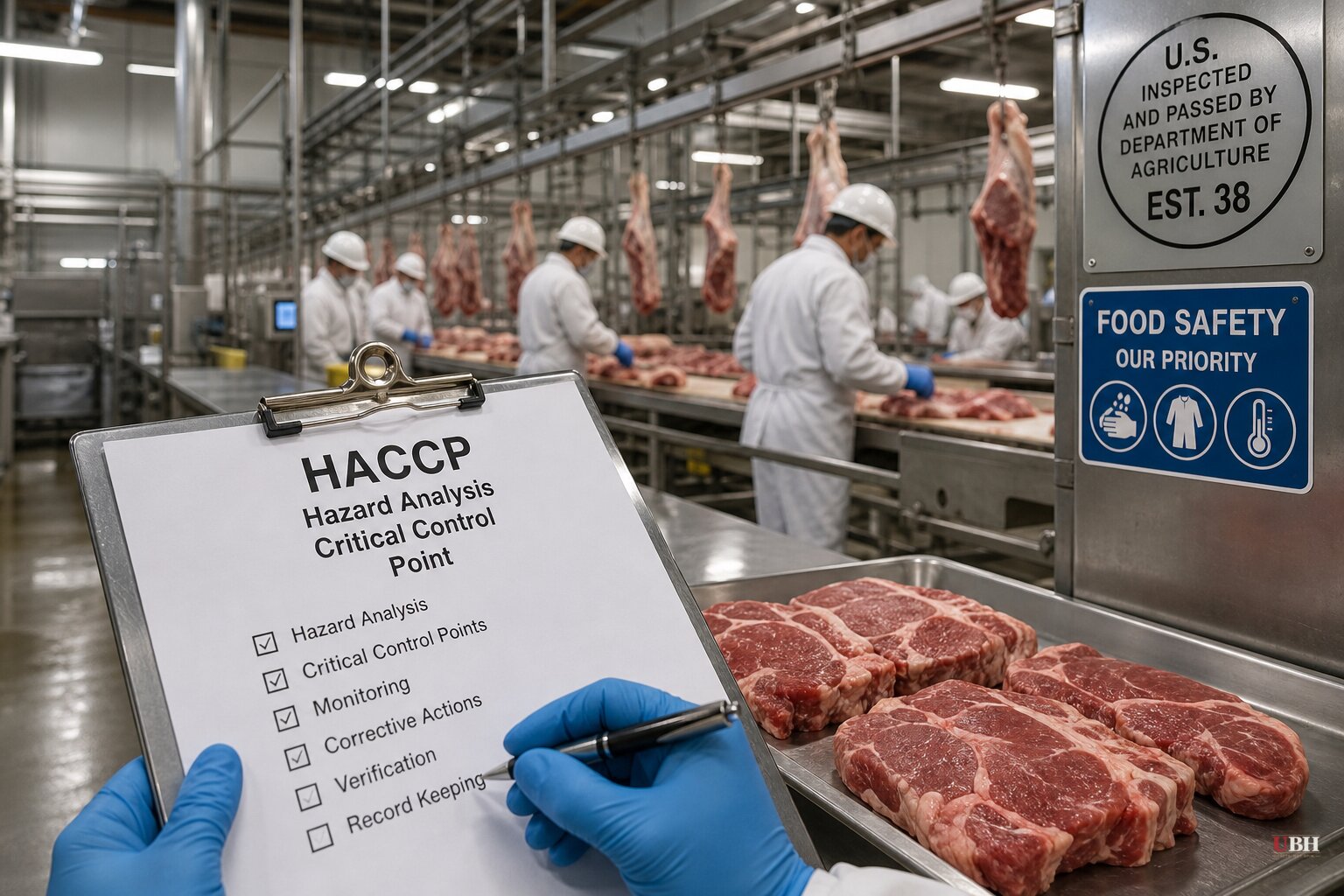
From Poke-and-Sniff to Zero Gravity
US meat inspection started as a reaction to outrage. Upton Sinclair's 1906 novel The Jungle exposed rancid, diseased meat coming out of Chicago's packing plants, and Congress responded with the Federal Meat Inspection Act. That law created what became the Food Safety and Inspection Service, according to Wired. For decades, federal inspectors checked livestock the old-fashioned way: eyes, nose, hands. The method got a nickname that stuck: "poke and sniff."
It worked for what it was built to catch. Inspectors could spot tuberculosis lesions or tapeworm cysts in a carcass. But by the late 20th century, Americans were eating far more beef, and plants were slaughtering hundreds of animals an hour, per Wired. No inspector force, no matter how large, could poke and sniff its way through that volume. Worse, the biggest threats to the meat supply had shifted to something no human sense can detect: bacteria like E. coli.
The Space Program's Food Problem
The fix didn't originate in a slaughterhouse. It came from NASA.
According to the food-safety education site Wekiva Culinary, NASA scientists began working with Pillsbury and US Army food researchers in 1959 on a problem nobody had faced at that scale: how do you guarantee food is safe when there's no hospital, no backup crew, and no next shipment if something goes wrong. Standard industry practice at the time was to test samples pulled from a finished batch. Passing that test told you the samples were clean. It told you nothing about everything else in the batch.
For astronauts on a mission to the Moon, that gap was unacceptable. NASA's lead food scientist, Paul Lachance, worried specifically about the danger of food poisoning in a sealed capsule or spacesuit, according to Wired. Testing every single bite wasn't an option either because, as Wired put it, every piece of food tested for pathogens is a piece of food that can no longer be eaten.
So the NASA-Army-Pillsbury team flipped the question. Instead of asking "is the finished product safe," they worked backward through the entire production process asking where a hazard could get in, where it could be stopped, and how you'd know the control actually worked. That approach became Hazard Analysis and Critical Control Points, or HACCP, per Wekiva Culinary.
Glass in Baby Cereal
HACCP might have stayed a NASA curiosity if not for a scare back on Earth. In 1971, Pillsbury found glass fragments in a batch of wheat cereal made for babies, according to Wekiva Culinary. The company recalled the product and, within days, presented the HACCP concept publicly at the first National Conference on Food Protection.
The pitch was simple: don't wait for something dangerous to already be in the product you're selling and hope an inspector catches it. Find the exact point in the process where a hazard can be stopped, and control it there.
Jack in the Box Forces the Issue
HACCP sat mostly in the background of American food regulation for two more decades. That changed in 1993, when hamburgers sold at Jack in the Box restaurants sickened more than 700 people and killed four children, according to Wired. The public reaction echoed the outrage that followed The Jungle nearly a century earlier.
The Food Safety and Inspection Service made two moves. Short term, it hired 160 additional meat inspectors. Longer term, it accelerated adoption of the process-control approach NASA and Pillsbury had built decades earlier, per Wired.
The Fair Counterargument
A reasonable objection to abandoning 100% inspection is straightforward: if you're not checking every piece of meat, how do you know contaminated product isn't slipping through. This is a legitimate consumer-safety concern, and it's the same instinct behind the original 1906 poke-and-sniff system.
The counter, laid out by both Wired and Wekiva Culinary, is that 100% testing for invisible pathogens is either physically impossible or self-defeating. You can't smell E. coli. And destructive testing that catches contamination also destroys the food being tested, so scaling it to every unit means nothing gets sold. Controlling the process at defined checkpoints, rather than inspecting every finished product, is presented in both sources as the only way to scale food safety to modern slaughter-line speeds without either bankrupting the industry or leaving consumers unprotected.
What's Unresolved
Neither source addresses how current USDA staffing and line speeds compare, decades after the 160-inspector hire following the 1993 outbreak, or whether critical-control-point monitoring has kept pace with today's even faster processing lines. That's the open question the history doesn't answer: a smarter inspection framework only works if the checkpoints are actually staffed and enforced, not just designed on paper.
Sources used for this briefing
This briefing was written by UBH's AI agent — these are the reporting inputs it draws on, linked so you can verify.


