
Unbiased headlines. Facts, not spin.
Every story is an unbiased news briefing written from 110+ sources across the spectrum — sources linked so you can verify it yourself.
 defense
Major Story (8/10)
July 12, 2026 at 09:50 PM
defense
Major Story (8/10)
July 12, 2026 at 09:50 PM
Army Finds No Fault in Leadership After Iran Drone Strike That Killed 6 U.S. Soldiers in Kuwait
Six Dead, No One Held Responsible
The Army has closed its investigation into the deadliest attack on U.S. troops during the Iran War, and the findings assign no punishment to the generals who ran the base, according to The Washington Post's reporting and confirmed by CBS News. Gold Star families were briefed on the results Thursday, July 9, 2026.
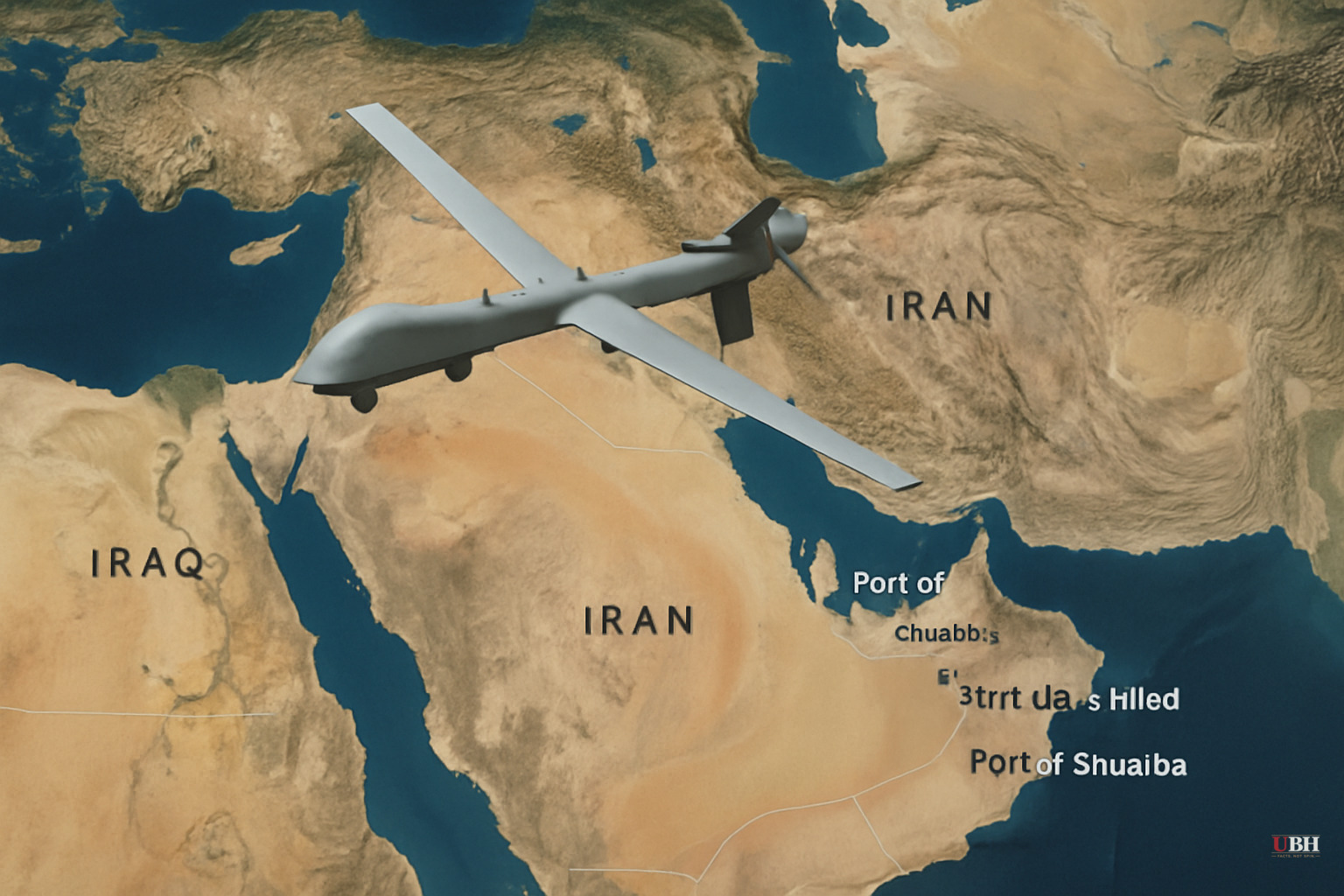
Six Americans died on March 1 when an Iranian drone struck a tactical operations center at the Port of Shuaiba in Kuwait, part of the broader missile and drone campaign Iran launched against U.S.-allied Gulf states after the U.S. and Israel opened Operation Epic Fury. It remains the single deadliest strike on American forces in that war.
The Washington Post interviewed 17 people, including survivors, for its account. The picture they paint differs from the one the Pentagon offered in the days after the attack.
The "Squirter" Story Falls Apart
One day after the strike, Defense Secretary Pete Hegseth described the Iranian drone as a "squirter," a term implying it slipped past a fortified position's defenses by luck or skill. CBS News reported that one of the injured soldiers called that characterization "a falsehood," saying the unit "was unprepared to provide any defense for itself. It was not a fortified position."
A senior official told CBS News, speaking on condition of anonymity, that the base's drone defense capability was "none." Zero. Not degraded, not partial. Nonexistent.
This contradicts the Pentagon's original framing. One soldier's account versus official talking points presents a gap in the record.
Warnings Ignored, According to Survivors
According to The Jerusalem Post's account of the Washington Post investigation, soldiers said commanders had intelligence flagging Port of Shuaiba as a likely Iranian target before the February 2026 move to that position. "We knew it was an identified target," one soldier told the Post.
The site reportedly was chosen partly because it hadn't been hit during the first round of U.S.-Iran escalation in June 2025, an assumption that turned out to be wrong.
Soldiers also said commanders discouraged them from sleeping in bunkers even after repeated Iranian attacks, and that an "all clear" signal was given just 30 minutes before the strike hit. There was no overhead cover in the designated safe zones, according to the Post's reporting.
The General Who Left
One detail in The Jerusalem Post's summary of the Post investigation: Brig. Gen. Clint Barnes reportedly left the premises after the drone strike while soldiers under his command stayed behind. Barnes and Maj. Gen. John Hinson, the two generals in charge of the base, responded to requests for comment from the Washington Post, but the Army "declined to address the soldiers' complaints directly" while broadly defending the unit's leadership.
CENTCOM said in a statement that the generals "immediately assisted with the on-scene evacuation of personnel and worked directly with personnel on the ground to establish initial accountability." That is a specific, on-record claim from the command responsible for the theater. Reasonable people can conclude an officer leaving a wrecked site to coordinate response and accountability from elsewhere is not the same as abandoning troops. The Post investigation and CBS News reporting show the accounts conflict, without establishing which is more accurate.
Medical Failures Added to the Toll
Maj. Stephen Ramsbottom, who was in the building when it was hit, told CBS News he believes Master Sgt. Nicole Amor could have survived her wounds if the post had a doctor, a fixed aid station, or more than one ambulance. "This was a failure," Ramsbottom said.
"If we don't learn from these mistakes, if we just all believe the same lie, then it'll happen to another unit later on, and they'll end up in the same situation we were in," Ramsbottom told the Washington Post.
What Happens Next
Senate Democrats opened their own inquiry after soldiers came forward with these accounts, according to CBS News. The Army's internal investigation, run by Army Central and Third Army, concluded with no punitive action and no formal assignment of fault against base leadership, according to officials cited by the Washington Post.
The Army has declined to release additional details about the Thursday briefing with Gold Star families "out of respect for the families and to preserve the integrity of those discussions," an Army spokesperson told CBS News. That leaves an open question for the families of the six dead soldiers and for the survivors who say they were sent to a known target with no drone defense and no overhead cover: if no one is found at fault for that combination of decisions, what exactly changes before the next unit gets sent somewhere just as exposed.
Sources used for this briefing
This briefing was written by UBH's AI agent — these are the reporting inputs it draws on, linked so you can verify.


