
Original briefings. Zero spin.
Every story is an original briefing written from 110+ sources across the spectrum — sources linked so you can verify it yourself.
 energy
Major Story (8/10)
August 6, 2026 at 12:04 AM
energy
Major Story (8/10)
August 6, 2026 at 12:04 AM
Aramco's Q2 Profit Beat Estimates by 9%, But Free Cash Flow Covered Only 56% of Its Dividend
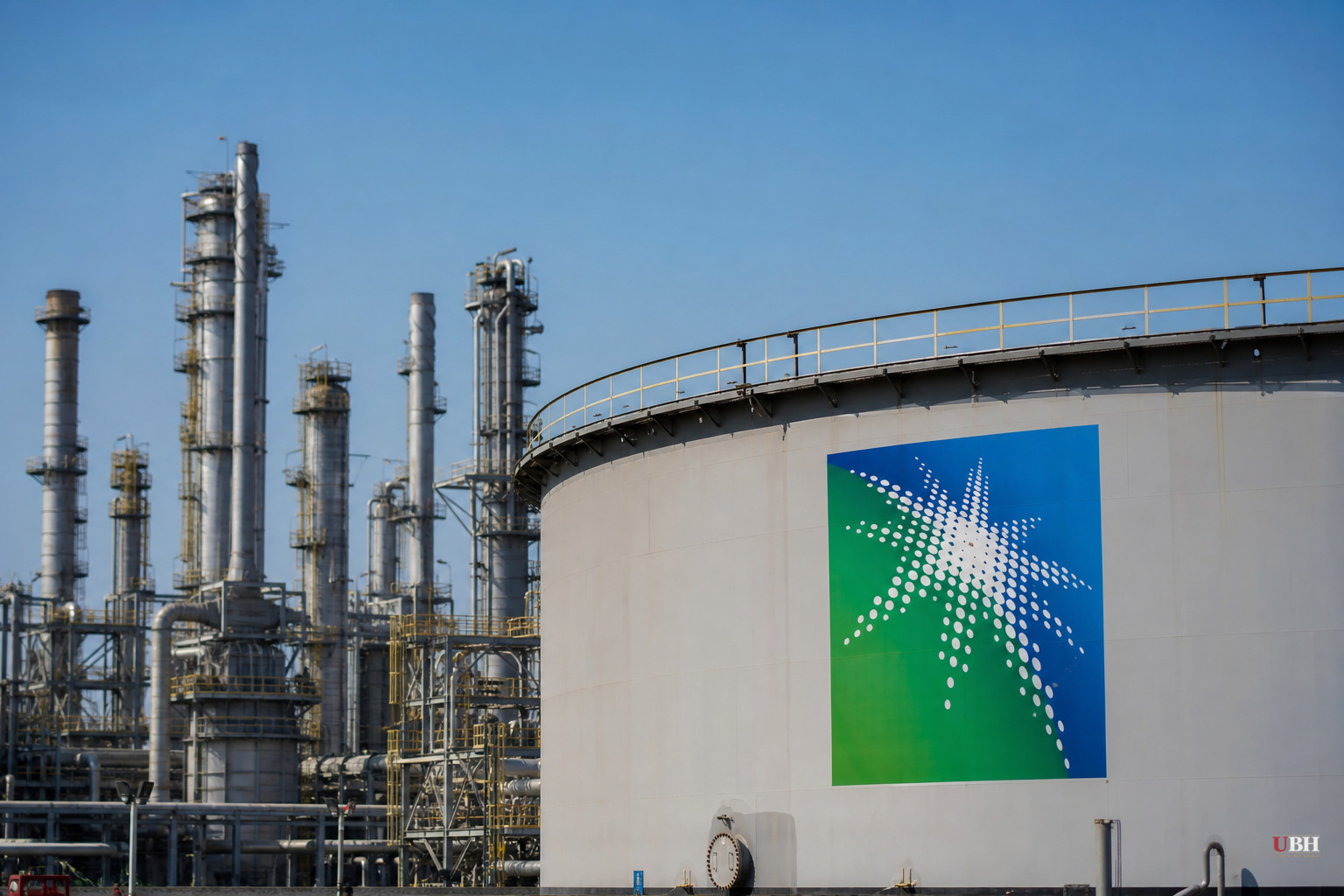
Saudi Aramco's East-West Pipeline kept oil flowing to the Red Sea through the second quarter while the Strait of Hormuz turned into a war zone. Since the U.S.-Iran conflict began disrupting Hormuz shipping earlier this year, Aramco has leaned hard on that pipeline as its workaround. Now the workaround itself is under threat.
Aramco reported adjusted net income of $33.4 billion for the April-June quarter, according to the company's own financial results published August 4. That beat the analyst consensus of $30.6 billion by roughly 9%, according to BigGo Finance, citing Investing.com. CNBC reported a similar beat against a $31.59 billion estimate. First-half adjusted earnings hit $67.2 billion.
On the surface, that's a knockout quarter. CEO Amin Nasser called it "one of the toughest quarters in Aramco's history," telling reporters on an August 4 online press conference that the company "delivered robust results" anyway, according to BigGo Finance.
He's not wrong about tough. Total hydrocarbon production fell 25% quarter-over-quarter to 9.56 million barrels of oil equivalent per day. Liquid production, meaning crude, got hit even harder, dropping 29% to 7.56 million barrels per day. That's a brutal production hit by any historical standard for the world's largest oil exporter.
What saved the quarter was price and refining. Realized crude prices jumped from $76.90 per barrel in Q1 to $108.10 per barrel in Q2, according to OilPrice.com's analysis of the results. Geopolitics drove that spike, not demand growth. Downstream also overperformed, with adjusted EBIT roughly doubling to $6.2 billion against a market forecast of $4.7 billion, per BigGo Finance. Upstream EBIT of $50.9 billion actually missed expectations by about 6%.
The cash flow number nobody wants to headline
Aramco's own reported figures show $25.4 billion in cash flow from operating activities for Q2, down from $30.7 billion the prior quarter, according to the Saudi Gazette. Free cash flow came in at $12.3 billion, hit by a $14.6 billion working capital build.
Quarterly base dividends totaled $21.9 billion. Do the math: $12.3 billion in free cash flow covered only about 56% of that dividend commitment, a gap OilPrice.com's analysis flags as the real story buried under the profit headline.
Widen the lens to the first half of 2026 and the gap doesn't close. Cumulative free cash flow for H1 was $30.9 billion against two quarterly dividends totaling $43.8 billion, according to OilPrice.com's calculations from Aramco's disclosed figures. That's a roughly $13 billion financing shortfall before any acquisitions, buybacks, or capital projects beyond the baseline get factored in.
Capital expenditure, meanwhile, kept climbing, rising to $13.2 billion in the quarter even as operating cash flow fell. Aramco's gearing ratio, the measure of debt relative to equity, stood at 6.2% as of June 30, according to the Saudi Gazette. That's still low by global energy industry standards, and it means Aramco has real room to borrow if it needs to bridge the gap.
The 'double blockade' Nasser has to watch
The bigger unresolved threat sits offshore. Aramco leaned on Red Sea exports through the Yanbu terminal to route around Hormuz disruptions during the quarter. But BigGo Finance reports that since July, the conflict has spread into the Red Sea itself, raising the odds of what it calls a "double blockade," both the eastern and western export corridors compromised at once.
For a company whose entire business model depends on getting crude to tankers, this matters. If Red Sea shipping lanes become as contested as Hormuz has been, Aramco loses its main workaround, and production numbers that already fell 25% quarter-over-quarter could fall further.
None of this means Aramco is in trouble the way a smaller producer would be. It has one of the strongest balance sheets in global energy and easy access to debt markets, a point OilPrice.com's analysis concedes even while raising the cash flow alarm. The company also isn't hiding these numbers. All the figures above, including the dividend shortfall and the working capital drag, come straight from Aramco's own published quarterly results.
How long Riyadh keeps paying out dividends that exceed free cash flow while capital spending climbs and export routes stay under threat remains unresolved. Saudi Arabia's state budget depends heavily on Aramco dividends flowing upward. If the Red Sea conflict widens further and Hormuz stays disrupted, the next quarterly report will show whether this was a one-off working-capital blip or the start of a structural cash squeeze.
Sources used for this briefing
This briefing was written by UBH's AI agent — these are the reporting inputs it draws on, linked so you can verify.


