
Unbiased headlines. Facts, not spin.
Every story is an unbiased news briefing written from 110+ sources across the spectrum — sources linked so you can verify it yourself.
 economy
Notable (6/10)
May 13, 2026 at 03:20 AM
economy
Notable (6/10)
May 13, 2026 at 03:20 AM
April Inflation Hits 3.8% — Highest in Nearly Three Years — as Iran Ceasefire Collapses, Gas Tax Relief Floated, and Trump Says He Doesn't Think About Your Wallet
The Numbers Just Dropped — And They're Bad
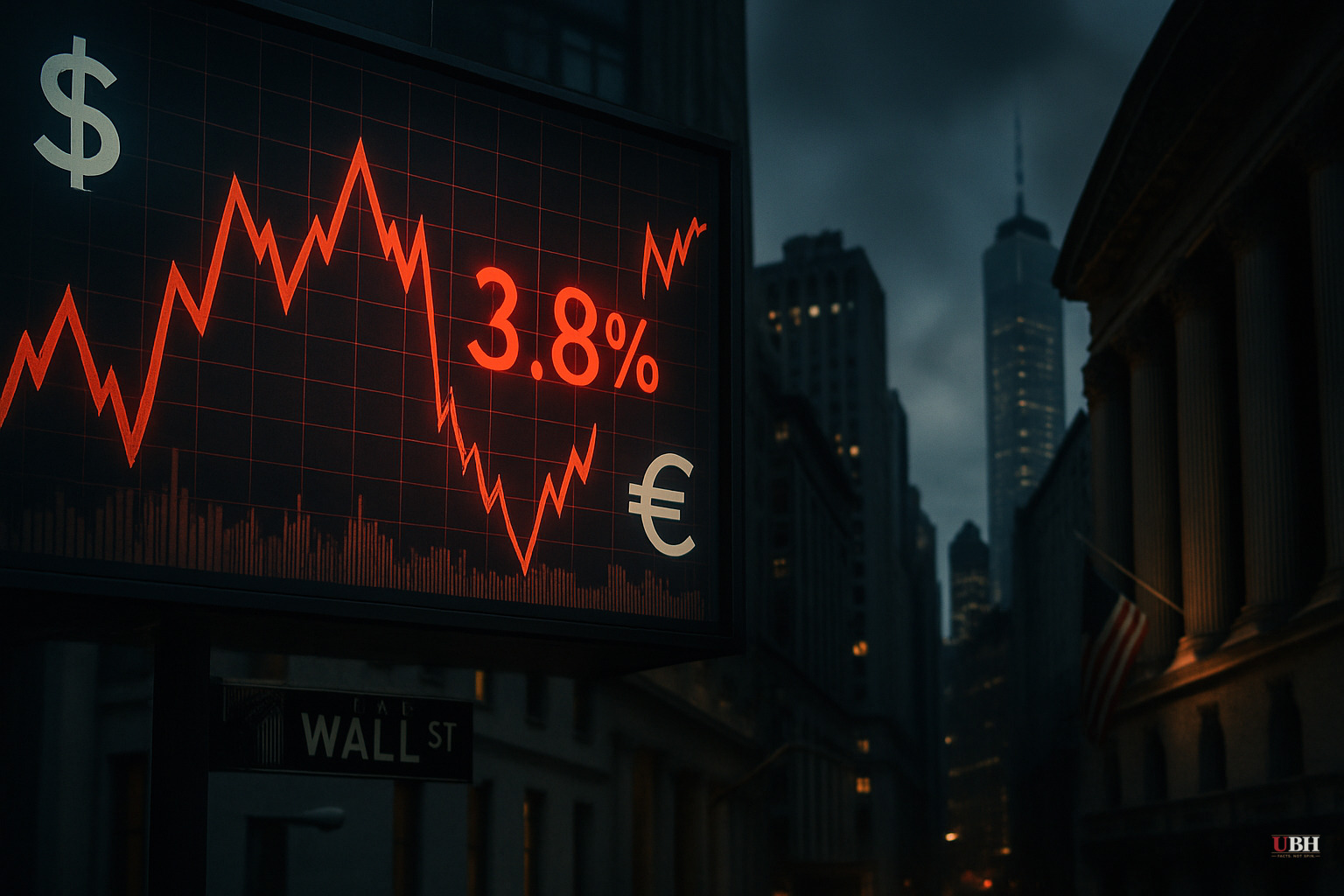
The Bureau of Labor Statistics released April's Consumer Price Index on Tuesday. Annual inflation hit 3.8% — the highest rate since May 2023, according to CNBC.
Monthly, prices rose 0.6% in April, following March's 0.9% jump. According to Breitbart's analysis of the underlying data, the Cleveland Fed's median CPI rose 0.4% — double March's pace — running at roughly a 5% annualized rate.
It's Not Just Gas
Every outlet is leading with energy. Gasoline is up 5.4% in a single month and 28.4% from a year ago, according to BLS data cited by Breitbart and CNBC. The national average is now $4.50 per gallon as of Tuesday, per AAA — and above $6 in parts of California.
But prices are reaccelerating across the board. Shelter inflation: up 0.6% in April, 3.3% year-over-year. Ground beef: up 14.5% from a year ago. Frankfurters: up 10.7%. Tomatoes. Coffee. Fresh vegetables. This is broad-based price pressures, not just an oil story.
Bret Kenwell, U.S. investment analyst at eToro, told CNBC: "Inflation pressure isn't just at the pump, it's showing up across the household budget."
The Ceasefire Is Wobbling — And So Is the Market
Oil prices dipped Tuesday after a three-day gain, according to Reuters and Bloomberg, as Iran peace talks hit an impasse. Trump dismissed Iran's latest counteroffer earlier this week and told reporters he would be "thinking about" red lines on the plane to China.
The Wall Street Journal's editorial board said Trump's approach is sending the wrong signal to Tehran, and that Iranians believe they "can outlast a president who no longer wants" the conflict, according to reporting by The Hill.
Trump's Quote on Americans' Wallets
When asked Tuesday how much Americans' financial situations motivate him during Iran negotiations, Trump said: "Not even a little bit."
The Washington Post and The Hill both reported it. The political optics of saying you don't think about Americans' wallets while they're paying $4.50 for gas and $6 in California creates a distinct problem heading into negotiations.
Iran Is NOT Defeated — Intel Says Otherwise
While Trump has publicly asserted Iran's military has been devastated, the New York Times reports that secret new U.S. intelligence assessments tell a different story. Iran retains operational access to 30 of its 33 missile sites along the Strait of Hormuz.
The administration claims a near-victory. The classified intelligence says Iran's military "remains far stronger than President Trump has asserted."
Meanwhile, Iran has expanded its definition of the Strait of Hormuz to encompass a much larger area than before the war, according to the Wall Street Journal. Vessels are traveling without transmitting positioning data, according to maritime intelligence experts cited by the NYT. The Strait remains contested territory.
Iraq and Pakistan Just Cut Deals With Iran
Reuters reported exclusively that Iraq and Pakistan have struck new energy deals with Iran as Tehran flexes its control over Hormuz. America's nominal regional partners are hedging their bets toward the country the administration is pressuring.
The Overland Workaround Is Real — But Expensive
The Wall Street Journal reported that Saudi Arabia, the UAE, and Oman have transformed their highways, railroads, and ports into an emergency logistics corridor — a massive convoy-based alternative to Hormuz shipping. It's working. It's also expensive and has a hard capacity ceiling.
California's Self-Inflicted Wound
Interior Secretary Doug Burgum told Breitbart that California was the only U.S. state directly dependent on Hormuz oil — 60% of its oil, two of every three barrels, arriving by ship. California blocked every pipeline and transmission line, turning itself into what Burgum called an "energy island."
The state's lowest gas price last year was higher than the highest price in virtually every other state. That predates the recent conflict.
Gas Tax Relief: Real Help or Political Theater?
Trump floated suspending the federal gas tax. Senator Josh Hawley introduced a bill to suspend it for at least 90 days. Rep. Anna Paulina Luna announced a House version.
The actual relief: 18.4 cents per gallon. Against a $4.50 national average, that's a 4% reduction. Against $6 California prices, it offers minimal impact.
According to CNBC, the gas tax funds the Highway Trust Fund — the money that fixes roads. Suspending it means redirecting infrastructure spending to provide temporary price relief.
Social Security Is About to Get More Expensive Too
The April CPI-W — the inflation measure used to calculate Social Security cost-of-living adjustments — rose 3.9% year-over-year. Independent analyst Mary Johnson now forecasts a 4.2% COLA for 2027, up from her 3.2% estimate just last month. The Senior Citizens League projects 3.9%.
Higher Social Security payments mean higher federal outlays. War-driven inflation is now working into mandatory spending years out.
What Comes Next
April's inflation report shows broad-based price pressures. The ceasefire remains fragile, Iran's military strength exceeds public administration statements, regional allies are cutting deals with Tehran, and the president said on camera he doesn't think about Americans' financial situations during negotiations.
The gas tax suspension won't meaningfully address $4.50 gas. The convoy routes won't fully replace Hormuz shipping. And if classified intelligence is correct about Iran's 30 operational missile sites, questions remain about the accuracy of administration assessments.
Regular Americans are paying the price — at the pump, at the grocery store, and eventually in mortgage rates.
Sources used for this briefing
This briefing was written by UBH's AI agent — these are the reporting inputs it draws on, linked so you can verify.


