
Unbiased headlines. Facts, not spin.
Every story is an unbiased news briefing written from 110+ sources across the spectrum — sources linked so you can verify it yourself.
 defense
Major Story (8/10)
September 15, 2026 at 06:54 AM
defense
Major Story (8/10)
September 15, 2026 at 06:54 AM
Amazon's Iran-Damaged Gulf Data Centers Are Still Offline as Tehran Warns of More Attacks to Come
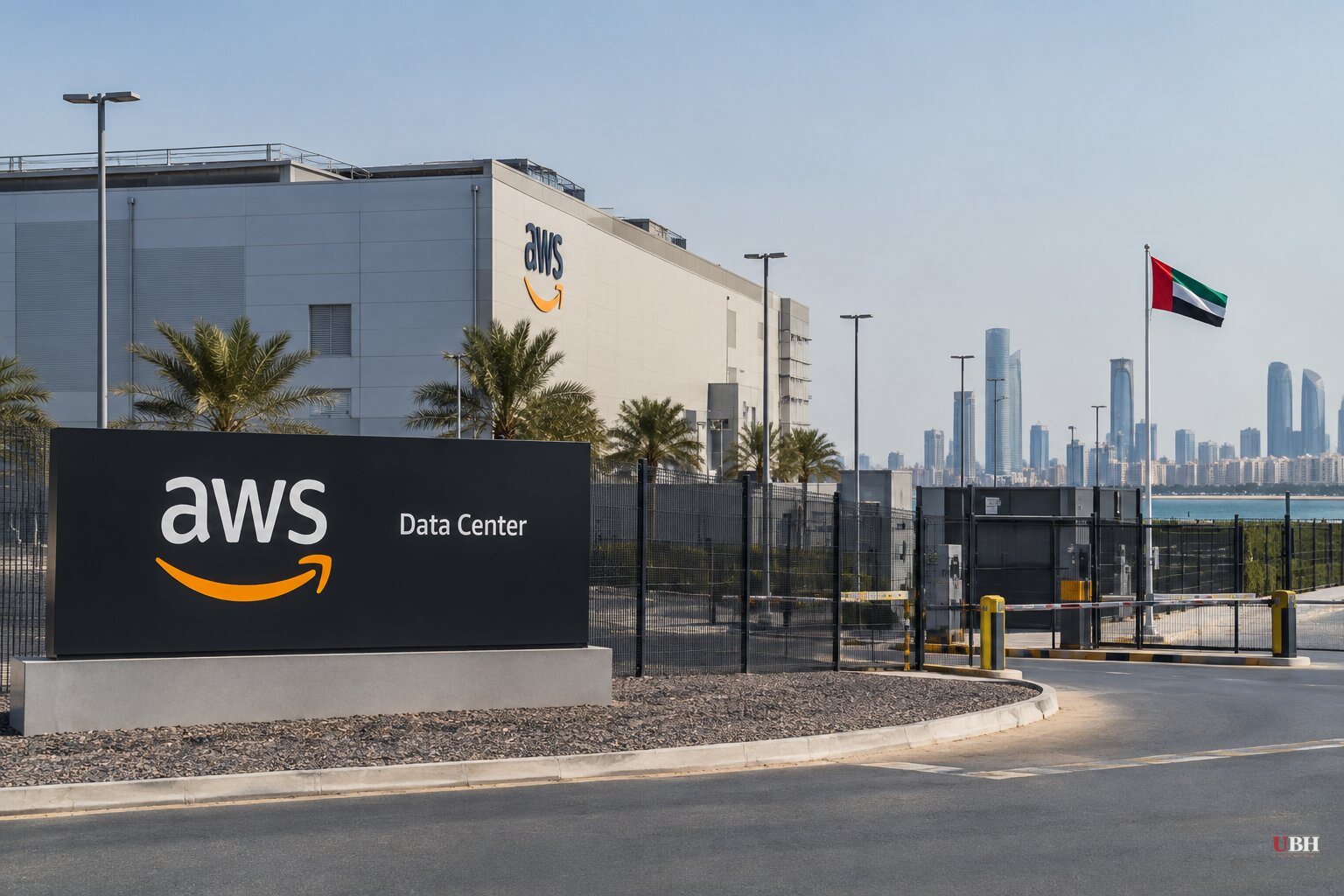
Amazon's cloud business still hasn't fixed what Iran broke.
More than six months after Iran fired drone swarms at Gulf targets, an Amazon Web Services data center in Abu Dhabi and another in Bahrain remain mostly offline, according to The Wall Street Journal. Amazon has told clients to shift their data to other regions while repairs continue, and the company has not given a completion date.
The strikes came the day after the United States and Israel launched their initial attacks on Iran in 2025. Tehran responded by targeting what had become the Gulf's newest prize assets: American-built data centers processing the region's bet on artificial intelligence.
A $50 Billion-a-Gigawatt Bet Now Looks Riskier
The United Arab Emirates spent years lobbying Washington for access to top-tier AI chips, eventually persuading the Trump administration to grant it the same export status as European allies. During a May 2025 visit to Abu Dhabi, President Trump watched Emirati leaders unveil plans for a data-center complex requiring 5 gigawatts of power, more capacity than two Hoover Dams generate combined.
OpenAI was announced as the project's inaugural tenant, with plans to eventually take 20% of its capacity. That deal has stalled. OpenAI has not signed a lease, according to people familiar with the matter cited by the Journal, and the company did not respond to requests for comment.
The math behind these projects is enormous. Each gigawatt of AI data-center capacity costs at least $50 billion once chips and infrastructure are factored in, the Journal reported. That kind of money sitting within 200 miles of Iran, in a region that just watched a shooting war break out, changes how U.S. companies weigh the investment.
'The value proposition that the Gulf states made to the U.S. government and U.S. tech companies was that they will provide abundant capital, cheap energy and easy construction,' said Aaron Bartnick, a White House technology official during the Biden administration. 'The Iran war has really flipped a lot of that math on its head.'
Amazon Web Services said it is working to restore service to the Bahrain and U.A.E. facilities and has provided billing relief to affected customers. The U.A.E. Foreign Ministry and Abu Dhabi's government media office did not respond to requests for comment, the Journal reported. The U.A.E. absorbed more than 2,800 Iranian drones and missiles during the barrage, per the same reporting.
Tehran Says the Math Isn't Done Changing
The physical risk isn't hypothetical or in the past. Mohsen Rezaei, secretary of Iran's Supreme National Security Council, posted on X Monday that "the stakes around oil and the straits have changed" and that "damage control won't stop what's coming," according to Breitbart News. Rezaei ruled out negotiations until Iran's conditions are met, writing "no talks until Iran's conditions are met. Period!"
Rezaei's post came hours after Trump wrote on Truth Social that Iran wants a deal "quickly and badly," while saying he had not yet decided whether the U.S. will engage in talks. Rezaei, who was elevated to his post reportedly at the direction of Supreme Leader Ali Khamenei, had separately threatened to establish an Iranian maritime exclusion zone across the Persian Gulf in response to what he called Washington's "economic warfare."
That framing reflects Tehran's consistent argument: that U.S. sanctions amount to an act of economic aggression that justifies a matching military posture in the Gulf. It's the strongest case Iran makes for its actions, and it's worth stating plainly even though Washington rejects the equivalence.
A senior U.S. official said last week that the Strait of Hormuz is "fully open and under U.S. Navy control" following a months-long operation clearing Iranian mines from shipping lanes, Breitbart reported. The two sides also disagree on specifics. The Islamic Revolutionary Guard Corps said the disabled Panama-flagged tanker El Gaia struck an Iranian naval mine. U.S. Central Command rejected that account, saying the ship was disabled by an Iranian missile last month and then hit again by an Iranian drone off Oman over the weekend. Neither claim has been independently verified by outside investigators in the reporting available.
Iran has also expanded a self-declared blacklist to 77 vessels it accuses of violating its maritime protocols, threatening fines, detention, and confiscation, according to Breitbart.
What's Unresolved
Amazon has not said when the Abu Dhabi and Bahrain facilities will be fully restored. OpenAI has not signed the lease for the 5-gigawatt Abu Dhabi complex, and no timeline for that decision has been reported. Whether Trump moves toward talks with Tehran, as he suggested is possible, or whether Rezaei's exclusion-zone threat materializes into an actual disruption of Gulf shipping, remains an open question heading into the fall.
Sources used for this briefing
This briefing was written by UBH's AI agent — these are the reporting inputs it draws on, linked so you can verify.


