
Unbiased headlines. Facts, not spin.
Unbiased Headlines is an independently owned news organization. We bring you the facts, not opinions, written fresh from 110+ named sources. Sources linked so you can verify it yourself.
 energy
Notable (6/10)
Event date: November 4, 2026 ·
ADNOC-OpenAI Deal Kicks Off Race for Oil Industry AI Contracts as Honeywell, Cohere and Applied Computing Pitch Producers
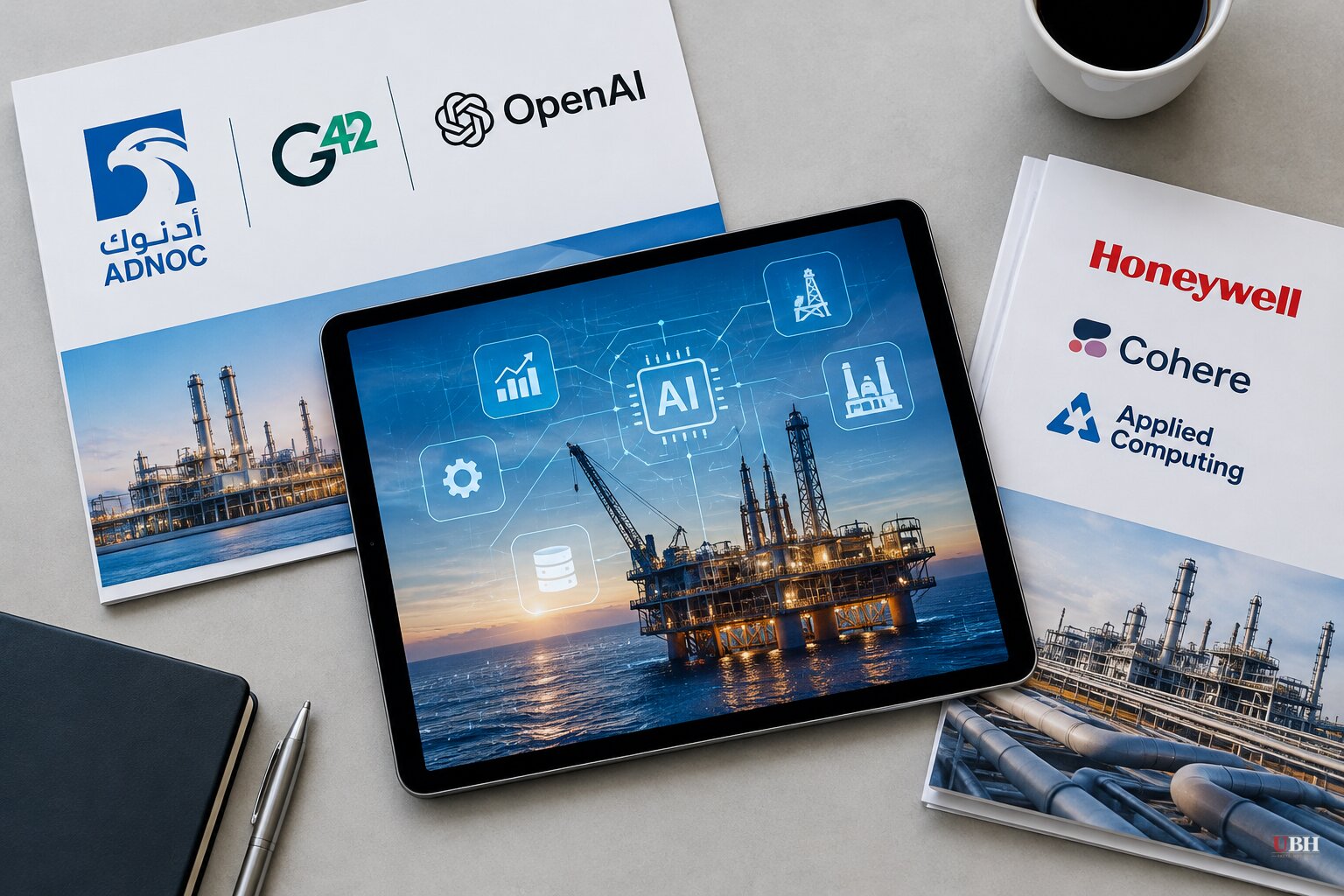
The multi-year partnership among ADNOC, G42 and OpenAI, announced Monday at ADIPEC in Abu Dhabi, has turned into the headline entry in a wider sales push. Tech companies used the same conference to pitch bespoke AI-driven tools for drilling rigs, refineries and other oil assets.
What ADNOC says it bought
OpenAI Frontier will run alongside ADNOC's subsurface AI platform, ENERGYai, and more than 200 existing AI applications. ADNOC says the goal is to connect operational, capital and commercial decisions and cut down on siloed decision-making.
The work starts with two applications. The first folds field master planning into a single process. That planning has traditionally been assessed through separate subsurface, facilities and economic studies.
Using ENERGYai's reservoir-level intelligence, OpenAI's reasoning models will analyze decades of industrial data covering thousands of wells, multiple reservoirs and hundreds of surface facilities. The objective is to produce and optimize complex, full-field development master plans in hours rather than months.
The second application will connect intelligence across ADNOC's integrated value chain, from production and processing through to refining, logistics, sales and trading. AI agents will continuously forecast crude oil supply, demand, prices and margins.
The technology will operate on G42's AI infrastructure in the UAE, with human experts retaining oversight of consequential decisions.
Dena Almansoori, ADNOC's Group Chief Technology and Innovation Officer, called it "a first-of-its-kind milestone for the energy industry." ADNOC says it wants to become "the world's most technology- and AI-enabled energy company."
The scale of the customer is not small. ADNOC has crude production capacity of approximately 4.85 million barrels per day and natural gas output of 11.5 billion cubic feet per day.
At the opening ceremony, OpenAI CEO Sam Altman appeared alongside UAE officials. Sultan Al Jaber, the UAE's minister of industry and advanced technology and ADNOC's chief executive, put it this way: "From the moment ChatGPT was born, the world has asked what energy can do for AI. And now, together, we will find out what AI can do for energy."
The company says the technology could improve operational efficiency and lower costs. Those projected improvements have not yet been independently demonstrated.
Rivals move in
ADNOC is not the only operator being courted. Dan Jeavons, president of UK-based Applied Computing, said the technology has matured "to the level where it will make a significant change in the operating processes within the sector."
Applied Computing counts numerous veterans of Shell and other producers among its staff. It processes millions of data points from sensors inside oil infrastructure, with the aim of helping operators work more efficiently, identify malfunctions faster and reduce emissions.
Competition in this space is heating up. Honeywell Technologies launched an AI platform at the new Dangote refinery in Nigeria, according to a report published Nov. 5 that described the launch as having come "last week."
Cohere, the Toronto-based AI firm, has been pitching the sector too. A 2025 Cohere e-book says AI "has the potential to change the industry's trajectory quickly, thereby better equipping it to address the growing supply-demand imbalance."
A Cohere post on X from early 2025 projected that the oil and gas market for AI and machine learning will surpass $4.9 billion by 2034.
The critics
Not everyone sees a clean win. Paris Marx, author of the new book Hyperscale, told DeSmog the pattern runs across Amazon, Microsoft, Google and other tech giants.
"It feels like another example of just how intertwined the fossil fuel industry and the tech industry have become since the advent of generative AI taking off," Marx said. "Now it's just fully out in the open how simpatico their interests are, because more data centres means more fossil fuel demand."
Cohere CEO Aidan Gomez has argued publicly that tech should be aligned with "environmental goals." He has also promised his company will help bring down the cost of living for the average Canadian. Cohere did not respond to DeSmog's request for comment. Ottawa has committed $1.6 billion to the company, which has a valuation near $36 billion.
The people question
At ADIPEC, supporters framed the technology as a tool for workers rather than a replacement for them. Angela Wilkinson, secretary general and CEO of the World Energy Council, told Fox News Digital the most encouraging part of the Altman and Al Jaber presentations was the emphasis on people. "It isn't about AI taking decisions for humanity, it's about AI enabling people to make better decisions," she said.
Amos Hochstein, a managing partner at TWG Global and a former senior adviser to President Joe Biden, said "the energy sector is going to be one of the big beneficiaries of AI coming into the sector." He also cautioned that AI's rapid expansion has to be weighed against its financial and societal costs, and that the U.S. must stay a leader in the technology.
Backdrop
The pitch lands while the war involving Iran and disruptions to the Strait of Hormuz keep pressure on global energy supplies.
The next test is concrete. ADNOC's field master planning application is meant to ingest decades of well and facility data. Whether it delivers the promised speed, and what it costs, will determine whether the rest of the industry follows.
Sources used for this briefing
6 links from 5 independent newsrooms (syndicated copies of the same report count once)
These are the sources it draws on, linked so you can verify.


