
Unbiased headlines. Facts, not spin.
Unbiased Headlines is an independently owned news organization. We bring you the facts, not opinions, written fresh from 110+ named sources. Sources linked so you can verify it yourself.
 energy
Notable (6/10)
energy
Notable (6/10)
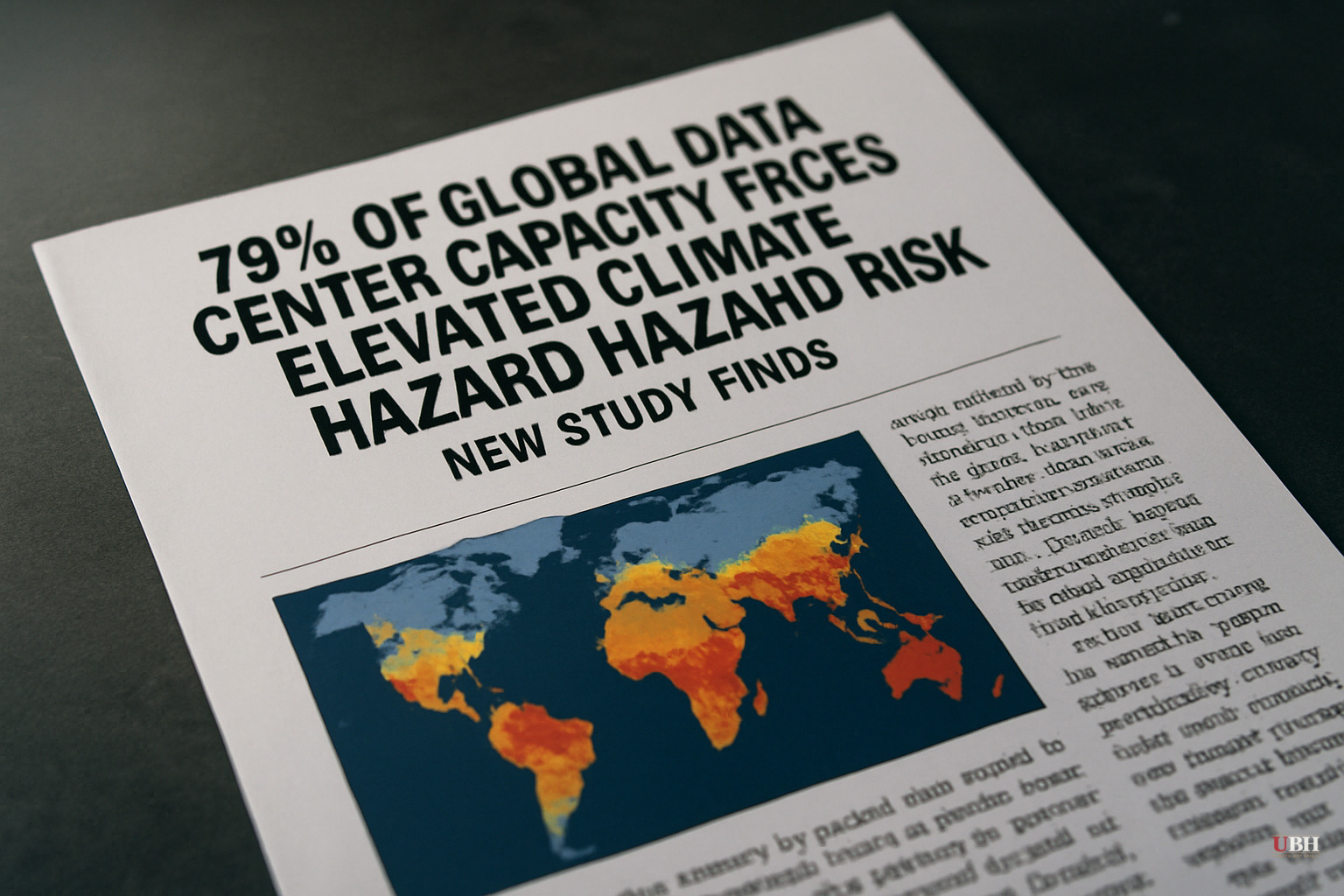
79% of Global Data Center Capacity Faces Elevated Climate Hazard Risk, New Study Finds
Since our prior coverage of AI infrastructure pressures, a new quantitative risk assessment has put concrete numbers on a problem the industry has largely treated as a future concern.
What the Study Actually Found
First Street, a climate risk analytics firm, published a report Thursday analyzing 97 global data center markets. The headline number: 79% of all data center capacity globally is exposed to acute risk from severe, climate-induced events, including flooding, extreme winds, and wildfires. These aren't theoretical risks. They directly increase downtime, drive up insurance premiums, and force costly repairs.
Just over half of all data center capacity sits in markets experiencing chronic climate stress, specifically extreme heat and drought, according to First Street. That second category matters more to long-term economics. Heat forces cooling systems to work harder and longer, burning more energy and raising operating costs. Drought threatens water supplies that cooling towers depend on.
First Street CEO Matthew Eby put it plainly: "Most underwriting for real assets still uses historical data, but the climate is no longer behaving the way the historical record would predict."
The Underwriting Problem
The study's sharpest warning isn't about storms or heat waves in isolation. It's about how investors and developers are pricing risk. Data centers are built to run for 20 to 30 years. The models used to underwrite them typically look backward, at historical precipitation, historical fire frequency, historical temperature ranges. Those models don't account for the physical changes already locked in.
First Street Chief Economist Jeremy Porter said the backward-looking models are simply "not correcting for climate" and that the industry is "underestimating" total risk exposure. Government flood models, which developers commonly reference for siting decisions, are among the specific targets of his criticism. As the atmosphere warms, clouds hold more moisture and rainfall events become more intense. Older precipitation maps don't capture this pattern.
Eby's practical takeaway: "Investors who incorporate these factors into underwriting and capital allocation decisions will be better positioned to identify resilient markets and avoid mispriced risk."
Why This Lands Now
The timing is not coincidental. AI model training and inference are extraordinarily power-hungry, and the global buildout of data center capacity has accelerated sharply over the past two years. As OilPrice.com reported in related coverage of the AI energy demand surge, the scale of new construction is straining both grid capacity and energy supply chains.
Siting decisions made today under outdated risk models will govern operations through the 2040s and 2050s. A data center built on current flood zone maps in a coastal or riverine market may look financially sound today and be materially impaired in 15 years. This could happen not from a single catastrophic event but from steadily rising insurance costs, increasing cooling expenses, and more frequent operational interruptions.
The Strongest Counterargument
Skeptics of climate risk modeling make a legitimate point. Long-range climate projections carry their own uncertainty. A 20-year forecast of flood frequency or drought severity involves model assumptions that can be wrong, and the history of infrastructure risk modeling includes plenty of over-engineered responses to threats that didn't materialize on schedule. Data center operators who have invested heavily in redundancy, backup power, and hardened cooling systems argue that engineered resilience can offset much of the locational risk that aggregate market-level statistics suggest.
At the individual-site level, this is defensible. The First Street study operates at the market level, meaning it flags regions with elevated exposure. Specific facilities within those regions may be far better or worse positioned than the market average. The study does not name individual data centers as inadequately protected.
The counterargument doesn't fully answer the chronic stress problem. A facility can be flood-hardened and still face a structurally higher electricity bill every summer because cooling demand rises as ambient temperatures climb. That's a cost problem, not an engineering one.
What the Numbers Don't Settle
First Street's report does not disclose the specific methodology used to assign "elevated risk" thresholds, nor does it break down which of the 97 global markets carry the highest exposure. Without that granularity, developers and investors cannot use the top-line numbers to make specific siting decisions. They tell you the aggregate is large. They don't tell you whether Northern Virginia, Singapore, or Phoenix is the worst offender.
The practical unresolved question: whether the capital markets currently pricing data center real estate and REITs are actually discounting elevated climate risk, or whether the mispricing Eby describes is already embedded in trillions of dollars of infrastructure investment that won't be tested until the 2030s.
Sources used for this briefing
2 links from 2 independent newsrooms (syndicated copies of the same report count once)
These are the sources it draws on, linked so you can verify.


