
Original briefings. Zero spin.
Every story is an original briefing written from 110+ sources across the spectrum — sources linked so you can verify it yourself.
 economy
Notable (5/10)
August 21, 2026 at 06:33 PM
economy
Notable (5/10)
August 21, 2026 at 06:33 PM
4.1% Unemployment Rate Doesn't Match What's Happening in the Job Market, Private Analysis Finds
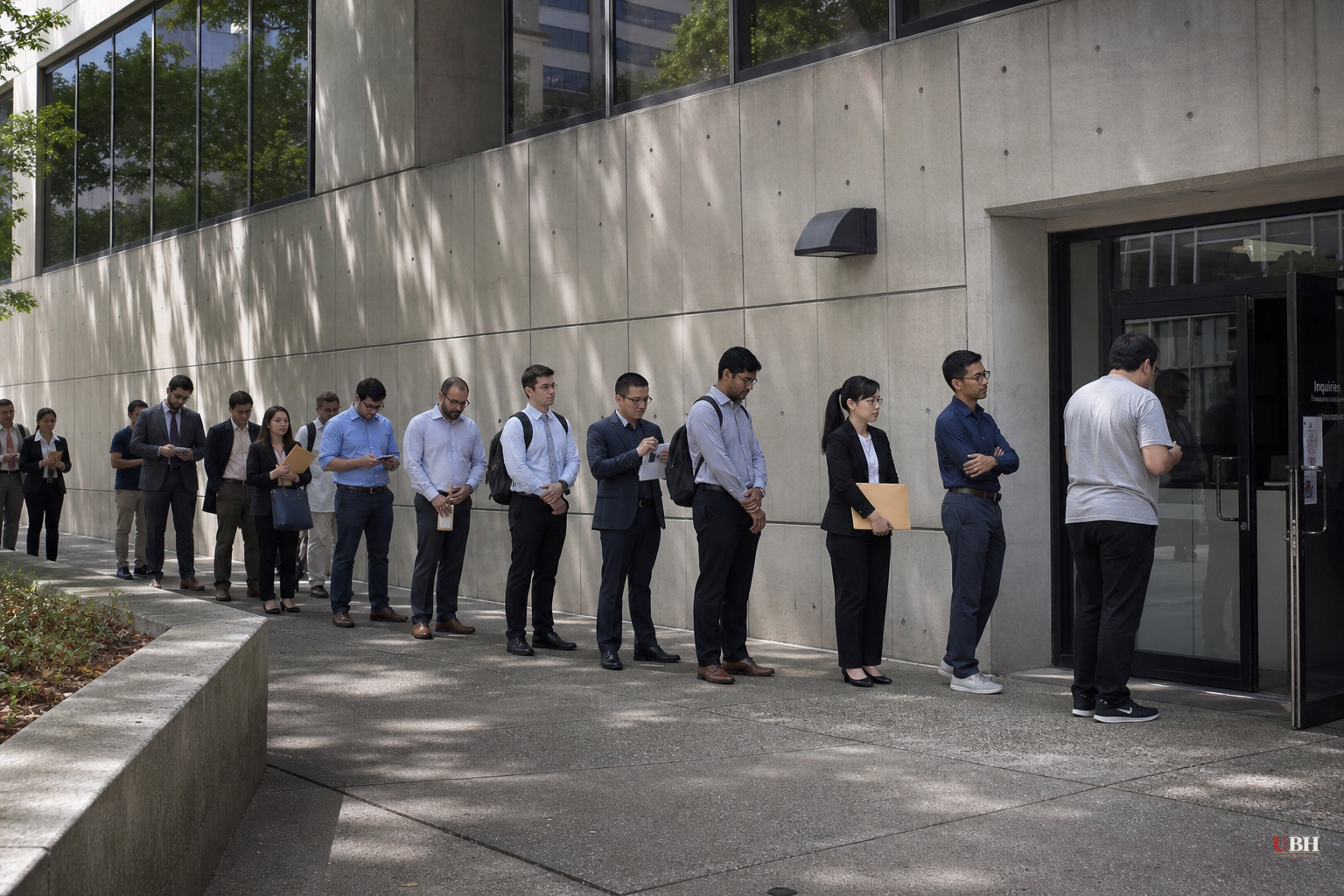
The headline unemployment rate says the U.S. job market is fine. A private economic research group says that number is hiding a much uglier picture.
The Bureau of Labor Statistics put the unemployment rate at 4.1% in July, a level economists generally consider healthy. But the Ludwig Institute for Shared Economic Prosperity, a nonpartisan economic research firm chaired by Gene Ludwig, says its own measure, the True Rate of Unemployment, put "functional unemployment" at 24.9% that same month.
The gap between those two numbers comes down to definitions. The official rate only counts people without a job who are actively looking for one. LISEP's measure adds two more groups: people working part-time who want full-time work but can't find it, and people working full-time who still earn less than $26,000 a year before taxes, which the group defines as a poverty-level wage.
Ludwig says the trend line matters as much as the number itself. Functional unemployment has now risen for four straight months, according to the Ludwig Institute, though it remains below the 25.2% mark recorded in December.
"We shouldn't read too much into a single month, but four months begin to tell a story," Ludwig said in a statement Thursday. "Functional unemployment is moving higher while workforce participation is moving lower. If this continues, it would suggest the labor market is losing strength despite what we may see in the headline unemployment numbers."
Ludwig argues a genuinely strong labor market should be pulling more people into the workforce, not fewer. "We need to pay attention when that starts moving in the other direction," he said. "It could be a sign that people aren't finding the opportunities they want or need, which matters for the broader economy."
Mainstream economists push back hard
Not everyone buys it. Gregory Daco, chief economist at EY-Parthenon, told CBS News that a 20-percent-range unemployment figure "does not line up with anything we see in the U.S. economy." If a quarter of the workforce were truly jobless or destitute in the way the term "unemployed" normally implies, it would show up everywhere: in consumer spending collapsing, in credit card defaults spiking, in food bank lines stretching around blocks nationwide. LISEP's own definition is broader than "unemployed" in the everyday sense, and folding in low-wage full-time workers alongside the jobless conflates two very different problems.
Daco himself pointed to real softening in the labor market. Employers unexpectedly cut 23,000 jobs in July, badly missing economists' forecasts, according to CBS News. Wage growth is running at 3.2% annually while inflation, measured by the Consumer Price Index, came in at 3.4% for July. The typical worker's raise isn't even keeping pace with rising prices.
Daco attributes slowing wage growth to employers tightening costs. "You see ongoing moderation of wage growth, which is reflective of employers controlling costs, and wanting to make sure they have the right talent and the right skills at the right price, and not spend excessively," he told CBS News.
That restraint has consequences beyond the paycheck. Consumer spending drives roughly two-thirds of U.S. economic activity, and stagnant wages mean less of it. "One company's wage bill is another person's income, and in turn their capacity to spend," Daco said.
Two numbers, two definitions
The 4.1% rate accurately measures what it's designed to measure: people without work who are actively searching. LISEP's 24.9% measures something different. Financial precarity among workers broadly, including people who technically have jobs but aren't earning enough to live on by the group's own poverty-wage threshold.
The disagreement isn't really about the math. It's about which definition better captures whether ordinary Americans are actually doing okay. A worker stuck in a part-time job while wanting full-time hours isn't "unemployed" by the official count, but they're also not thriving. A full-time worker earning under $26,000 a year isn't jobless either, but try covering rent, groceries, and a car payment on that in most American cities.
The Ludwig Institute isn't calling for the government to scrap the official unemployment rate. It's arguing policymakers and the public need to look at both numbers side by side. Whether the Bureau of Labor Statistics or the Federal Reserve gives that alternative measure any weight in future policy decisions remains to be seen. For now, the July jobs report and the next CPI release will be the numbers that actually move markets and Fed rate decisions, not LISEP's TRU index.
Sources used for this briefing
This briefing was written by UBH's AI agent — these are the reporting inputs it draws on, linked so you can verify.


