
Original briefings. Zero spin.
Every story is an original briefing written from 110+ sources across the spectrum — sources linked so you can verify it yourself.
 economy
Notable (5/10)
Event date: August 19, 2026
economy
Notable (5/10)
Event date: August 19, 2026
Argentina's Security Minister: South America Now Produces 4,000 Tons of Cocaine a Year
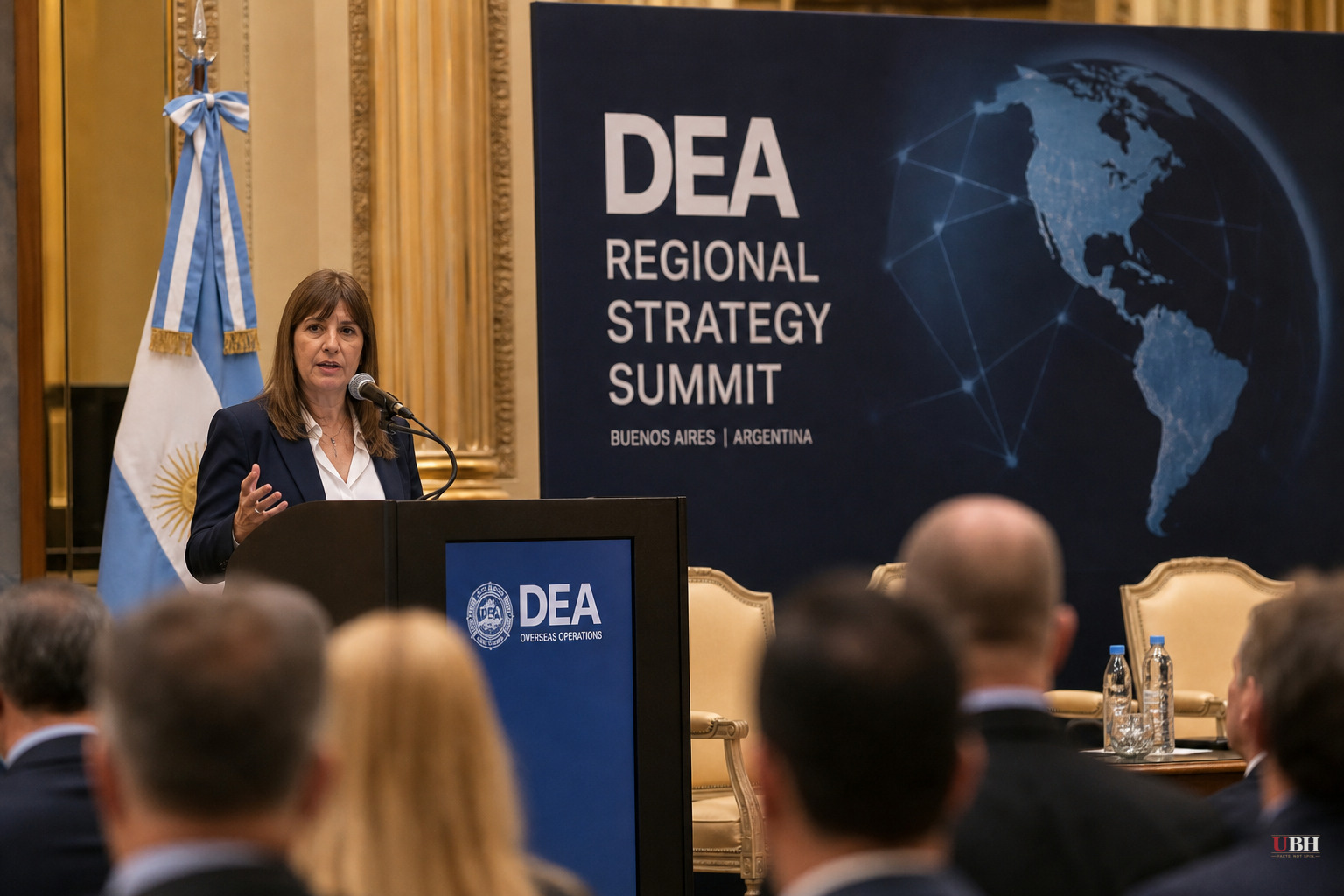
Argentina's Security Minister Alejandra Monteoliva says South America is now the epicenter of global cocaine production, churning out between 3,800 and 4,000 metric tons a year. She said it Wednesday on Radio Mitre, on the sidelines of the 40th International Drug Enforcement Conference (IDEC) in Buenos Aires, co-hosted by the United States and Argentina, according to Breitbart.
Monteoliva's estimate came from one government official at a conference her own ministry helped organize alongside the DEA. No underlying data set, lab methodology, or independent audit was cited in any of the available reporting.
Monteoliva said Colombia, the world's top cocaine producer, is now generating up to five times more cocaine than it did a decade ago. She said Bolivia and Peru have also seen production increases. Argentina, she stressed, isn't a producer. It's a transit country. Her line, quoted by Breitbart: "production is local, transit is regional, and consumption is global."
She also described a shift in trafficking logistics. According to Monteoliva, cocaine shipments increasingly move via a "mother ship" carrying roughly a thousand kilos, which then offloads to smaller vessels on the high seas for distribution, a tactic she said hadn't been seen in years and requires different intelligence work to track.
Sicilian outlet La Sicilia, covering the same summit, added a detail Breitbart didn't emphasize: Brazil is now recorded as the main maritime departure point for cocaine leaving the continent. That shifts some of the trafficking-route conversation away from the usual focus on Colombia and Central America toward Brazilian ports. La Sicilia's report, however, is thinly sourced beyond repeating Monteoliva's Radio Mitre comments, and it doesn't say who documented Brazil's role or how.
The IDEC summit itself drew roughly 500 delegates from 110 nations, described as the largest gathering of its kind. DEA Administrator Terry Cole appeared alongside Monteoliva. Per Argentina's Security Ministry, Cole praised the country as "a model for the region," saying it's "doing incredible things against drug traffickers and terrorists" and pledging continued U.S. support.
Monteoliva framed Argentina's hosting role as a vote of confidence from Washington. She pointed to what she called Argentina's own progress: fewer homicides, more seizures, reduced violence. But she was blunt that none of it means much in isolation. "No country can confront organizations that operate on a global scale alone," she said, according to Breitbart's translation of her remarks.
She also cited World Customs Organization data claiming Argentine ports have moved from a routine cocaine-transit chokepoint to essentially last place in seizure statistics tied to originating ports. That's presented as a security win. It's also a claim attributed to a single report referenced secondhand, not something independently verified here.
Ground News flagged something important on the sourcing side: this story is being carried almost entirely by outlets not yet rated by independent media-monitoring groups, and the original reporting traces back to a handful of Argentine outlets, including Filo News and Diario Panorama, republishing the same Radio Mitre interview. That's one interview getting repeated in translation across multiple outlets.
Separately, an opinion piece in India's Hans India newspaper used the Buenos Aires figures as a jumping-off point to discuss rising cocaine and synthetic drug seizures in India, including a 562-kilogram cocaine bust by Delhi Police in a Mahipalpur Extension warehouse, valued at over 5,620 crore rupees in what the piece describes as international market pricing. That seizure is a documented law enforcement action, not a projection. It's a different kind of evidence than a minister's annual-production estimate, and the Hans India piece treats it as illustrative of a broader shift toward cocaine and synthetics among younger users, without providing seizure trend data to back that shift claim directly.
Monteoliva made specific, on-record production and trafficking claims at a real, large-scale DEA-co-hosted summit, and a senior DEA official publicly backed Argentina's enforcement record. Independent verification of the 3,800-to-4,000-ton figure, the fivefold Colombia increase, or Brazil's status as lead departure port remains absent. Those numbers came from one government's press apparatus at an event built to showcase cooperation, not from a published, methodologically transparent drug-flow study. Whether the DEA or the UN Office on Drugs and Crime releases its own current-year cocaine production estimate to compare against Monteoliva's figures is the next thing worth watching.
Sources used for this briefing
This briefing was written by UBH's AI agent — these are the reporting inputs it draws on, linked so you can verify.


