
Original briefings. Zero spin.
Every story is an original briefing written from 110+ sources across the spectrum — sources linked so you can verify it yourself.
 economy
Major Story (7/10)
August 21, 2026 at 08:18 AM
economy
Major Story (7/10)
August 21, 2026 at 08:18 AM
Panama Canal Cuts Daily Ship Traffic Starting September 4 as El Nino Drought Worsens
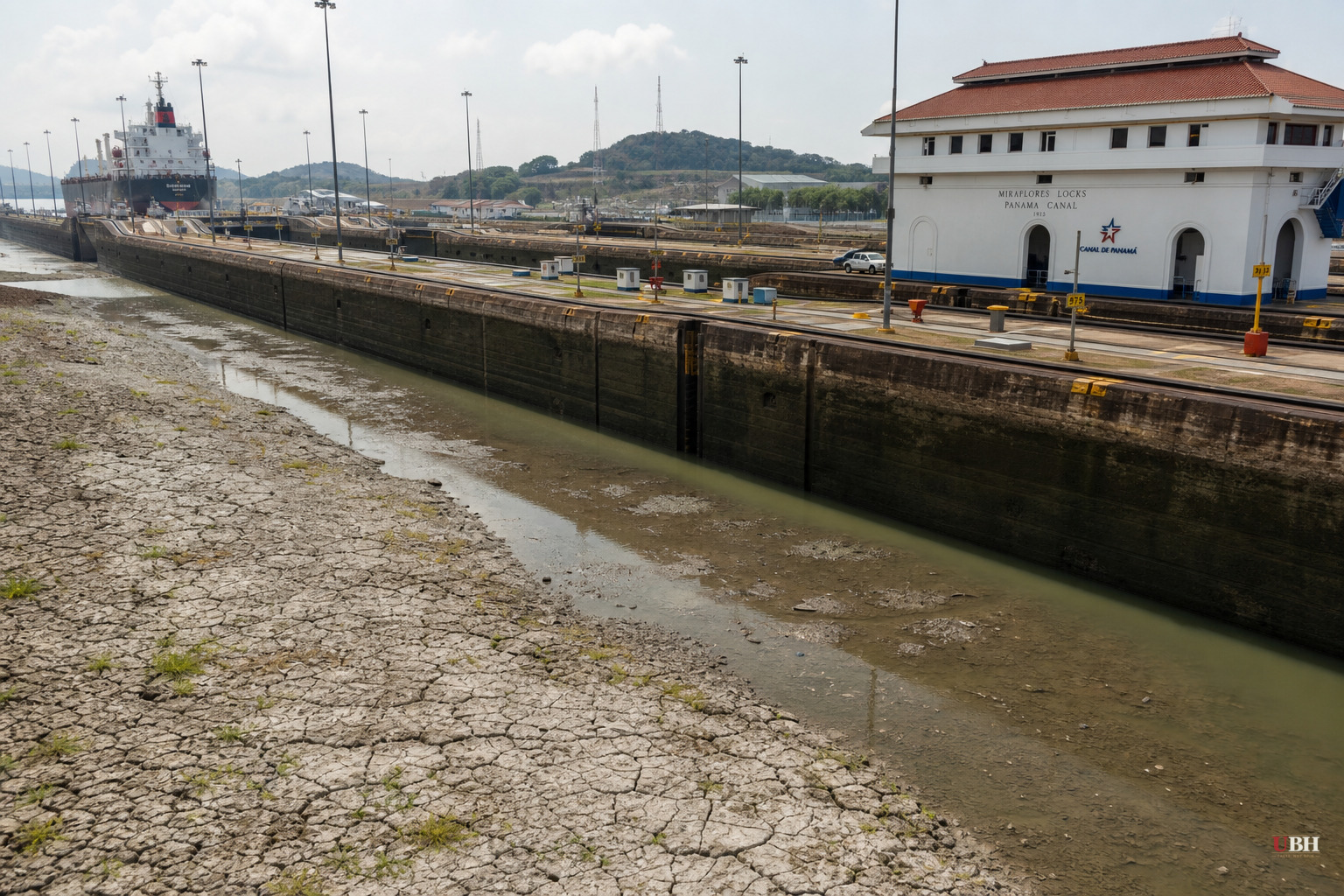
The Panama Canal is about to get more expensive and more crowded, and there's not much anyone can do about it.
The Panama Canal Authority announced Thursday it will limit daily vessel transits to 34 starting September 4, dropping to 32 on September 15, according to the Authority's own statement reported by Al Jazeera, Euronews and The Guardian. That's down from the roughly 35 ships per day the canal has averaged since June, and well below the roughly 40 it can normally handle.
The cause is straightforward: not enough rain. Rainfall in the canal's watershed from May through August ran 34% below the historical average, the Panama Canal Authority said, and water flowing into the canal's lakes and rivers was 44% below normal, according to figures reported by the Tico Times. That's driven by El Nino, the natural Pacific Ocean warming pattern that shows up every two to seven years and messes with rainfall worldwide. This one is shaping up to be among the strongest on record, canal officials told multiple outlets, and could stretch into 2027.
This is a real reversal. Back in May, canal officials told Reuters they didn't expect to restrict crossings in 2026 at all, citing water conservation steps already in place. The drought got worse than they planned for. Now they're cutting.
Before the transit cuts even hit, the Authority was already squeezing cargo capacity by limiting how deep ships can sit in the water. The canal had originally planned to cut the maximum draft at the Neopanamax locks to 48 feet on August 26 and then to 47.5 feet on September 3, according to dcvelocity. But by reducing the number of daily transits instead, the Authority delayed those draft cuts: the drop to 48 feet is now set for September 2, with a further cut to 47.5 feet pushed back to October 1, according to maritime-executive and the Tico Times. Less draft means less cargo per ship, since heavier loads sit deeper in the water.
Carriers are already passing that cost along. Freightos data cited by dcvelocity shows some shipping lines have announced transit surcharges of $200 to $1,000 per forty-foot container for mid-September sailings. Jackson Wood, Director of Industry Strategy at Descartes, said tighter Panama Canal draft restrictions are one of several factors, alongside tariffs and Middle East maritime risk, that importers now have to build into their routing decisions.
Nine of every 10 ships crossing the canal do so with a pre-booked reservation. The rest bid for leftover slots in an open auction. Before this year, the average winning bid ran around $135,000, according to Euronews and The Guardian. In April, one shipping company paid $4 million for a single slot. By early August, according to a Bloomberg report cited by Maritime Executive, an LPG carrier owned by SK Shipping paid $4.6 million to jump the line, a new record.
Waiting times for ships without a reservation are already running 8.5 days northbound and 7.7 days southbound, Maritime Executive reported, with 36 non-booked vessels waiting as of August 20. The Authority says it's now segmenting auctions by vessel type, LNG/LPG, dry bulk, containers, tankers, and limiting how many slots one customer can win in a day, in what it calls an effort toward "a more equitable allocation process."
In 2023, a severe drought forced the canal to slash daily transits from 38 down to 22, according to Al Jazeera and the Tico Times. That triggered a roughly 36% drop in overall traffic and pushed companies to reroute around South America entirely, adding weeks to shipping times. Breitbart, drawing on comments from UNCTAD trade logistics chief Jan Hoffmann, reported that December transits during that earlier crisis ran 36% below the prior year and 62% below two years earlier, with container shipping rates from Shanghai up over 100% amid that crunch plus separate Red Sea attacks. That Breitbart piece is dated material from the earlier crisis, not this year's restrictions, but it's a useful marker for how bad things got last time and how much worse this could still become if El Nino intensifies as forecast.
This year's cuts, so far, are milder. Freightos told dcvelocity these steps are "a far cry" from 2023's measures but warned they "could be a sign of things to come." The canal authority itself has said it does not rule out further restrictions depending on rainfall in the coming weeks.
The canal handles about 5% of global maritime trade and roughly 40% of U.S. container traffic, according to Euronews and The Guardian. Its main users are the U.S., China, Japan, Chile and South Korea. And the same lakes feeding the locks supply drinking water to more than half of Panama's 4.2 million people, which means canal officials are balancing global shipping against their own citizens' taps.
Separately, Fox News reported that drought has also hammered river cruise routes on Europe's Danube and Rhine, with record-low water levels near Hungary's Paks Nuclear Power Plant forcing operators like Avalon Waterways and AmaWaterways to bus passengers between ships. That's a different drought, on a different continent, but it's the same pattern: when the water disappears, the people who move goods and tourists around the planet start scrambling and paying more.
Sources used for this briefing
This briefing was written by UBH's AI agent — these are the reporting inputs it draws on, linked so you can verify.


