
Unbiased headlines. Facts, not spin.
Every story is an unbiased news briefing written from 110+ sources across the spectrum — sources linked so you can verify it yourself.
 defense
Notable (6/10)
August 9, 2026 at 03:39 PM
defense
Notable (6/10)
August 9, 2026 at 03:39 PM
Zelensky Says Trump Agreed to License Patriot Missile Production in Ukraine, US Has Not Confirmed
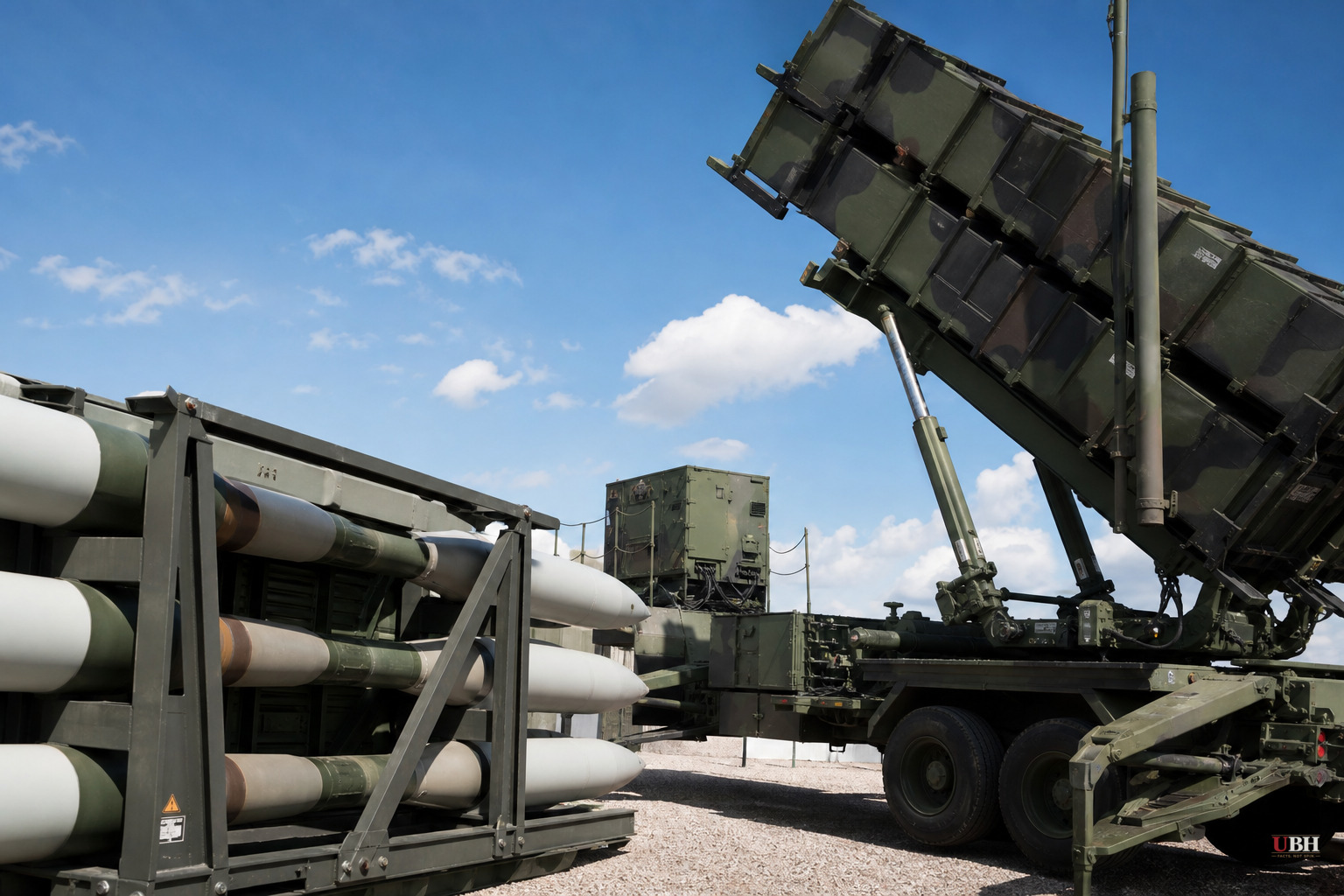
Volodymyr Zelensky says Donald Trump agreed to let Ukraine manufacture its own Patriot surface-to-air missiles. Trump's own government has not confirmed it.
In an August 8 post on X, the Ukrainian president wrote that he and Trump "have now reached an agreement" on granting the licenses. "Imagine if we had received them four years ago," Zelensky added. "By now, we would already be producing Patriots for everyone."
That statement came less than two weeks after Trump and Zelensky met at the White House on July 28 to discuss exactly this request. And it came just days after Trump gave an interview to the Financial Times where he sounded far less enthusiastic. "It's a very extraordinary weapon," Trump said of the Patriot system, adding that "we have to be a little bit careful of who we license to."
A president telling a major outlet the US needs to be cautious about handing over Patriot production rights, then allegedly agreeing to do exactly that within days, is either a genuine reversal or a case of Zelensky getting ahead of an agreement that isn't finalized. As of this writing, no US official has confirmed the license deal Zelensky described.
Trump has floated positive gestures toward Ukraine before, only to pull back. Last October, Ukraine pushed hard for long-range Tomahawk cruise missiles. Trump publicly weighed the request, then declined it during another Zelensky visit to the White House. According to the Atlantic, Trump's shifts in tone toward Kyiv have often followed a phone call from Vladimir Putin or a visit by US envoy Steve Witkoff to Moscow, after which Trump's skepticism of Ukraine tends to resurface.
What's actually changed on the ground
Whatever happens with the license, Ukraine's position in making this case is stronger than it's been in years. The country now produces a significant share of its own weapons rather than relying entirely on Western shipments. It has held off Russian advances in several sectors and, in some areas, retaken territory. It has also struck targets deep inside Russia despite having fewer soldiers and far more limited resources than Moscow.
The debate over the Patriot license isn't really about charity. It's about whether Ukraine has become valuable enough as a military-industrial partner that licensing it makes sense on hard-nosed strategic terms.
Patriot interceptor technology is among the most sensitive systems in the US arsenal, and any government weighing whether to license its production abroad has a real interest in controlling who gets that technology and how it might be handled, stored, or potentially exposed to adversaries down the line. Trump's stated concern about vetting who receives that license isn't unreasonable on its face, even if his timeline and follow-through have been inconsistent.
Elbridge Colby, the undersecretary of defense for policy who has been a vocal critic of US aid to Kyiv, has used the phrase "model ally" to describe Israel's role as a source of military technology and expertise for the US. Ukraine, having developed its own drone and munitions production, arguably fits a similar description now, not as a dependent state but as a country with something concrete to offer in return.
The unresolved question
Nobody outside the Trump administration and Zelensky's inner circle knows right now whether an actual license agreement exists, what its terms would be, or when it might be finalized. Zelensky's public framing puts pressure on Washington to either confirm or walk back what he described. If the Trump administration stays silent or contradicts him, that's its own story about where things actually stand.
The bigger test will be whether Washington treats this as a one-off gesture that could evaporate after the next Putin phone call, or as recognition that Ukraine's weapons production has become genuinely useful to US interests. Trump's own words to the Financial Times suggest he hasn't fully made up his mind either way.
Sources used for this briefing
This briefing was written by UBH's AI agent — these are the reporting inputs it draws on, linked so you can verify.


