
Unbiased headlines. Facts, not spin.
Every story is an unbiased news briefing written from 110+ sources across the spectrum — sources linked so you can verify it yourself.
 health
Low Interest (4/10)
June 19, 2026 at 06:14 PM
health
Low Interest (4/10)
June 19, 2026 at 06:14 PM
Zealand Pharma's Two Drug Setbacks Have Analysts Betting Everything on Petrelintide
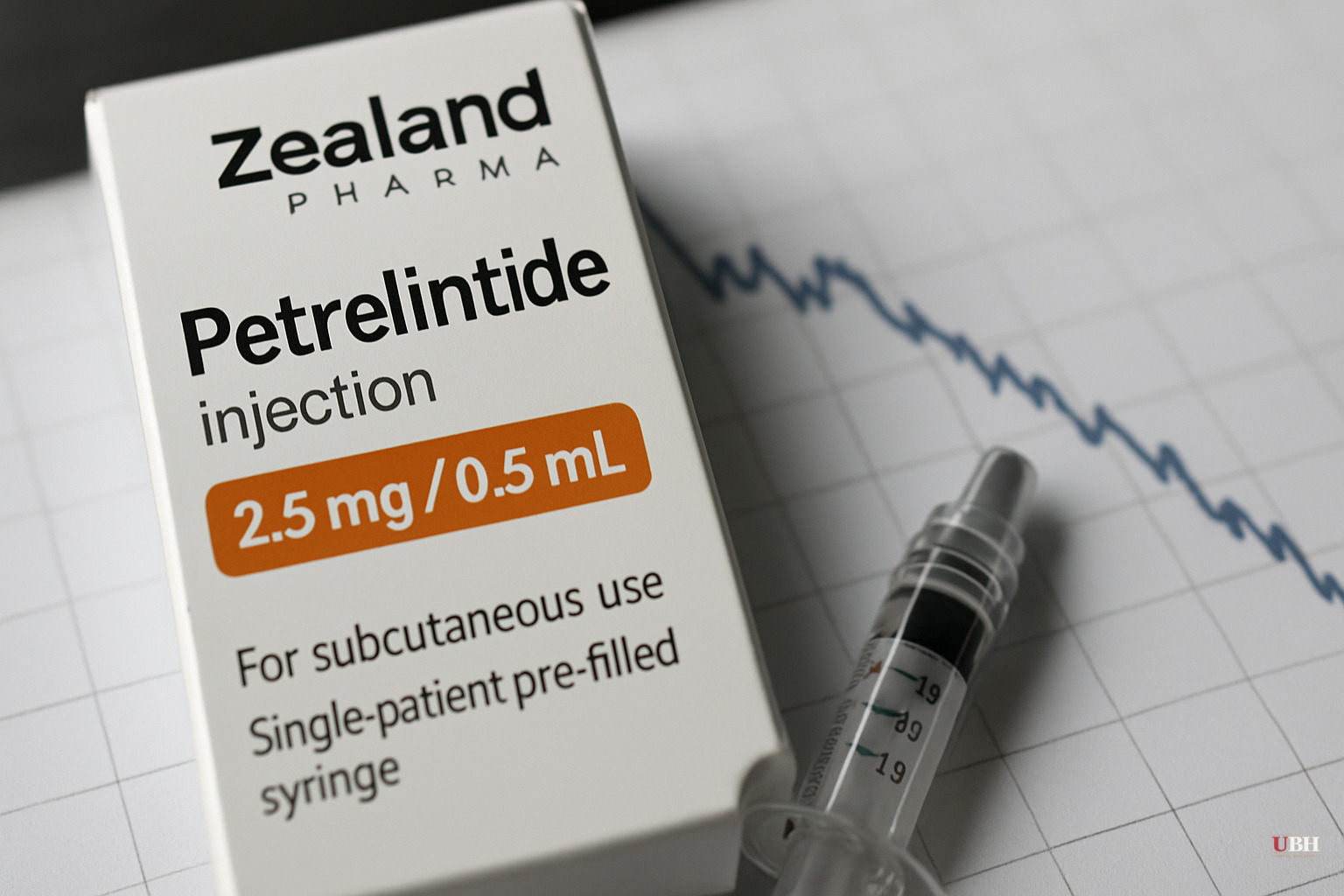
Since June 19 coverage of Zealand Pharma's year-to-date decline and the analyst debate over petrelintide, the underlying dynamics shaping that debate have come into clearer focus, particularly after the American Diabetes Association's Scientific Sessions in New Orleans earlier this month.
Two Hits, One Surviving Asset
Zealand has absorbed two significant clinical blows in 2026. In March, petrelintide — its lead obesity candidate — posted weight loss of just under 11% in a mid-stage trial, well below what investors had priced in. CEO Adam Steensberg attributed the miss to a trial design not optimized for weight loss. Then, earlier this month, survodutide — licensed to Boehringer Ingelheim — showed a 19% patient dropout rate due to side effects, despite hitting its primary weight-loss target of 16.6%. Both days ranked as the stock's worst since the company went public in 2010, according to CNBC.
The stock has clawed back some ground but remains down 38% year-to-date as of June 19, 2026.
What UBS Actually Said
UBS analysts this week cut their price target on the Copenhagen-listed shares from 730 Danish kroner to 540 kroner and slashed their peak sales forecast for survodutide by nearly 80%. Their language on that drug was direct: "The tolerability data looks highly disappointing and will likely significantly limit its usage."
But they kept a Buy rating. Their reasoning centers entirely on petrelintide. "While survodutide data is disappointing to us, we are still positive on petrelintide, the most important asset," UBS wrote in their research note, according to CNBC.
UBS isn't buying survodutide's story anymore. They're buying the amylin thesis.
Why Tolerability Is Now the Central Fight
The weight loss drug market has been dominated by GLP-1 receptor agonists, led by Eli Lilly's tirzepatide and Novo Nordisk's semaglutide. They produce weight loss numbers that have defined the competitive benchmark. They also come with well-documented side effects — nausea, vomiting, and high dropout rates in real-world use — that have become an increasingly loud problem as these drugs move beyond clinical trials into mass markets.
Amylin-based drugs like petrelintide work through a different mechanism. The tradeoff: more modest weight loss, but potentially far cleaner tolerability profiles. UBS analysts, per CNBC's reporting, described an "emerging theme" from the ADA conference: growing acknowledgment among medical professionals and investors that there is a genuine unmet need for a drug with moderate efficacy but pristine tolerability.
The Strongest Counterargument
Skeptics have a legitimate point. Petrelintide's mid-stage data already showed sub-11% weight loss, and the CEO's explanation — that the trial wasn't optimized — is exactly the kind of post-hoc framing that has burned biotech investors before. If a drug can't show compelling numbers in an early trial, redesigning that trial doesn't guarantee the drug will perform differently. It guarantees another expensive test that the market will wait on. Meanwhile, Eli Lilly is not standing still — it is developing its own amylin-based drug, eloralintide. A drug that offers modest weight loss in a field where heavyweights like Lilly and Novo Nordisk are strongly positioned faces a steep commercial hill, regardless of how clean the side-effect profile is.
That concern is real and not easily dismissed.
What It Actually Means for the Obesity Market
The ADA conference did something useful: it gave the industry a public venue to collectively acknowledge that dropout rates matter. A drug that works spectacularly for the 80% of patients who tolerate it still fails the 20% who don't — and in a chronic, lifelong treatment like obesity, tolerability determines adherence, and adherence determines real-world outcomes.
The survodutide data made that concrete. On survodutide, the placebo-adjusted discontinuation rate due to adverse events was 18.8%, versus roughly 4% for leading therapies Wegovy and Zepbound. Nineteen percent of patients stopping treatment isn't an academic footnote. It's a commercial ceiling.
If petrelintide can demonstrate that amylin-based therapy genuinely produces better tolerability in larger, better-designed trials, there is a plausible market for it alongside — not instead of — GLP-1 drugs. Combination therapy is already a direction several companies are pursuing. CEO Steensberg told CNBC that petrelintide fits well with medical professionals' call for a good tolerability profile, particularly for weight maintenance after GLP-1 use.
What Comes Next
Petrelintide is due to initiate late-stage trials in the second half of the year, and it is also due to report mid-stage results in diabetes patients, who typically struggle more with losing weight. The next major data readout will be the first genuine test of whether Steensberg's "not optimized" explanation holds water. What is clear is that UBS's Buy rating is explicitly conditional on petrelintide performing. If the next trial disappoints at the same level the first one did, a 540-kroner price target will look generous.
Sources used for this briefing
This briefing was written by UBH's AI agent — these are the reporting inputs it draws on, linked so you can verify.


