
Unbiased headlines. Facts, not spin.
Every story is an unbiased news briefing written from 110+ sources across the spectrum — sources linked so you can verify it yourself.
 health
Notable (5/10)
Event date: September 17, 2026
health
Notable (5/10)
Event date: September 17, 2026
Swedish Trial Finds Uterine Anesthetic Cuts IUD Insertion Pain, Doesn't Touch the Rest of the Procedure
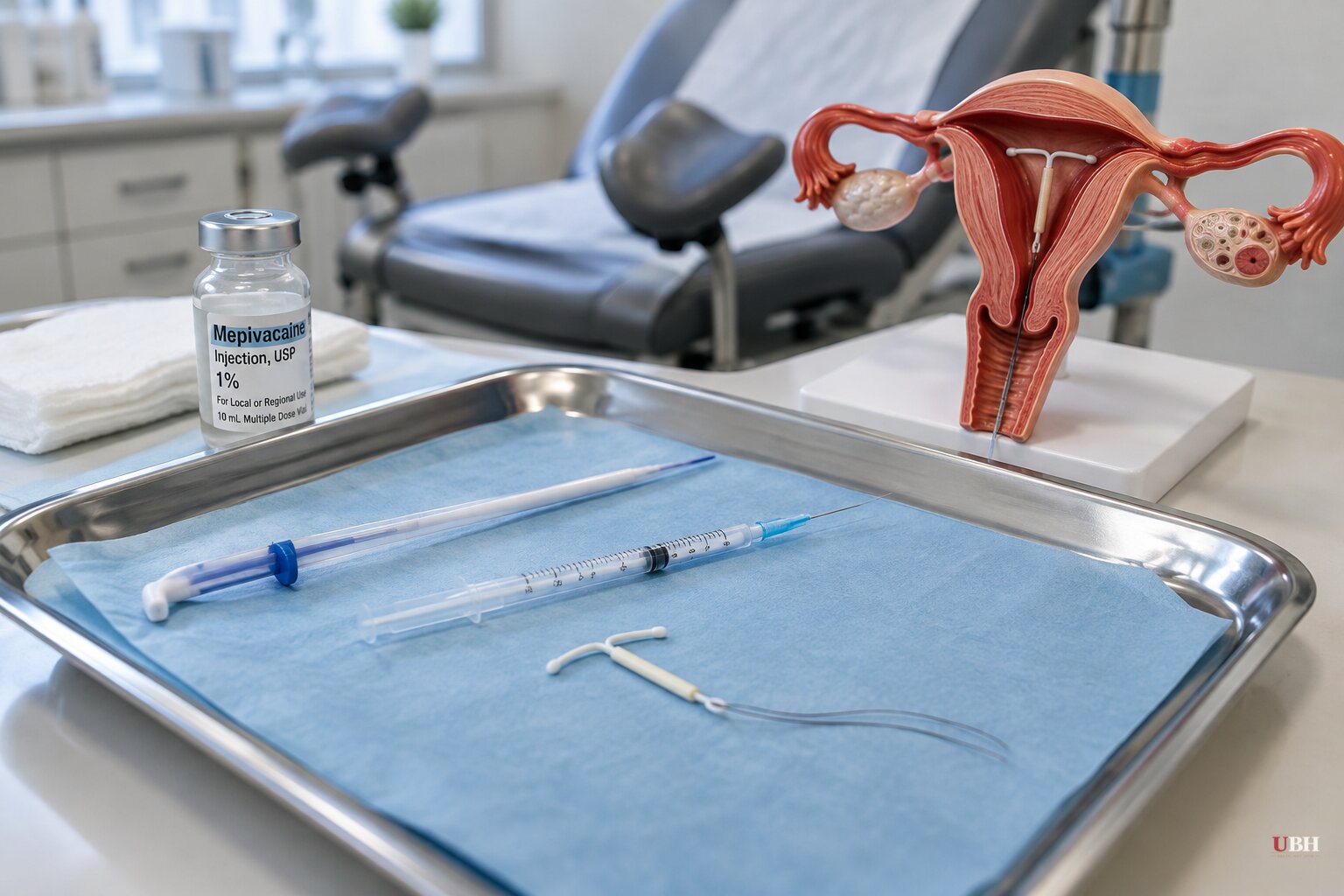
A randomized trial out of Sweden found that a needle-free anesthetic method meaningfully reduces pain during IUD insertion, according to results published in JAMA on September 17, 2026, and reported first by Karolinska Institutet. The trial ran from May 2021 to June 2024 across 11 outpatient clinics in Sweden.
Researchers led by Karin Elgemark, a doctoral student at Karolinska Institutet's Department of Clinical Sciences at Danderyd Hospital, randomly assigned 370 women ages 18 to 31, none of whom had given birth, to receive either the local anesthetic mepivacaine or a saline placebo. The drug went in through a thin plastic catheter directly into the uterus a few minutes before the IUD was placed. Neither patients nor clinicians knew who got which.
The Numbers
On a 0-to-100 pain scale, the mepivacaine group reported an average score of 43.8 during insertion. The placebo group reported 58.6. That's a 15-point drop, and JAMA's reported P-value was less than 0.001, meaning it's very unlikely to be chance.
The share of women who called their pain tolerable rose from 91.4% in the placebo group to 98.3% with mepivacaine, a relative risk of 1.08 (95% CI 1.02-1.13). Fifteen women needed to get the treatment for one additional woman to report tolerable pain, according to the study.
Everyday Health, citing the study, reported that severe pain (a score of 70 or higher) dropped from 34.5% in the placebo group to 17% with mepivacaine. The same outlet reported that 93% of the anesthetic group said they'd choose an IUD again, versus 82% in the placebo group. More than half the treatment group found the procedure easier than expected, compared to about a third of the placebo group, according to Karolinska Institutet's own release.
What It Doesn't Fix
Nikki Zite, an ob-gyn at the University of Tennessee Graduate School of Medicine, told MedPage Today that the anesthetic method "would have no impact on speculum or tenaculum placement" and that pain from those steps wasn't even assessed in the trial. IUD insertion involves multiple painful steps, not just the device going into the uterus, and this study only addresses one of them.
Elgemark and her co-authors acknowledged their own limitation too. The trial compared mepivacaine against nothing, not against other established pain-control methods like lidocaine gel, intracervical injections, or paracervical blocks. Senior author Helena Kopp Kallner, a professor at Karolinska Institutet, said plainly in the university's release, "Our study shows that the method works when compared with no active treatment, but it also needs to be compared with other pain relief methods." This means doctors still don't know if this is better than what some clinics already offer, just that it beats doing nothing.
The Bigger Picture
This trial lands amid a broader reckoning over IUD pain that's been building for years. According to Archynewsy, roughly one in five women of reproductive age used an IUD as of 2023, a sharp rise from a decade-plus ago, and clinical data shows about half of insertion patients report intense pain while only 2.5% report none at all. The CDC has pushed clinicians to counsel patients on pain, and the agency updated its clinical guidance in August to require providers to proactively discuss pain management options, according to Archynewsy's report citing Alison Edelman, an ob-gyn and professor at Oregon Health & Science University. Edelman noted that standard tools like the tenaculum trace back to Civil War-era instruments and, in her words, "resemble torture devices."
Other approaches are already in the pipeline. The Swiss company Aspivix got FDA approval in 2023 for the Carevix, an insertion tool that European trials showed cut pain by up to 73% and bleeding by up to 83%, per Archynewsy. A separate JAMA study noted that when patients were universally offered IV moderate sedation for IUD insertion, one in five took it, suggesting demand for real pain control runs higher than clinics have assumed.
None of this settles what the actual best practice should be. The mepivacaine catheter method is cheap, needle-free, and easy to add to a standard visit, which matters if it holds up against injections and gels in a future head-to-head trial. That trial hasn't been run yet. Until it is, patients asking their doctor about pain options are choosing between several partially-tested methods, not one proven winner.
Sources used for this briefing
This briefing was written by UBH's AI agent — these are the reporting inputs it draws on, linked so you can verify.


