
Unbiased headlines. Facts, not spin.
Every story is an unbiased news briefing written from 110+ sources across the spectrum — sources linked so you can verify it yourself.
 health
Notable (5/10)
Event date: September 17, 2026
health
Notable (5/10)
Event date: September 17, 2026
Wegovy Cuts Heart Risk in Frail Patients Too, Novo Nordisk-Funded Analysis Finds
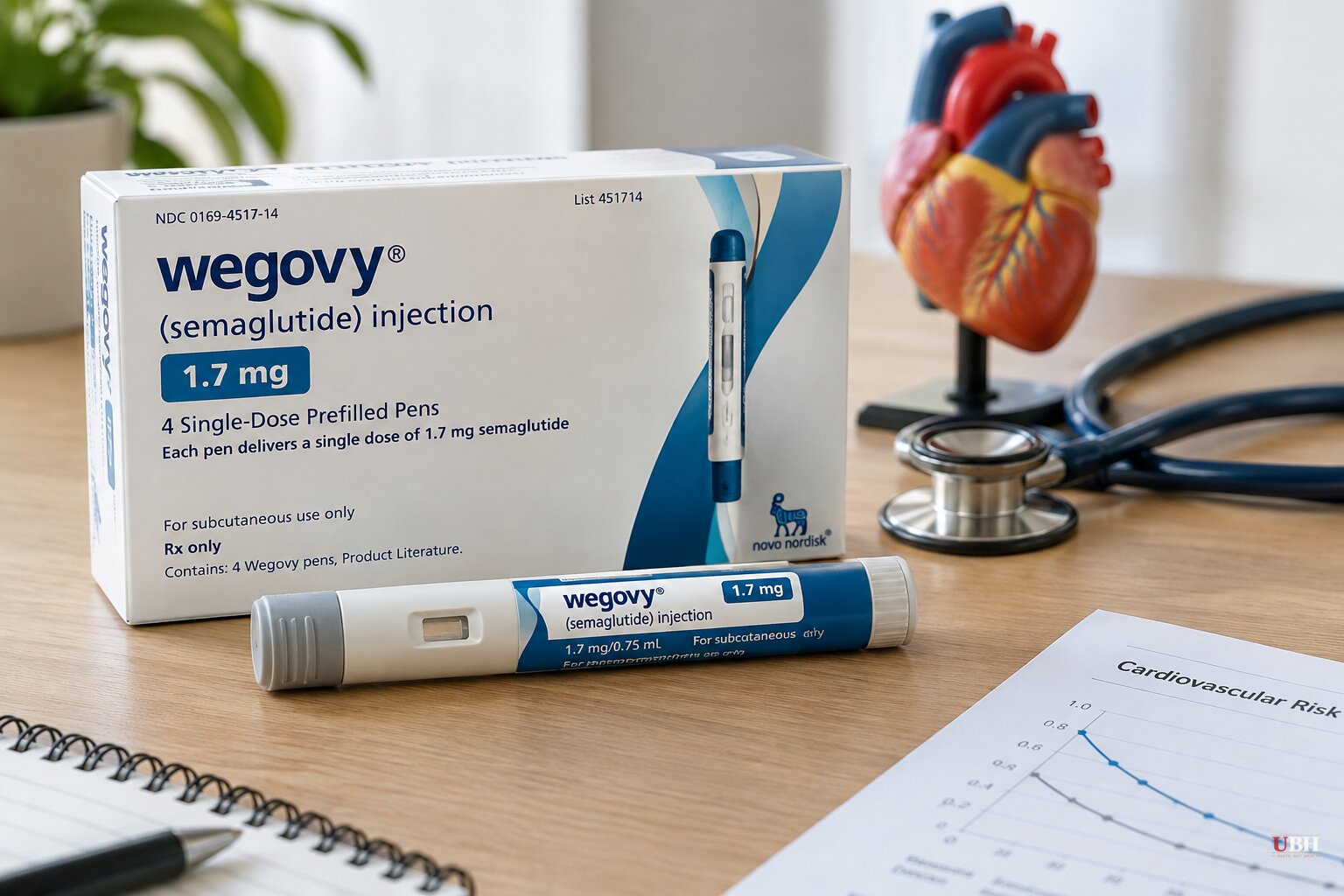
Doctors have been split on whether to prescribe Wegovy to frail, elderly heart patients. A new analysis says they shouldn't be.
The study, led by Dr. John Ostrominski of Brigham and Women's Hospital and Harvard Medical School, was published in JAMA Cardiology and reported by MedPage Today and Healio on September 16 and 17, 2026. It's a secondary analysis of the SELECT trial, the 2023 study that showed semaglutide 2.4 mg reduced major cardiovascular events by 20% compared to placebo in people with heart disease and overweight or obesity.
What the numbers show
Researchers took the SELECT trial's 17,604 participants, average age 61.6, 72.3% men, and sorted them by a 31-item frailty index into three groups: not frail (31%), more frail (47%), and most frail (22%), according to Healio.
For the primary outcome, cardiovascular death, nonfatal heart attack, or nonfatal stroke, semaglutide beat placebo across all three groups. Hazard ratios were 0.84 for the not-frail group, 0.70 for the more-frail group, and 0.92 for the most-frail group, with a p-value of 0.09 for interaction, meaning the differences between groups weren't statistically significant, per MedPage Today.
The drug also cut heart failure risk, all-cause hospitalization, and all-cause death consistently no matter the frailty level. Patients on semaglutide were more likely to see their frailty score improve (odds ratio 2.46) and less likely to see it get worse (odds ratio 0.47) than those on placebo.
The most frail patients saw the biggest gains in quality of life, measured by the EQ-5D-5L scale, driven mostly by improvements in mobility, self-care, and daily activities, according to Everyday Health. They were also less likely to quit the drug because of side effects than frail patients on placebo.
The concern this study is trying to answer
The worry among clinicians isn't made up. GLP-1 drugs cause rapid weight loss, and rapid weight loss can mean muscle loss along with fat loss. For an already-frail elderly patient with declining strength and mobility, losing muscle on top of that could make things worse, not better. That's a legitimate clinical concern raised by researchers and physicians and it's the reason, as Ostrominski told Healio, that "practice is currently highly variable" when it comes to prescribing these drugs to frail patients.
Kelley Gregorovic, a nurse practitioner at Tufts Medicine's Weight and Wellness Center, told Everyday Health that frailty has to be part of the conversation with older patients. But she added she doesn't want frailty alone to become an automatic reason to deny someone a drug that might help them well beyond the scale.
This analysis used a deficit-accumulation frailty index, a composite score built from things like comorbidities, function, and symptoms. It's not a direct measurement of lean muscle mass. So while the frailty score improved on semaglutide, that doesn't settle the specific sarcopenia question that worries doctors most. Ostrominski himself called for more research on GLP-1s in frail populations rather than treating this as the final word.
Who paid for it, and why that matters
The SELECT trial, and this secondary analysis of it, was funded by Novo Nordisk, the company that makes and sells Wegovy, according to Everyday Health. That doesn't make the data fake. The trial's design and endpoints were published and peer-reviewed in JAMA Cardiology, and the hazard ratios and confidence intervals are on the record for anyone to check. But when the company selling the drug funds the trial proving the drug works, readers deserve to know that upfront, and outlets covering this story should be saying it plainly instead of burying it.
Real-world evidence complicates the story
A separate analysis reported by the Pharmaceutical Journal complicates the picture further. Looking at more than 20,000 patients on tirzepatide or semaglutide, researchers found women were far more likely than men to land in the "high responder" group losing over 15% of body weight, while men were overrepresented among minimal responders. Data from the platform Patientric also showed patients in the UK's most deprived areas were half as likely to still be on treatment after a year compared to wealthier patients, and Black patients were roughly half as likely as white patients to stay on treatment that long.
None of that undercuts the SELECT frailty findings directly, since it's a different question. Real-world persistence and response variation are different from trial-controlled cardiovascular outcomes. But it's a reminder that a drug working in a controlled trial and a drug actually reaching and staying with the patients who need it most are two different problems. The frailty findings say Wegovy's heart benefits don't disappear for the sickest, most vulnerable patients. Whether those patients can afford to stay on it long enough to see those benefits is a separate, unresolved question.
Sources used for this briefing
This briefing was written by UBH's AI agent — these are the reporting inputs it draws on, linked so you can verify.


