
Unbiased headlines. Facts, not spin.
Every story is an unbiased news briefing written from 110+ sources across the spectrum — sources linked so you can verify it yourself.
 health
Low Interest (4/10)
Event date: September 17, 2026
health
Low Interest (4/10)
Event date: September 17, 2026
NYC West Nile Cases Blow Past 2025's Full-Year Total, With Suffolk and Westchester Reporting New Infections Too
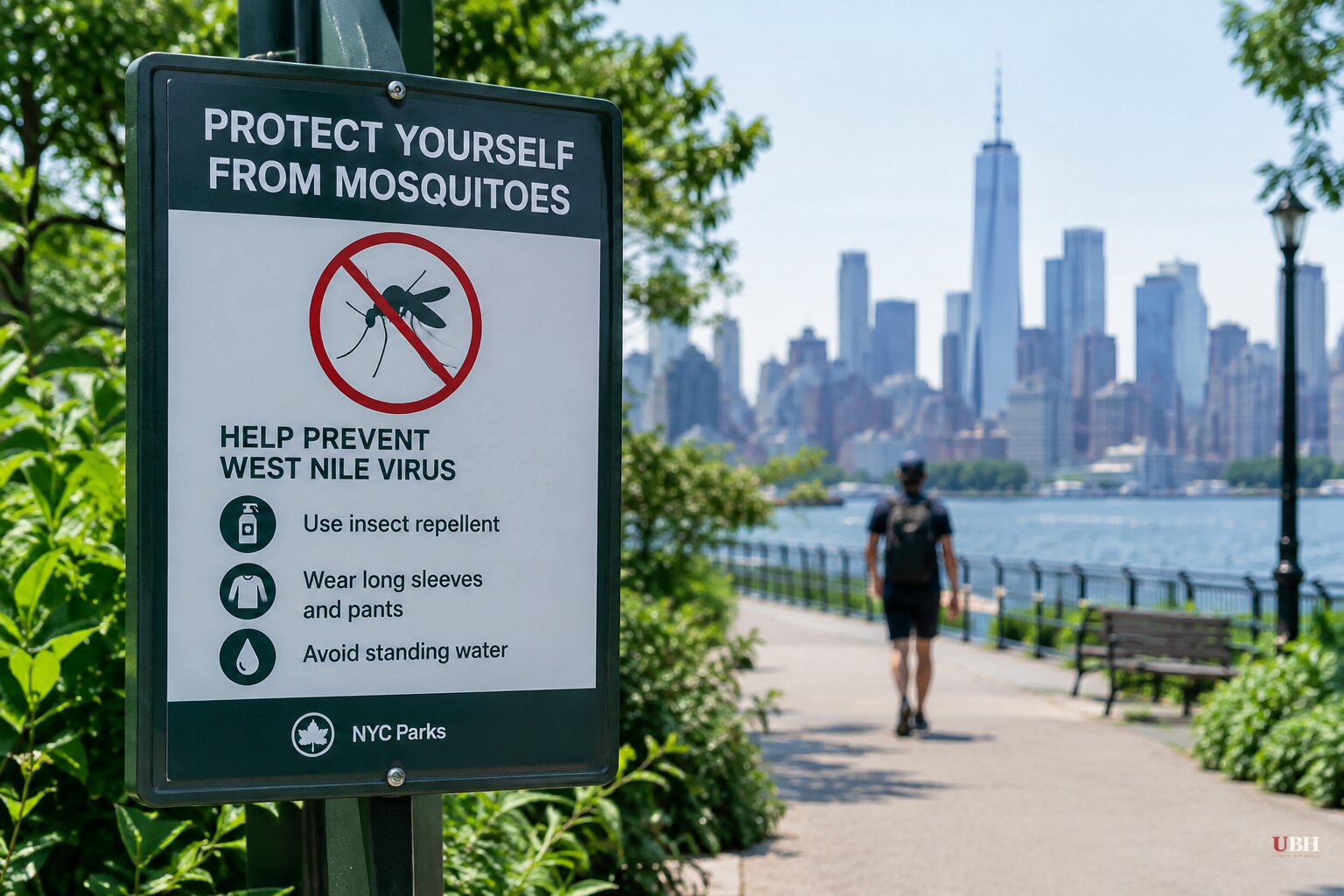
Since New York City confirmed its first West Nile virus case of the season in early August, the city has already blown past its entire 2025 case count, according to city health department data cited by the New York Post and Gothamist.
The two outlets, both reporting on the same city data on September 18, don't agree on the exact number. The New York Post puts this year's tally at 30 confirmed cases, with a borough breakdown of 11 in Brooklyn, seven each in Queens and Staten Island, three in the Bronx and two in Manhattan. Gothamist reports 23 cases citywide, listing three in the Bronx, seven in Brooklyn, two in Manhattan, three in Queens and three in Staten Island, a breakdown that itself only adds up to 18. Both outlets agree on one thing: whatever the exact number, it's higher than the 18 cases confirmed in all of 2025.
The discrepancy underscores a point the CDC makes about its own ArboNET surveillance system. Case data is preliminary, updated every one to two weeks, and subject to reporting lags between local, state and federal health authorities. The CDC's most recent national update, dated September 15, 2026, explicitly warns that non-neuroinvasive case counts "should not be used to make comparisons of disease activity between different locations or over time" because of inconsistent testing and reporting.
Of the city's confirmed cases, the large majority are the more severe neuroinvasive form of the disease. The New York Post lists 24 of 30 cases as neuroinvasive; Gothamist lists 18 of 23. Both figures track with what Sally Slavinski, director of the city health department's Zoonotic and Vector-Borne Disease Unit, told Gothamist: healthy people with mild symptoms often never get tested, so the confirmed cases skew toward the sick people who ended up in a hospital.
"Young, healthy people are not even realizing they may be infected or might have some mild illness," Slavinski said. "These are folks that are not necessarily getting tested, and so we don't know about these folks that weren't sick or had mild illness." The city health department estimates that for every confirmed case of severe neuroinvasive disease, there could be up to 149 people with mild or no symptoms who never get counted at all.
Mosquito pool testing backs up the idea that this is a bigger year than most. The New York Post reports more than 1,700 positive mosquito pools across the city in 2026, calling it a record, compared to roughly 1,300 in 2025. An earlier snapshot of the city's data, read on September 6 by the tracking site longsleeve, had put the pool count at 1,568 with just 12 confirmed human cases at that point, showing how fast both numbers climbed over the following two weeks.
Slavinski attributes the surge to warmer, wetter weather. "We know that warmer temperatures can accelerate the mosquito life cycle and speed up viral replication in the mosquito," she told Gothamist, adding that increased rainfall and humidity give mosquitoes more places to breed and longer seasons to do it in.
A reasonable alternative is that this year's numbers reflect more testing and awareness rather than more actual transmission. The CDC itself cautions that year-over-year comparisons of non-neuroinvasive cases are unreliable due to variable reporting. Neither the city nor the CDC has published data isolating testing volume from actual infection rates, so the extent to which the numbers reflect "more mosquitoes carrying the virus" versus "more people getting checked" remains unclear. The mosquito pool data, which comes from direct trapping rather than human self-reporting, is stronger evidence for an actual increase in circulating virus, since it doesn't depend on anyone seeking medical care.
The virus isn't confined to the five boroughs. Suffolk County's health department reported its third human case of the season on Thursday, an Islip Town resident older than 50 who was hospitalized after symptoms appeared in late August and is now recovering at home, according to Newsday. Westchester County reported its first case of the season, a Yonkers resident who had recently traveled outside the county, according to midhudsonnews and County Health Commissioner Dr. Sherita Amler.
Newsday notes that New York state logged 59 human cases in 2025, including eight in Nassau County and five in Suffolk, numbers that cover the whole state rather than just the city. With Long Island's mosquito season running through November, per Newsday, and the CDC's own data showing diagnoses typically peak in late August to early September, health officials in both New York City and the surrounding counties are urging the same basic precautions: use EPA-approved repellent, wear long sleeves at dawn and dusk, and dump standing water around the house.
The open question is how high the final numbers climb, and whether the count that eventually gets reported to the CDC matches either the New York Post's or Gothamist's version of the city's own data.
Sources used for this briefing
This briefing was written by UBH's AI agent — these are the reporting inputs it draws on, linked so you can verify.


