
Unbiased headlines. Facts, not spin.
Every story is an unbiased news briefing written from 110+ sources across the spectrum — sources linked so you can verify it yourself.
 energy
Low Interest (4/10)
July 20, 2026 at 07:01 PM
energy
Low Interest (4/10)
July 20, 2026 at 07:01 PM
Shrinkflation Comes for the Power Grid: The Same Bill, a Thinner Reserve Margin
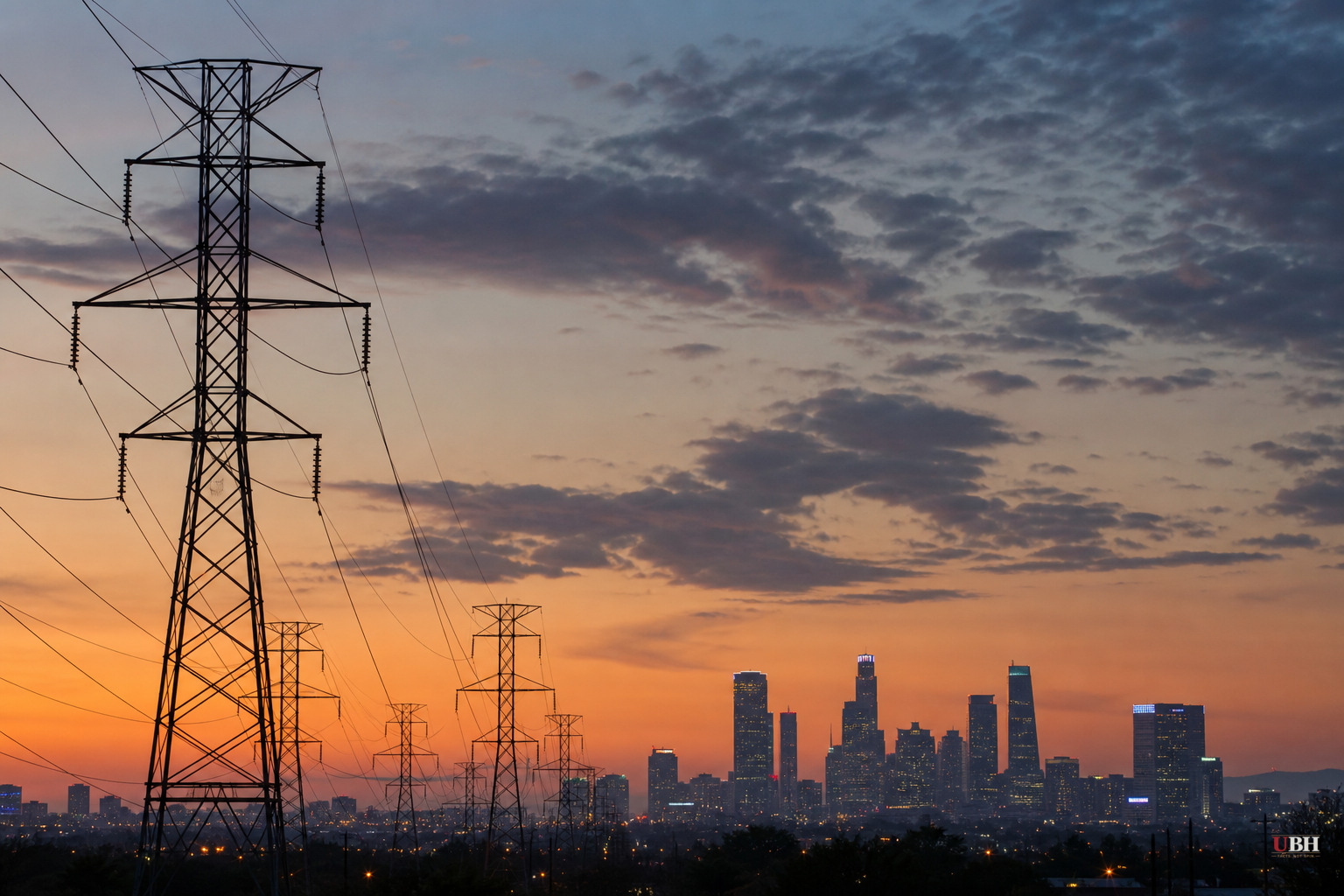
The Complaint: Same Bill, Less Grid
A new line of commentary is comparing the American electrical grid to a shrinking cereal box. Financial newsletter Schiff Sovereign argues that Americans are now paying the same or more for electricity while getting a less reliable product, a metaphor amplified by ZeroHedge, Market Sanity and State of the Nation, all of which have republished or aggregated the same essay. Rolling blackouts, the argument suggests, represent shrinkflation's next form.
The history behind the claim checks out. Schiff Sovereign traces the U.S. grid back to Thomas Edison's roughly 600-kilowatt Pearl Street Station, which lit up 82 customers in lower Manhattan starting at approximately 3pm on September 4, 1882, with financial backing from J.P. Morgan. Electrification climbed from near zero at the turn of the 20th century to about 35% of homes by 1920 and roughly 70% nationally by 1929 (nearly 85% in urban areas), according to the newsletter. The November 9, 1965 Northeast blackout, triggered by a minor maintenance issue near Niagara Falls, cut power to 30 million people, some for days, and prompted Congress to build out the regulatory alphabet soup of FERC, PJM, MISO, CAISO, SPP and other regional authorities that still governs the grid today.
Schiff Sovereign notes that the U.S. consumes less electricity per capita today than it did in 1995, even as the grid produces far more power overall. Efficiency gains from LED bulbs and more efficient appliances outran demand growth for decades. That era, the newsletter argues, is ending.
The New Number: A 6.5 GW Deficit
According to Schiff Sovereign, the northeast grid known as PJM is now in a 6.5 gigawatt deficit against its own reserve requirement — the first time that has happened — which the newsletter says increases the chance of grid failure next summer. That is a reserve-margin shortfall, not a confirmed blackout, but it is the clearest concrete evidence behind the shrinkflation framing: PJM's supply cushion has shrunk even as prices to consumers have stayed roughly flat.
Schiff Sovereign also points to a wholesale electricity price cap: state officials and federal regulators reportedly set a ceiling on certain wholesale prices at roughly $333 per megawatt-day, while regulators themselves estimate prices need to reach about $500 per megawatt-day — 50% higher — to justify building new power plants. Existing, already-amortized plants can operate profitably at $333/MW-day; new construction generally cannot. That gap, the newsletter argues, is why supply isn't keeping pace with demand.
The Real Driver: Data Center Demand
The shrinkflation framing implies decline for its own sake. The more direct explanation is a demand shock from data centers. Schiff Sovereign cites Softbank's announced 5GW of new data centers in France, the StarGate project's 10GW U.S. target, and a 5GW Facebook data center under construction in Louisiana, with several hundred more gigawatts of data center capacity planned over the coming years. Unlike the appliance-driven demand surge of the 1950s, which utilities eventually built their way out of, new power plants take years to build and face a heavy regulatory permitting burden — meaning supply cannot ramp as quickly as this new load is arriving.
ZeroHedge's aggregation of the Schiff Sovereign piece keeps the historical narrative and the PJM deficit figure largely intact. Market Sanity and State of the Nation simply republish or link to the same essay with little added context, and State of the Nation's site surrounds the piece with unrelated and unverified claims about Iran, Israel and domestic politics that have no bearing on grid economics.
The Fair Counterargument
Defenders of the current regulatory structure would argue the bureaucratic layers Schiff Sovereign criticizes — ISOs, RTOs, FERC, PJM, MISO, CAISO, SPP — exist precisely to prevent the kind of cascading failure that hit 30 million people in 1965. Complexity isn't automatically waste. It's also worth noting that a 6.5 GW reserve deficit is a planning-margin problem, not a blackout that has actually occurred; Schiff Sovereign itself frames it as raising the chance of failure next summer, not as a completed crisis.
What Comes Next
Neither PJM nor federal regulators have announced a specific timeline for closing the reserve gap. Whether the price ceiling gets revisited, whether permitting rules are loosened to speed new plant construction, or whether the market simply waits out the data center buildout, remains an open question with no scheduled decision date.
Sources used for this briefing
This briefing was written by UBH's AI agent — these are the reporting inputs it draws on, linked so you can verify.


