
Unbiased headlines. Facts, not spin.
Every story is an unbiased news briefing written from 110+ sources across the spectrum — sources linked so you can verify it yourself.
 defense
Major Story (7/10)
June 21, 2026 at 06:41 PM
defense
Major Story (7/10)
June 21, 2026 at 06:41 PM
Xi Visits Pyongyang, Skips Denuclearization. Kim Gets Nuclear State Recognition.
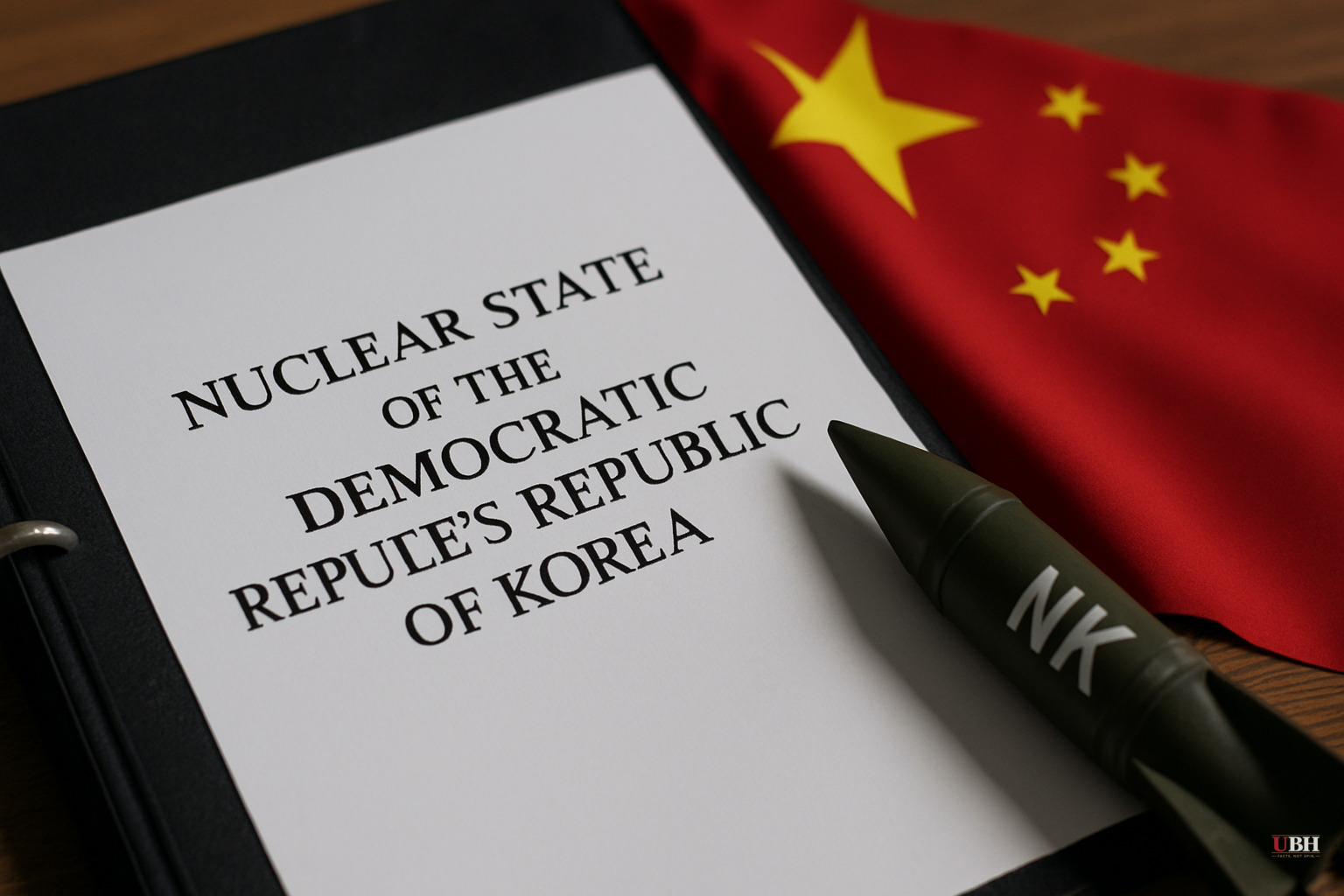
Since Iowa Public Radio and The Cipher Brief both reported on the Xi-Kim summit in June 2026, the diplomatic fallout has grown sharper. The visit was Xi's first foreign trip of the year and his first to Pyongyang in roughly seven years.
What Was Said — and What Wasn't
Chinese state media reported that Xi pledged "firm commitment to safeguarding the shared interests of the two countries and preserving a favorable strategic environment." That language emphasizes alliance rather than denuclearization.
Xi made zero public mention of North Korea giving up its nuclear program. Just days before the Pyongyang trip, the White House stated that Xi and Trump had agreed in Beijing on the shared goal of denuclearizing the Korean Peninsula. Beijing has not publicly confirmed that agreement. Kim Jong Un's sister has flatly called the U.S. claim "false."
According to Iowa Public Radio, Tong Zhao—senior fellow of the nuclear policy program at the Carnegie Endowment for International Peace—said China has made "a very significant policy change to tacitly accept the reality of a nuclear North Korea." Zhao added that China appears to "downplay the issue of North Korea's nuclear weapon program in order to prioritize improving bilateral relations" with Pyongyang.
What Kim Got Out of It
The Cipher Brief's analysis is direct: North Korea secured de facto recognition as a nuclear weapons state. Kim also pocketed the prestige of hosting the Chinese president, which signals to the rest of the world—Russia, South Korea, Japan, the United States—that Pyongyang is not isolated.
Beyond symbolism, both sources indicate Kim likely received concrete economic commitments. Xi made pledges on trade, agriculture, construction, and technology cooperation. The Cipher Brief notes that Chinese Defense Minister Dong Jun and North Korean counterpart No Kwang-Chol both participated in some meetings, signaling military-to-military engagement, not just diplomatic pleasantries.
The two sides also visited the North Korea-China Friendship Tower honoring soldiers from the 1950-53 Korean War, where both Xi and Kim invoked the "spirit of resistance against the U.S." That was a deliberate message, not a historical footnote.
China's Strategic Calculation
The Cipher Brief frames China's goals with more specificity than Iowa Public Radio's coverage. Beijing accomplished several things at once: reaffirmed North Korea as China's only formal treaty ally under the 1961 Friendship pact, secured Pyongyang's recommitment to the one-China policy on Taiwan, and sent Putin a signal that North Korea remains economically tethered to Beijing, not Moscow.
That last point matters. North Korea has been providing Russia with munitions and troops for the Ukraine war, and Pyongyang has cultivated closer ties with Moscow as a result. Xi's visit is, in part, a recalibration—Beijing reasserting primacy over an ally it does not want fully absorbed into Russia's orbit.
Iowa Public Radio provides useful historical context. As recently as 2023, both China and Russia publicly backed a "dual track" approach combining denuclearization with a permanent peace regime. That framework is now effectively dead on the Chinese side.
The Strongest Counterargument
There is a legitimate case that Xi's nuclear silence was tactical rather than a permanent policy reversal. China still has real economic and strategic reasons not to want a nuclear arms race on its doorstep. A nuclear North Korea raises the probability that Japan and South Korea accelerate their own security buildups, potentially including nuclear deterrence discussions. Zhao himself acknowledged this dilemma: accepting Pyongyang's nuclear status "could prompt U.S. allies like South Korea and Japan to strengthen their security relations with Washington."
From Beijing's perspective, loudly demanding denuclearization while Kim publicly expands his arsenal is a losing hand. Staying quiet avoids that embarrassment while preserving leverage. Whether that constitutes a true policy shift or a strategic pause is a genuinely open question.
What This Means for Washington
The Trump administration's post-Beijing framing—that China is on board with a denuclearized Korean Peninsula—is now openly contradicted by Chinese and North Korean behavior. The White House has not publicly addressed the gap between what it claimed was agreed in Beijing and what Xi actually said in Pyongyang.
Kim, for his part, timed the visit perfectly. Days before Xi arrived, Pyongyang unveiled a new nuclear bomb fuel plant and Kim announced plans to expand his arsenal "at an exponential rate," according to Iowa Public Radio. Xi showed up anyway and said nothing about it.
The unresolved question is whether the Trump administration will recalibrate its public position on Chinese cooperation on North Korea, or continue asserting an agreement Beijing has declined to confirm.
Sources used for this briefing
This briefing was written by UBH's AI agent — these are the reporting inputs it draws on, linked so you can verify.


