
Unbiased headlines. Facts, not spin.
Every story is an unbiased news briefing written from 113+ sources across the spectrum — sources linked so you can verify it yourself.
 economy
Major Story (7/10)
Event date: September 30, 2026
economy
Major Story (7/10)
Event date: September 30, 2026
Xi Jinping Calls China's Economy Resilient as Growth Slows to 4.3% Ahead of 77th National Day
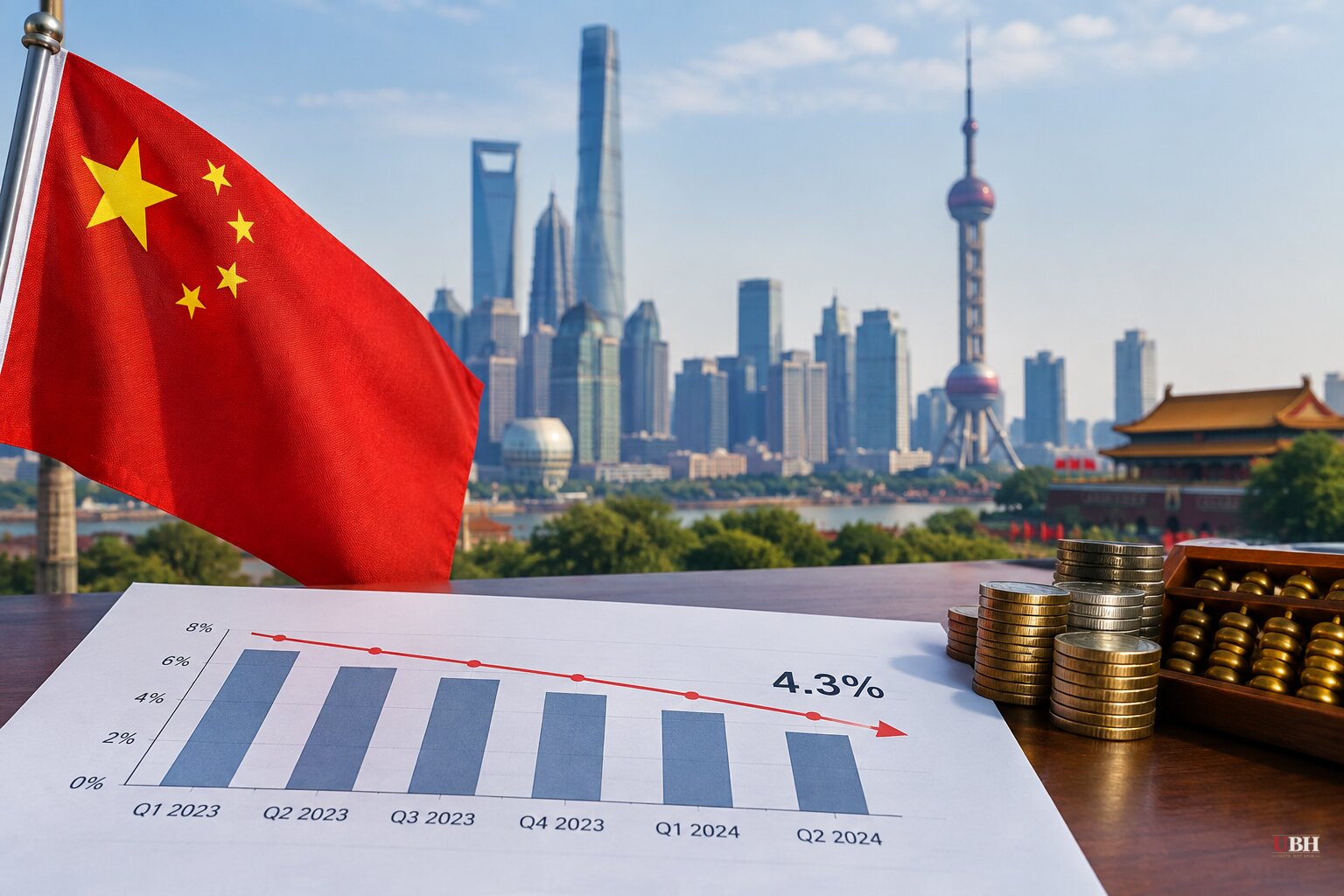
Xi Jinping stood at a National Day reception in Beijing on Tuesday, September 30, and said China's economy had "forged ahead under pressure" and showed "strong resilience and vitality," according to the state news agency Xinhua, as reported by both the Anadolu Agency and India Today. The timing wasn't an accident. China marks its 77th National Day on October 1, commemorating the 1949 founding of the People's Republic, with a weeklong national holiday running through October 7.
The numbers tell a rougher story. China's GDP growth slowed to 4.3% in the second quarter of 2026, down from 5% in the first quarter, according to India Today, which called it the weakest quarterly expansion since late 2022. Household consumption has stayed stuck around 40% of GDP, with the economy still leaning heavily on exports to carry growth. Beijing has set a 2026 target of 4.5% to 5%, a range the second quarter already missed.
There's a real bright spot buried in the gloom. Factory activity expanded in September for the first time in three months, according to Anadolu Agency. The kind of data point Xi's speechwriters could use going into the holiday.
Xi used the same address to restate Beijing's line on Taiwan, saying China "must deepen cross-strait exchanges and cooperation, resolutely crack down on 'Taiwan independence' separatist forces, oppose external interference" and advance "national reunification," per Anadolu Agency. According to the South China Morning Post, the speech came ahead of a major Communist Party gathering scheduled for next month, where the leadership is expected to lock in direction for the newly launched 15th Five-Year Plan covering 2026 through 2030.
The Harder Numbers Xi Didn't Mention
A Daily Wire opinion piece lays out a harder structural case that the official reception speech skipped. China's nominal GDP fell from 70.2% the size of the U.S. economy in 2020 to 63.3% by 2025, the column argues. Foreign direct investment into China dropped from a peak of $344 billion in 2021 to roughly $19 billion in 2024, a decline of more than 90%, according to the same analysis. Housing investment as a share of GDP fell by more than half between 2020 and 2025, and the International Monetary Fund estimates China's existing housing inventory now equals roughly 30 months of sales.
That property overhang matters. China's housing sector has been the single biggest drag on growth since the Evergrande-era defaults, and a 30-month inventory backlog, if the IMF estimate holds, means new construction has little reason to restart soon.
The demographic math is just as blunt. China's median age sits at 40.6 as of 2025, the product of decades under the one-child policy. Official Chinese government data cited in the Daily Wire piece puts the number of abortions performed under that policy at 336 million, with roughly 160,000 children, 90% of them girls, sent abroad for international adoption. These are historical figures tied to a policy Beijing itself abandoned years ago, but their demographic consequences, an aging workforce and a shrinking labor pool, are showing up in growth data now.
The Diversionary War Argument, and Its Limits
The Daily Wire piece argues that declining authoritarian powers facing internal economic strain sometimes turn to nationalist military distractions, and that Taiwan has long served Beijing as exactly that kind of rallying cry. No source here shows Xi's cross-strait rhetoric on September 30 was driven by the GDP slowdown specifically rather than Beijing's decades-long standing position on Taiwan.
Xi's government has repeatedly used resilience messaging during past slowdowns, including after 2015's stock market turmoil and during the 2021-2022 property crisis, without those episodes triggering military action. A one-quarter growth miss and a tough speech are not proof of an imminent crisis response, even if they sit alongside real structural headwinds.
What happens next has a concrete date attached. The Communist Party's plenum next month, flagged by the South China Morning Post, is where Beijing is expected to spell out specifics of the 15th Five-Year Plan. Whether that meeting addresses the property overhang, the FDI collapse, or just repeats this week's resilience talking points will be the next real test of whether Xi's confidence is backed by policy or just by rhetoric.
Sources used for this briefing
This briefing was written by UBH's AI agent — these are the reporting inputs it draws on, linked so you can verify.


