
Unbiased headlines. Facts, not spin.
Every story is an unbiased news briefing written from 110+ sources across the spectrum — sources linked so you can verify it yourself.
 energy
Notable (5/10)
August 12, 2026 at 06:13 PM
energy
Notable (5/10)
August 12, 2026 at 06:13 PM
Xcel Asks Colorado Supreme Court to Save 1 Gigawatt of Finished Wind Power Stuck Over 550 Feet of Land
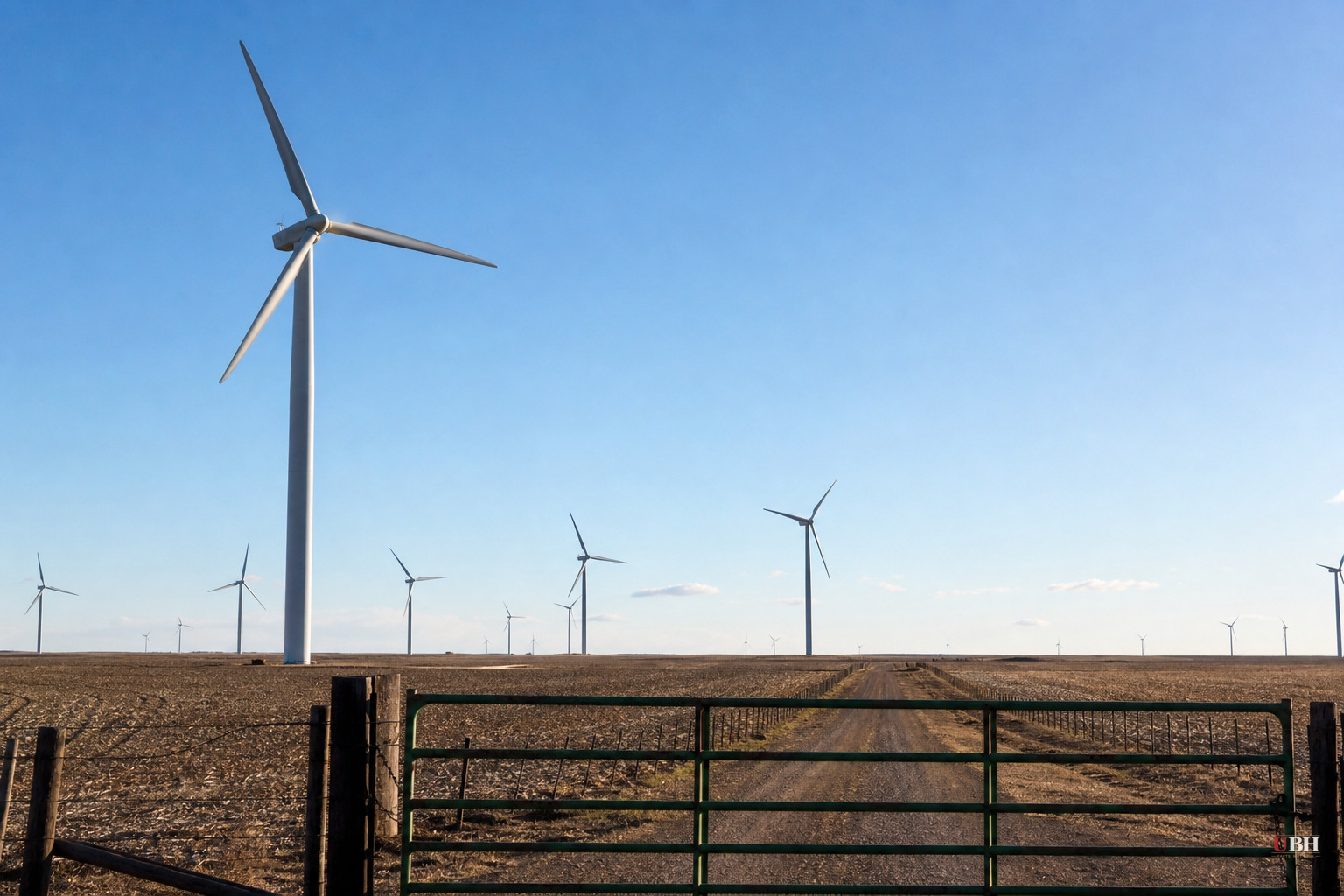
Two nearly complete wind farms in eastern Colorado, totaling more than 1 gigawatt of generating capacity, are sitting idle because of a fight over 550 feet of land.
Xcel Energy's Public Service Co. of Colorado, known as PSCo, has now asked the Colorado Supreme Court to take up the case directly, according to a July 31 court filing reported by Utility Dive. PSCo wants the state's highest court to decide whether a regulated utility can use eminent domain to condemn easements for transmission lines that connect renewable energy projects to the grid.
The two projects, the 603-megawatt Singing Grass wind farm and the 450-megawatt Cheyenne Ridge II wind farm, are part of a roughly 6.1-gigawatt expansion plan that Colorado utility regulators approved in January 2024. Both are located near Burlington, close to PSCo's roughly 1.7-billion-dollar Power Pathway transmission project, which was built in part to give renewable projects in the region a path onto the grid.
That path runs through land owned by Dryland Partners, near a substation called Goose Creek. PSCo tried to acquire the easement through eminent domain. In June, a district court judge rejected that effort.
PSCo has already appealed to the Colorado Court of Appeals, but the utility says that process could take more than a year, according to Xcel spokesperson Lisa Andersen. That is why PSCo is now asking the state Supreme Court to leapfrog the appeals court and rule directly.
What it's costing, and who pays
The exact cost of the two wind farms is confidential. PSCo declined to disclose it to Utility Dive. But using Lawrence Berkeley National Laboratory's most recent land-based wind report, which put 2024 wind project costs at an average of 1.85 million dollars per megawatt, the combined price tag for Singing Grass and Cheyenne Ridge II lands in the neighborhood of 1.8 billion dollars. That estimate predates Trump administration tariffs that have since pushed infrastructure costs higher industry-wide.
Andersen told Utility Dive the ruling is "significantly delaying" both projects and "preventing customers from receiving the energy and economic benefits they expect." Ratepayers approved this build-out through the regulatory process back in January 2024, and every month the turbines sit disconnected is a month customers aren't seeing the power they were promised.
But Dryland Partners isn't just digging in for spite. Brad Haight, a representative for the landowner, told Utility Dive the company "remains open to a market-based resolution." Dryland wants to negotiate a price, not have the land taken by government force at whatever value a court decides is fair.
Eminent domain exists so infrastructure doesn't grind to a halt because one landowner wants leverage. But it also exists in tension with a basic property right: the government, or a utility acting with government-granted condemnation power, shouldn't get to seize land on the cheap just because negotiating is inconvenient. A district court judge already looked at this fight and sided with the landowner.
Haight also raised a pointed warning for regulators. He said the Colorado Public Utilities Commission "should be prepared for PSCo to seek recovery of fuel costs and imprudently incurred" carrying costs, the accounting term for financing costs on unfinished construction, while the wind farms sit idle. If this delay drags on, expect Xcel to try to pass some of that cost onto ratepayers, and expect a fight over whether that's fair given the utility chose to build first and secure the easement second.
The bigger legal question
PSCo isn't just asking the Supreme Court to fix its own problem. The utility argues the district court's ruling threatens to "disrupt the legal framework governing how renewable projects connect to Colorado's grid and delay critical renewable energy development statewide."
That's a sweeping claim, and it's the kind of argument utilities make to get a fast-tracked hearing. Whether it's true depends on how narrowly or broadly the district court's reasoning applies to future transmission disputes across the state. Utility Dive's reporting doesn't include the district court's full legal reasoning for denying condemnation, which would matter for judging how far this precedent actually reaches.
The Colorado Supreme Court has not yet said whether it will take the case. If it declines, the dispute goes back to the Court of Appeals, where PSCo says a resolution could take more than a year. Either way, more than 1 gigawatt of built wind power sits unconnected in eastern Colorado while lawyers argue over a strip of land less than a tenth of a mile long.
Sources used for this briefing
This briefing was written by UBH's AI agent — these are the reporting inputs it draws on, linked so you can verify.


