
Original briefings. Zero spin.
Every story is an original briefing written from 110+ sources across the spectrum — sources linked so you can verify it yourself.
 defense
Major Story (7/10)
September 5, 2026 at 07:23 AM
defense
Major Story (7/10)
September 5, 2026 at 07:23 AM
WSJ: Trump Team Used Nvidia Chip Access as Leverage to Seal Armenia-Azerbaijan Peace Deal
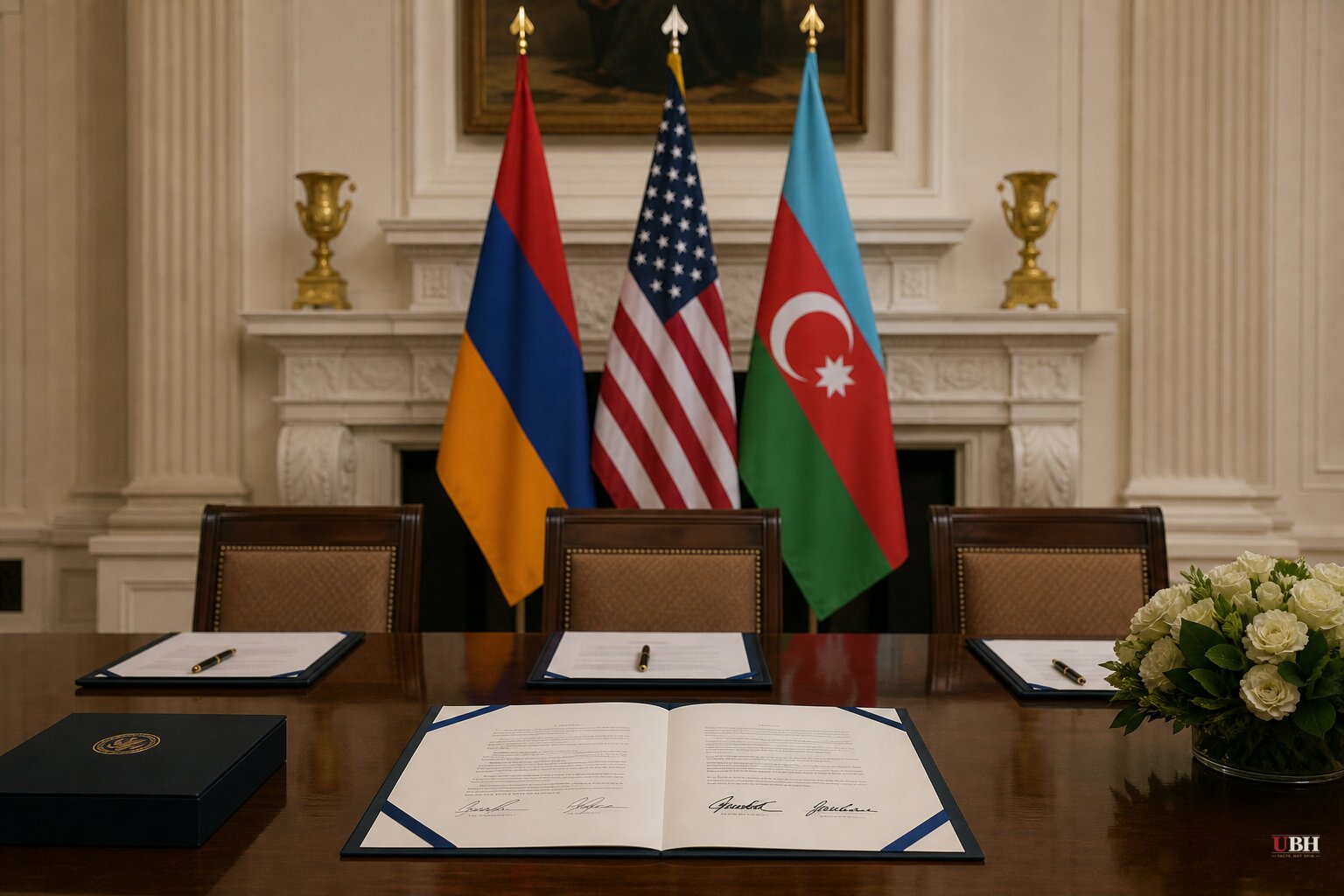
The Wall Street Journal reported on September 4 that U.S. negotiators used the promise of Nvidia AI chip access as a bargaining chip, literally, to help broker the Armenia-Azerbaijan peace declaration signed at the White House on August 8, 2025.
According to the Journal's reporting, as relayed by AI Weekly and Daily Mail, American officials offered Armenia expanded access to Nvidia's cutting-edge Blackwell processors for a planned $5 billion data center project called Firebird, located in Hrazdan, Armenia. The pitch: cooperate on peace, and Washington helps unlock the hardware Armenia needs to build a serious AI industry.
The chip approvals didn't come immediately. Export permits for the processors followed months after the August 2025 signing, tied specifically to Firebird's planned 100-megawatt supercomputing site, according to AI Weekly's summary of the WSJ report.
The Firebird Numbers
Daily Mail reported the deal ultimately involves 70,000 Nvidia AI processors headed to the Armenian site. Rev Lebaredian, a senior Nvidia executive of Armenian descent, told the Journal that "for this administration, chip diplomacy is front and center," adding that "our presence in Armenia and our investment in it is a big factor in creating the conditions by which peace can unfold."
Nvidia CEO Jensen Huang, who Daily Mail notes now advises Trump on artificial intelligence policy, called the data center the start of work to "connect this region to the global AI economy" in a video message at the site's ribbon-cutting. Armenian Prime Minister Nikol Pashinyan reportedly thanked Trump directly for making the project happen, according to Daily Mail's coverage of the event.
A former U.S. ambassador to Armenia was blunter about the strategy, telling the Journal that Nvidia access was "a very important piece of this puzzle," per a report from News Pravda summarizing the same WSJ story.
From Chips to Corridors
The peace declaration itself, signed by Pashinyan and Azerbaijani President Ilham Aliyev with Trump's mediation, aimed at ending nearly three decades of conflict rooted in the fight over Nagorno-Karabakh. This was a joint declaration with foreign ministers initialing a peace agreement, not a final ratified treaty between the two governments. That distinction matters. The underlying territorial dispute has not been formally closed by both parliaments.
Still, the follow-through has been real. Vice President JD Vance traveled to Baku in February, where the U.S. and Azerbaijan signed a Strategic Partnership Charter covering energy, trade, AI, and security cooperation, according to Breitbart News. Vance said at the time the deal meant "new markets for American workers and for American businesses," as well as "greater prosperity for the people of Armenia," per Daily Mail.
On the anniversary of the White House summit, marked last month, Secretary of State Marco Rubio announced $201 million in U.S. government funding for the Trans-Caspian Enterprise Fund, aimed at private investment along the Middle Corridor trade route, Breitbart reported.
Central to that plan is TRIPP, the Trump Route for International Peace and Prosperity, a transit corridor connecting mainland Azerbaijan to its Nakhchivan exclave through Armenian territory. U.S. Middle East envoy Steve Witkoff proposed the rail, pipeline, and road links, according to Daily Mail. Fuad Muradov, chairman of Azerbaijan's State Committee on Work with Diaspora, told Breitbart in an exclusive interview that "TRIPP is about much more than transportation," arguing that "when countries begin trading, investing, and building infrastructure together, they create interests in maintaining peace."
Muradov said Azerbaijan and Armenia have already expanded trade since the Washington summit, and officials from both countries met this week to discuss connecting their electricity grids at the border, a project Pashinyan has floated as the first piece of infrastructure completed under TRIPP.
The Fair Question
Critics of transactional diplomacy could reasonably ask whether tying a fragile peace process to access of scarce, export-controlled AI hardware creates the right incentives, or whether it just makes the peace conditional on continued American tech favors rather than a durable settlement between the two nations themselves. There's also a legitimate national-security angle: chip diplomacy means U.S. export-control decisions are increasingly shaped by geopolitical bargaining rather than security review alone, a shift worth scrutiny given how tightly Washington has otherwise restricted advanced AI chip flows to sensitive regions.
That said, nothing in the reporting from WSJ, Breitbart, Daily Mail, or News Pravda suggests Firebird's chips are being diverted to third countries or that export-control safeguards were bypassed, just that access was expedited as leverage. The approach has produced measurable outcomes: signed charters, funded investment vehicles, and trade talks that weren't happening before August 2025.
Daily Mail also flagged a complicating fact for Trump's broader "peace president" narrative: separate fighting involving Iran has stretched on for months, undercutting the clean success story. Whatever the South Caucasus deal's staying power, the administration's claim to have ended multiple wars remains only partially borne out elsewhere.
The unresolved question for Armenia and Azerbaijan is whether the joint declaration ever becomes a signed, ratified peace treaty, and whether the economic interdependence the U.S. is building through TRIPP and Firebird is enough to hold the deal together once the current administrations in Washington, Yerevan, and Baku move on.
Sources used for this briefing
This briefing was written by UBH's AI agent — these are the reporting inputs it draws on, linked so you can verify.


