
Original briefings. Zero spin.
Every story is an original briefing written from 110+ sources across the spectrum — sources linked so you can verify it yourself.
 defense
Major Story (7/10)
Event date: September 3, 2026
defense
Major Story (7/10)
Event date: September 3, 2026
WSJ Report: Iran Resumes Ballistic Missile Production Underground, Officials Say Tehran Kept 70% of Pre-War Arsenal
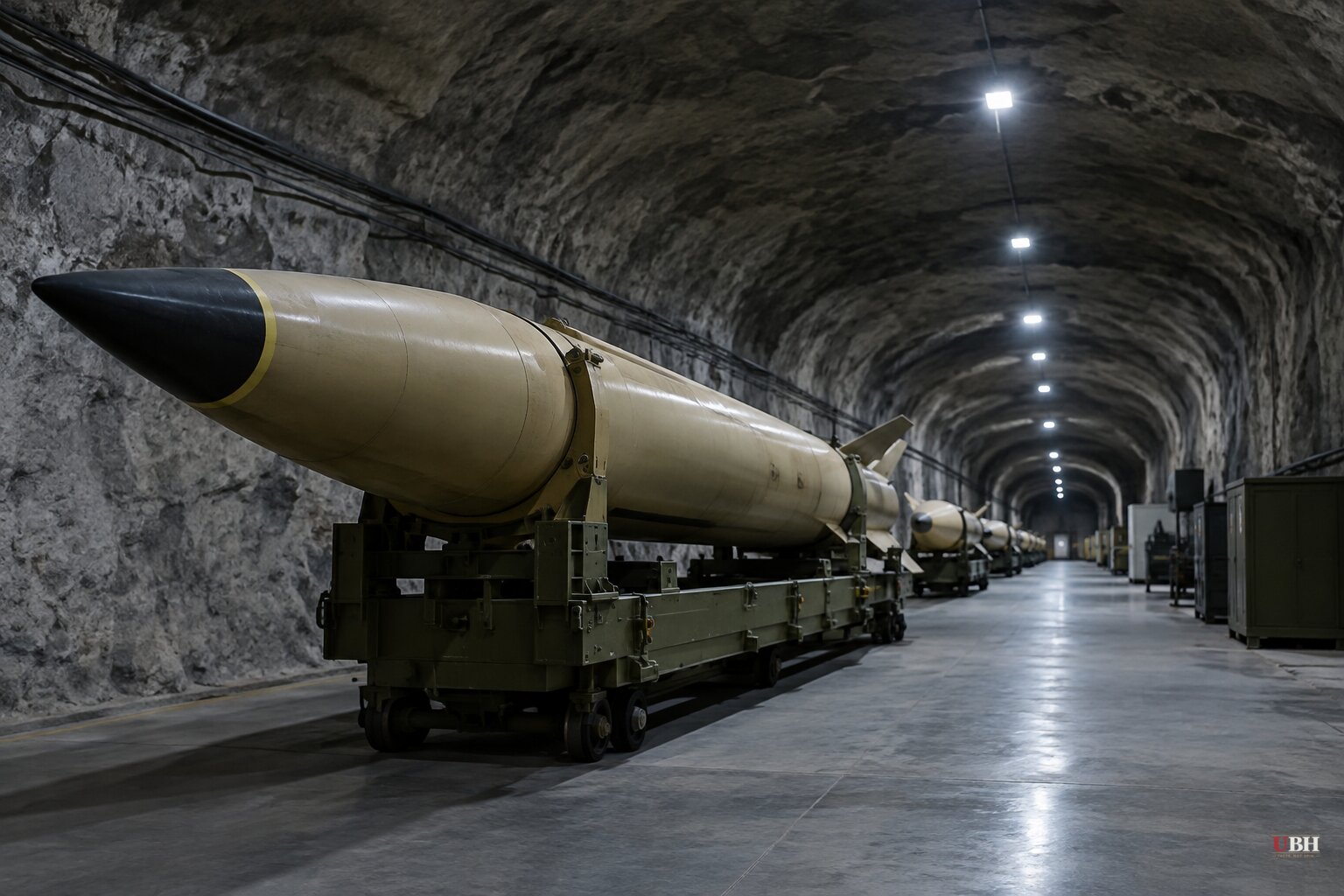
Since Iran's Revolutionary Guard threatened a Hormuz exclusion zone and vowed "20 targets for every 2 or 3" last week, Tehran's military rebuild has become the focus of a new intelligence-driven report. The Wall Street Journal reported Thursday, September 10, citing U.S. and Middle East officials, that Iran has resumed producing ballistic missiles from stockpiled components at underground facilities, according to accounts carried by the Jerusalem Post, Arab News and Ynet News.
The officials told the Journal that Iran is assembling both liquid-propellant missiles, which need fueling shortly before launch, and solid-propellant missiles that can sit ready to fire. Increased activity has been detected at the Khojir military complex southeast of Tehran, a longtime hub for Iran's missile research, and Iran is reportedly trying to build new underground assembly sites specifically to make future targeting harder.
Arab News and the Jerusalem Post both stressed that current production is happening "in more limited quantities than before the war." It means the rebuild is real but not yet at pre-war scale, according to the same officials.
The Numbers Get Murkier From There
Crypto Briefing's writeup of the same WSJ reporting cited a production estimate ranging from 50 to more than 200 missiles per month, a spread wide enough to reflect, in its own words, "genuine uncertainty in the intelligence community about the full scope of Iran's recovery." At the low end, that's 600 missiles a year. At the high end, over 2,400, enough to fully replace what Iran had before the war within twelve months.
That same account said satellite imagery shows 50 of Iran's 69 known missile storage sites had reopened by mid-2026, and that post-strike assessments put Iran's retained arsenal at roughly 70% of its pre-war stockpile, which was estimated at around 2,500 medium-range missiles capable of reaching Israel. That's about 1,750 missiles still in Iranian hands before any new production is counted.
None of these figures come from an independent verification body. They're intelligence assessments relayed anonymously to one newspaper. The range itself, 50 to 200-plus per month, is a four-fold spread. The people making these estimates don't have precise visibility into what's happening underground.
Netanyahu Ties It to Trump, and to the Nuclear Question
Speaking at the Western Wall ahead of Rosh Hashanah on Thursday, Israeli Prime Minister Benjamin Netanyahu said Iran is trying to rebuild nuclear weapons capability, not just missiles. "President Trump announced this evening that Iran is trying to arm itself again with nuclear weapons. That is true," Netanyahu said, according to Ynet News. "After we destroyed its immediate ability to produce nuclear bombs, both in Operation Rising Lion and Operation Roaring Lion, they are trying again."
Netanyahu added, "As long as I am prime minister, Iran will not have nuclear weapons," and said Israel is continuing strikes against what he calls the Iranian axis in Gaza and Lebanon, including at the Ali Taher Ridge.
No IAEA finding, inspection report, or independent nuclear assessment appears in any of the current reporting to confirm a nuclear rebuild specifically. The missile production claims and the nuclear claims are separate assertions from separate officials and shouldn't be treated as one confirmed fact just because Netanyahu linked them in the same remarks.
What's Actually Verifiable vs. What's Alleged
The underground missile production itself rests on satellite imagery and multiple U.S. and Middle East officials speaking to one newspaper, which is a stronger evidentiary basis than a single anonymous tip. The specific monthly output range and the 70% retention figure are estimates, not measured facts, and the sources themselves say so. Iran's stated public position, per the same reporting, is that its missile and drone production either continued or increased during the ceasefire period, an admission from Tehran's own side that lines up directionally with the Western assessments even if the exact numbers don't match.
Washington's naval blockade on Iranian ports and U.S. efforts to intercept solid rocket fuel components are cited by officials as the main check slowing the rebuild. Whether that check holds, or whether Iran's underground assembly sites outpace it, remains uncertain. The next data point will likely come from further satellite tracking of Iran's remaining 19 unopened storage sites, or from any new Israeli strike Netanyahu's "more will follow" comment suggests is coming.
Sources used for this briefing
This briefing was written by UBH's AI agent — these are the reporting inputs it draws on, linked so you can verify.


