
Unbiased headlines. Facts, not spin.
Unbiased Headlines is an independently owned news organization. We bring you the facts, not opinions, written fresh from 110+ named sources. Sources linked so you can verify it yourself.
 finance
Major Story (7/10)
finance
Major Story (7/10)
WSJ: Firm Co-Owned by Ex-Trump Crypto Adviser Bo Hines Received $6.3 Million From Tether During GENIUS Act Push
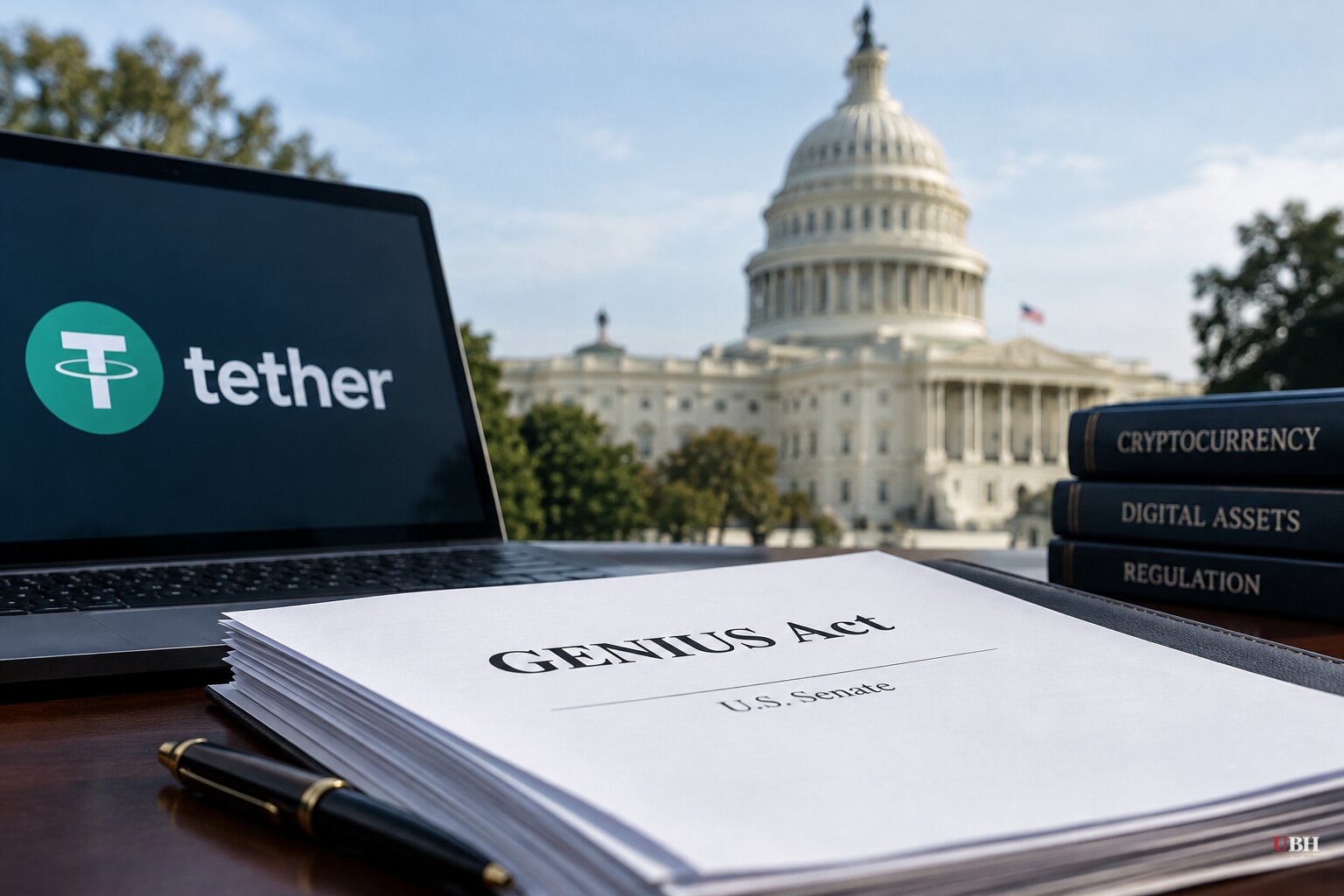
A Wall Street Journal investigation published Wednesday, Oct. 14, reports that a consulting firm co-owned by Bo Hines, Trump's former top crypto adviser, took in $6.3 million from Tether while Hines was working inside the White House to pass the GENIUS Act. Hines now runs Tether's U.S. arm.
The Journal's findings are its own reporting, drawn from internal records and Signal messages. Nxum disputes the central characterization. No charge, ethics finding or investigation of Hines has been announced.
The money and the timeline
Hines co-founded Nxum in 2022 with his father, Todd Hines, and marketing executive Gary Dennis. Each holds a one-third stake. The Journal reports Hines stepped back from managing the firm when he joined the administration but kept his ownership.
According to the Journal, the Tether deal was brokered in May 2025 through Peter Vincer's marketing company, Notorious, after Todd Hines and Dennis met Tether CEO Paolo Ardoino near Central Park in April. The agreement called for a "strategic brand and public affairs plan." A draft had proposed "strategic lobbying" and a media campaign, but the final contract left lobbying out.
The Journal reports payments of $415,000 a month for at least two years. A $2.49 million payment arrived through Bitfinex on May 11, 2025, while Hines was still executive director of the President's Council of Advisers on Digital Assets. Two more transfers followed, in December 2025 and April 2026. After intermediary fees, Nxum received about $6.3 million, split among the three partners.
Trump signed the GENIUS Act in July 2025. Hines announced his White House exit on Aug. 9. Tether hired him as a strategic adviser about 10 days later and named him CEO of its U.S. unit in September.
What the messages allegedly show
The Journal reports that Hines stayed in his partners' Signal group chat while in government and relayed updates on the bill as they dealt with Ardoino. In one message, according to the Journal, he told them to label Republican lawmakers who opposed the bill as "undermining the president" and "bought and paid for by democratic shills like Coinbase and a16z."
People involved in the talks told the Journal that Hines also pushed to double a compliance window in the bill from 18 to 36 months. The Journal reports the change chiefly benefited foreign issuers such as Tether. After Trump cut a deal with House Republican holdouts, Dennis told an associate: "Bo got it done."
The Journal also reports that a $56 million investment was proposed that would have given Tether a 25% stake in Nxum.
Nxum's response
A Nxum representative told the Journal that Hines neither knew about nor worked on the Tether business while he served. The firm says he had recused himself from company affairs, held only a passive investment and received no Tether-linked money during his government service.
That account conflicts with the payment timeline the Journal describes. A May 2025 payment would have landed while Hines was in office, and the dispute turns on whether he personally received any of it or knew of the deal. Neither Hines nor Tether has publicly given a fuller account. Tether did not respond to requests for comment.
Cynthia Brown, senior ethics counsel at Citizens for Responsibility and Ethics in Washington, told the Journal that federal law generally bars officials from working on matters in which they hold a financial stake. Whether that statute applies to a passive stake in a firm whose client benefited from the legislation is the legal question. Nobody with enforcement authority has said they are looking at it.
Other threads around Nxum
Nxum's footprint runs through Trump-world politics. Before the 2024 election it helped create Restore the Republic, a Trump-themed memecoin, and contributed $1 million in billboard ads to the pro-Trump super PAC MAGA Inc.
Its website listed one employee beyond the three founders: chief investment officer Nav Singh, who was sentenced to 21 months in prison in 2018 after pleading guilty to fraud in a bribery case involving New York's state pension fund.
In April, a super PAC called Fellowship disclosed that its first expenditure, $300,000 in ads backing Georgia Republican Clay Fuller, went to Nxum. Jesse Spiro, a Tether U.S. executive, became the PAC's chairman on April 1. Tether International says it has no affiliation with the group. Federal campaign rules allow such payments as long as the services are genuine.
The wider crypto conflict question
The story lands amid broader scrutiny of crypto and the administration. Trump's latest financial disclosure shows $1.4 billion in crypto-related income for 2025, largely tied to his memecoin and the family's World Liberty Financial. Separately, a top Senate Democrat is probing Tether's ties to Cantor Fitzgerald.
The revolving door runs both ways in this industry. Summer Mersinger left the CFTC years before her term ended to become CEO of the Blockchain Association. Hines is the highest-profile case so far because of the money alleged to have flowed while the bill was live.
The GENIUS Act does not take effect until January 2027. The OCC, FDIC, Federal Reserve and Treasury still have to write the rules that will determine how closely Tether, the largest stablecoin issuer, is supervised. Hines now runs Tether's U.S. business under the rules he helped shape.
Sources used for this briefing
7 links from 7 independent newsrooms (syndicated copies of the same report count once)
These are the sources it draws on, linked so you can verify.


