
Unbiased headlines. Facts, not spin.
Unbiased Headlines is an independently owned news organization. We bring you the facts, not opinions, written fresh from 110+ named sources. Sources linked so you can verify it yourself.
 finance
Major Story (7/10)
finance
Major Story (7/10)
G7 Finance Ministers Agree to Run Drills Simulating AI-Driven Cyberattacks on Banks
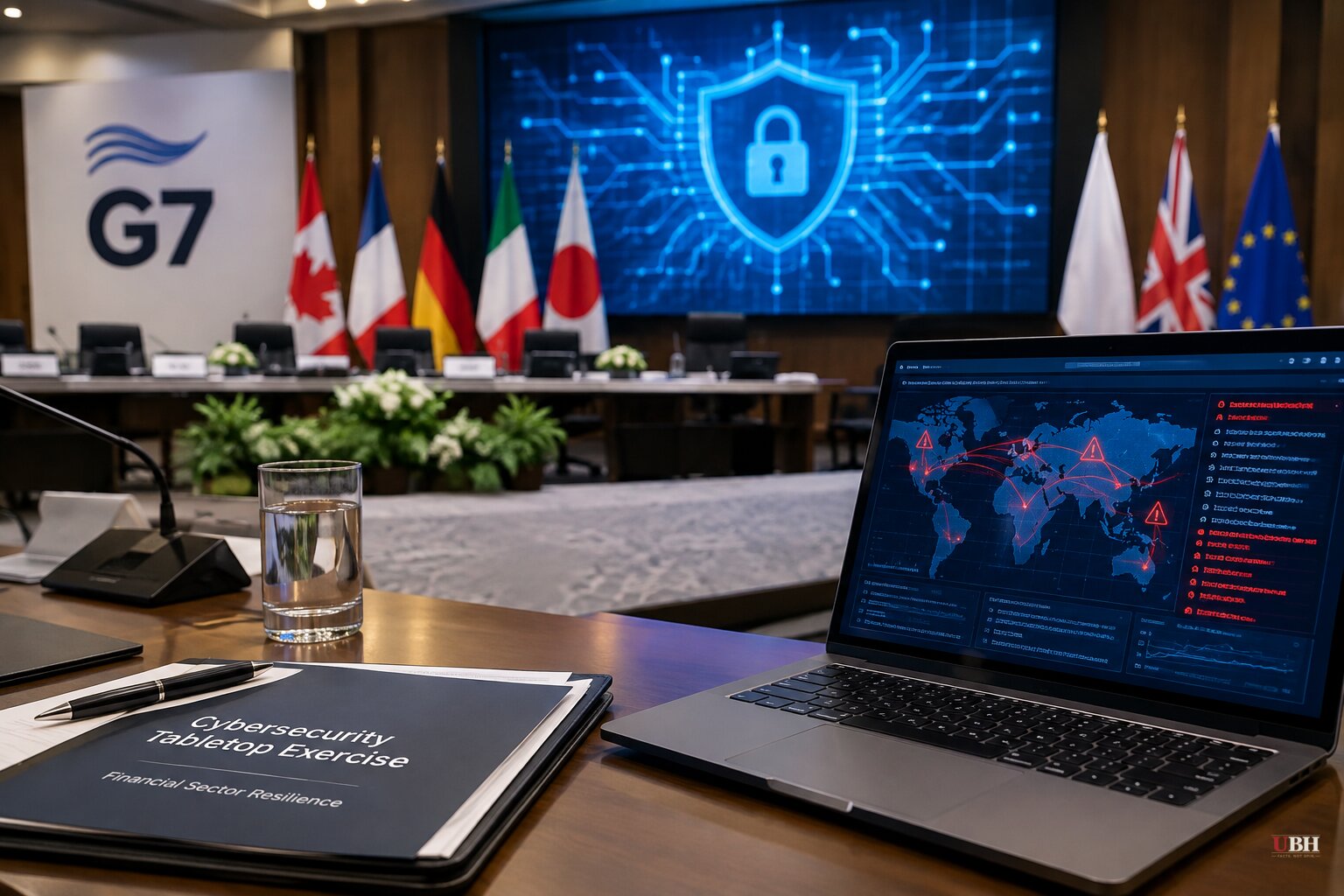
G7 finance ministers and central bank governors have agreed to rehearse a cyberattack on the financial system before one happens.
Japan's finance minister, Satsuki Katayama, said Thursday, Oct. 15, that finance deputies had been discussing tabletop exercises on frontier AI and that the plan was signed off at ministerial level. She spoke after the G7 meeting held on the sidelines of the IMF annual meetings in Bangkok.
What the drills will cover
A Japanese finance ministry official who attended the meeting described the setup. Each G7 financial authority will design its own simulations. Finance ministries and central banks will run them.
Commercial banks could join, depending on the scenario. The official named none.
Possible scenarios include AI-enhanced intrusions and attacks on AI-related infrastructure itself. The official compared the exercises to flight-simulator training for pilots.
The point is to test whether existing government cyber emergency manuals hold up. Results will be used to revise those manuals, the official said.
Why regulators are worried
The IMF's October Global Financial Stability Report lists AI-empowered cybercrime among the biggest perceived threats to financial stability. The Fund also warned this week that an AI-enabled attack on a critical service at a financial institution could damage confidence.
IMF data points to the speed problem. In 2026, attackers exploited more than 70% of vulnerabilities before or on the day the flaw was disclosed. That is up 20 percentage points from 2025 and compares with roughly 20% in 2018.
The IMF's Caio Ferreira cautioned that a loss of confidence after a service-provider disruption could be systemic even if no one suffers material losses. That puts the target on trust as much as on money.
Other officials have sounded similar alarms. The Bank of England's deputy governor said Thursday that the central bank is working with banks on deep cyber-recovery options. Banks, he said, can no longer take for granted that their defenses are impervious to AI-enabled attacks.
Andrew Bailey, the Bank of England governor and chair of the Financial Stability Board, said regulators had raised the "pace and intensity" of their work. He called for more testing of AI models and higher safety standards.
South Korea's president has said AI models showed signs of being used in attacks on banks. The UK Financial Conduct Authority has warned that frontier models can find flaws faster than firms can fix them.
Not the first G7 cyber drill
The G7 Cyber Expert Group ran a cross-border cyber crisis exercise in May. It involved finance ministries, central banks and market regulators from all seven countries.
In May, Katayama said ministers had agreed to step up monitoring of cyber risk and develop concrete measures on frontier AI models. She named Anthropic's Mythos at the time.
What is new this time is the explicit focus on AI as the attacker's weapon.
The wider AI risk picture
The cyber warning sits inside a broader IMF caution about AI. In its World Economic Outlook, released Oct. 13 in Bangkok, the Fund forecast global growth of 3.1% in 2026 and 3.4% in 2027.
It also modeled a downside scenario in which a steep drop in AI investment cuts global GDP by 1.1% by 2028, including a 1.8% hit to U.S. output.
IMF Managing Director Kristalina Georgieva put it this way at a Bretton Woods Committee event: "We now have an economy that is standing on one leg, the AI leg."
The Fund's review of 14 circular financing deals among AI firms found about $300 billion in equity investment and $650 billion in debt since 2023. Those deals came in exchange for $1.4 trillion in future revenue commitments.
The cyber drills and the AI-valuation warning are separate risks. Both land on the same financial system.
What is still open
The G7 has set no date for the first exercise. It has not said which banks might take part. It has not said whether any findings will be made public.
Tabletop drills expose gaps in paper plans. They do not close them. Whether the revised manuals reach banks in time depends on a schedule the G7 has yet to announce.
Sources used for this briefing
6 links from 6 independent newsrooms (syndicated copies of the same report count once)
These are the sources it draws on, linked so you can verify.


