
Unbiased headlines. Facts, not spin.
Every story is an unbiased news briefing written from 110+ sources across the spectrum — sources linked so you can verify it yourself.
 energy
Major Story (7/10)
August 14, 2026 at 11:51 PM
energy
Major Story (7/10)
August 14, 2026 at 11:51 PM
Wildfires Burn Across France, UK, Germany and Croatia as Record Heat Grips Europe
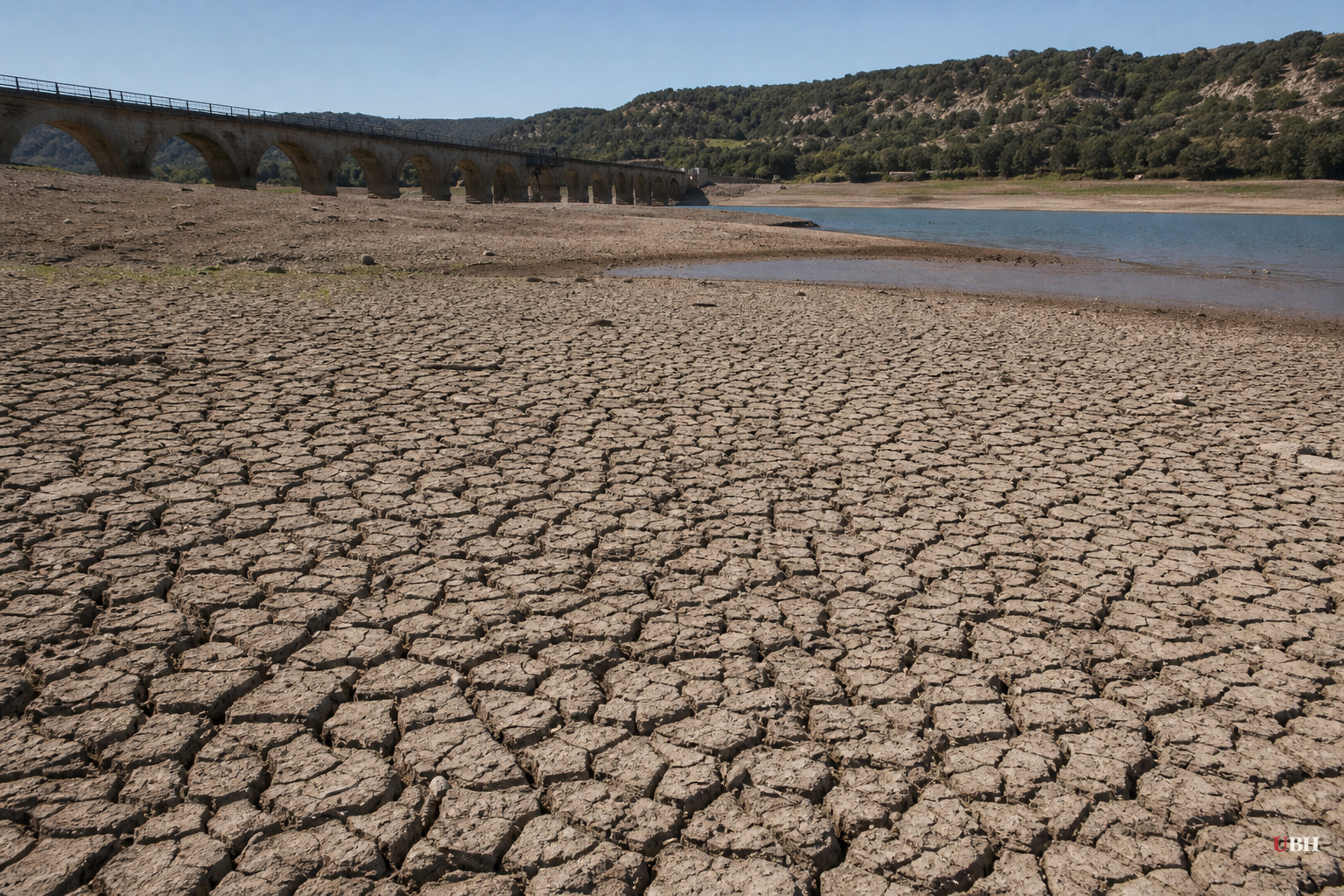
Firefighters across four countries spent Friday, August 14, battling blazes that have already burned an estimated 500,000 hectares this summer, according to Al Jazeera. The fires are hitting places built for damp, mild summers, not this.
In Stourbridge, near Birmingham, a wildfire that broke out Thursday tore through the Quarry Park Road area and destroyed 19 houses completely, with 18 more damaged, according to the West Midlands Fire Service. Stourbridge's member of Parliament, Cat Eccles, told the BBC that 20 to 30 homes were wiped out. Resident Jane Baxter told BBC Radio that police gave her almost no warning: "They thought the fire was changing directions, and they didn't know which direction it was going in. So, it was literally 'grab what you need and get out.'"
The fire hit on the UK's hottest day of the year so far, when the Met Office recorded 38.1 degrees Celsius (100.6 Fahrenheit) in west London on Thursday. One firefighter was hospitalized and five others suffered minor injuries, the fire service said Friday. Six more firefighters in Staffordshire were hospitalized for smoke inhalation and heat exhaustion. The West Midlands Ambulance Service said it treated 68 people Thursday for symptoms including smoke inhalation, 25 of whom needed hospital care.
Simon Tuhill, chief fire officer for West Midlands Fire Service, called it one of the most significant incidents his service has ever handled, according to CNN. He said an investigation is underway but the fire is believed to have started in grassland before spreading into homes. Nearly three-quarters of England is now in official drought, and this July was the driest in England and Wales since records began in 1836, according to the Associated Press.
Andy Burnham, the Mayor of Greater Manchester, visited Stourbridge Friday and didn't mince words. "I've never seen scenes like this in Britain, where you just see a whole house gutted, smouldering," he said, according to Euronews. "We have to face up to the changing climate. There's no point denying where we are. We need to face up to it. We need more clean energy." The government has banned sales of disposable barbecues as officials counted 37 separate blazes burning around the country Friday.
France's driest year on record
France is dealing with its driest year ever, according to the AP. A fire tore through woodlands overnight in the Landes region on the southwest coast, forcing more than 500 people to evacuate the town of Luglon. It's one of several fires burning across France this week, including in Brittany and the north, regions that are normally cooler and wetter. A historic fire near Bordeaux last month displaced a quarter of a million people, per CNN.
Temperatures in France approached 41C (106F) Thursday in areas from Aquitaine to the Rhone valley, the national weather service said, with similar highs forecast for Friday before a weekend cooldown.
The heat forced utility company EDF to shut down six nuclear reactors in recent days. EDF said the shutdowns were driven by extreme heat and drought conditions, plus a mass of jellyfish that washed up outside one power plant on the English Channel coast, tied to unusually warm sea temperatures. The company said the impact on France's electricity production was minimal and that the reactors themselves faced no safety risk.
Germany and Croatia also hit
In Germany's North Rhine-Westphalia state, all 1,800 residents of the village of Gey were evacuated after a wildfire in the nearby Hürtgen forest threatened the town. Nearly 300 hectares were ablaze Friday morning, according to CNN. Firefighting efforts were complicated by unexploded World War II ordnance buried in the forest, with German news agency dpa reporting explosions as old munitions detonated in the heat, forcing crews to pull back.
In Croatia, shifting winds pushed flames deeper into a coastal suburb near the tourist town of Omis. Al Jazeera and Euronews reported one death, 40 people hospitalized, and around 2,000 residents evacuated. CNN and PBS, citing the Associated Press, put the evacuation figure at more than 1,000 and reported 14 people hospitalized, seven of them in life-threatening condition. Firefighters had put out the blaze by Friday morning, with crews then redirected to another fire on the Pelješac Peninsula.
The bigger pattern
The World Meteorological Organization's John Kennedy said plainly: "Heatwaves like this are what we expect to see in a changing climate." The World Economic Forum, citing the EU's Copernicus Climate Change Service, reported that Western Europe just had its warmest June-July stretch on record, and that this is the fourth time since May that hot, dry air has locked over the continent, driven by shifts in the jet stream, El Niño, and warmer-than-usual oceans.
Reuters data cited by the World Economic Forum estimated roughly 10,000 excess deaths tied to June's heatwave alone, based on early figures. The Danube is at record lows, threatening Hungary's power supply. Italy has put most major cities on its highest heat alert. Belgium logged the largest temperature anomaly among 10 European countries tracked, with an average high on August 4 running more than 11C above the 1961-1990 norm for that date. Portugal was the only country in that comparison running cooler than its historical average.
The heat is real, the records are real, and Europe is objectively warming faster than the global average at roughly twice the rate. What remains a live policy argument, not a settled fact, is how much of this specific damage owes to climate change versus land management, forest density, and drought-response funding choices made by national governments. Burnham's comments skip past this distinction entirely in favor of a straight climate-and-clean-energy framing. Investigators in Stourbridge have not yet determined the fire's exact cause, and the West Midlands Fire Service says that inquiry is still open.
Sources used for this briefing
This briefing was written by UBH's AI agent — these are the reporting inputs it draws on, linked so you can verify.


