
Unbiased headlines. Facts, not spin.
Every story is an unbiased news briefing written from 110+ sources across the spectrum — sources linked so you can verify it yourself.
 energy
Major Story (7/10)
August 2, 2026 at 09:31 PM
energy
Major Story (7/10)
August 2, 2026 at 09:31 PM
Wildfires Are Burning Millions of Acres in 2026. Forest Management and Climate Policy Are Both on Trial
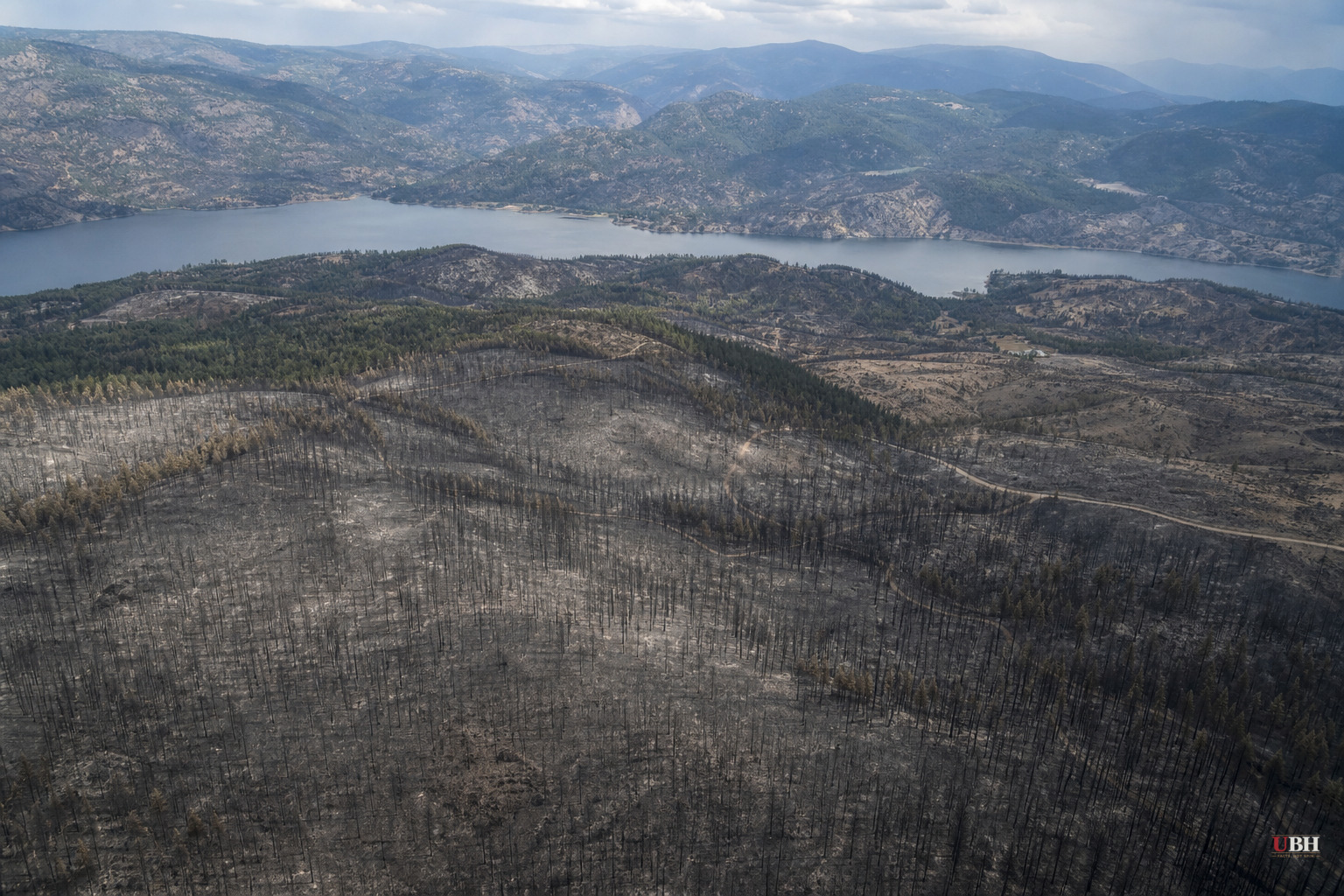
The numbers are ugly, no matter who's counting
By mid-July, nearly 40,000 fires had burned more than 3.6 million acres in the United States this year, according to the Washington Examiner, citing federal fire data. That's roughly 10,000 more fires and nearly a million more acres than the 10-year average for the same point in the season.
Canada is worse off. More than 750 fires had burned about 6.9 million acres by mid-July, compared with a 6.1 million-acre average, the Washington Examiner reported.
Europe's numbers, from the Guardian, are stark in a different way. France has already burned far more land in 2026 than the roughly 30,000 hectares it burned in all of 2025. In the Gironde region near Bordeaux, 220,000 people have been evacuated. Spain's environment ministry has recorded over 170,000 hectares burned, compared with 29,000 last year, and more than 100,000 people forced from their homes.
Firefighters in the Bordeaux region believe they're witnessing France's first pyrocumulonimbus, a fire-generated thunderstorm that whips up unpredictable winds and makes containment far harder, according to the Guardian. The phenomenon is well documented in North America and Australia but new to French wildfire response.
Two very different diagnoses
The Guardian's editorial board lays the blame squarely on inadequate climate policy. It points to Spanish Prime Minister Pedro Sánchez, who attributed the fires to the climate emergency and has pushed to accelerate the EU's green transition. The Guardian criticizes Emmanuel Macron's government for cutting France's Green Fund in June and faults the European Commission for proposing to weaken the EU's emissions trading system under pressure from Giorgia Meloni's Italy, which would let heavy industry keep free polluting permits longer and at lower cost.
The Washington Examiner takes a different angle: government-managed forests, not gas stoves or car mandates, are the real carbon problem. It cites NASA-funded research finding that Canada's 2023 wildfires released about 640 million metric tons of carbon in five months, more than Russia's or Japan's entire annual fossil fuel emissions. The World Resources Institute put Canada's total 2023 CO2 output from fires at roughly 3 billion tons, nearly four times global aviation's annual emissions.
The Examiner also cites a Canadian climate analysis estimating 2025's wildfires released more than 500 million tons of CO2, and puts Europe's 2025 wildfire emissions at roughly 48 million metric tons, about 2% of the continent's fossil fuel emissions.
Where each side has a real point
The Guardian's underlying climate argument deserves a fair hearing. Climate scientists have long projected that a hotter, drier atmosphere would produce more frequent and more intense fires, and this year's heatwaves in France, with a fourth wave following the third, are consistent with that pattern. Sánchez's claim that the crisis reflects climate change isn't a fringe position; it's the mainstream scientific consensus on how warming interacts with drought and fuel conditions.
But the Washington Examiner's core complaint, that government forest mismanagement is an underappreciated driver of fire severity, is also a serious, evidence-backed argument, not just a talking point. Decades of fire suppression policy in the U.S. and Canada have allowed dense underbrush and fuel loads to accumulate in publicly managed forests, making fires burn hotter and spread faster when they do ignite. That's a documented forestry-science critique, distinct from climate skepticism, and it doesn't require denying that climate change is also a factor.
The honest picture is that both dynamics can be true simultaneously: a warmer, drier climate is loading the dice for ignition and spread, while decades of forest management choices determine how catastrophic any given fire becomes once it starts. Both source pieces tend to frame this as an either/or debate, which misses that fuel management and climate trends compound each other rather than substitute for each other.
What's actually happening on policy right now
The European Commission's proposal to loosen the EU's emissions trading system, giving heavy industry free permits for longer, is a live policy fight, not a done deal. It has not been adopted as of now, and the Guardian frames it as something still working through EU institutions under pressure from Meloni's government.
Macron's Green Fund cuts, announced in June, are already implemented, according to the Guardian, and represent a concrete reduction in resources for local climate and environmental adaptation efforts, even as French communities absorb historic wildfire damage.
None of the sources here report any major new U.S. federal forest-management initiative tied specifically to this year's fire season. That's the open question the Washington Examiner's argument ultimately raises but doesn't answer: whether Congress or the Forest Service will redirect money toward fuel reduction and controlled burns, or whether the debate stays confined to op-ed pages while the acreage numbers keep climbing.
Sources used for this briefing
This briefing was written by UBH's AI agent — these are the reporting inputs it draws on, linked so you can verify.


