
Unbiased headlines. Facts, not spin.
Unbiased Headlines is an independently owned news organization. We bring you the facts, not opinions, written fresh from 110+ named sources. Sources linked so you can verify it yourself.
 health
Notable (6/10)
Event date: November 15, 2026 ·
WHO Calls Human Insulin an Effective Option for Adults With Type 1 Diabetes as Novo Nordisk Phases Out Human Insulin Pens
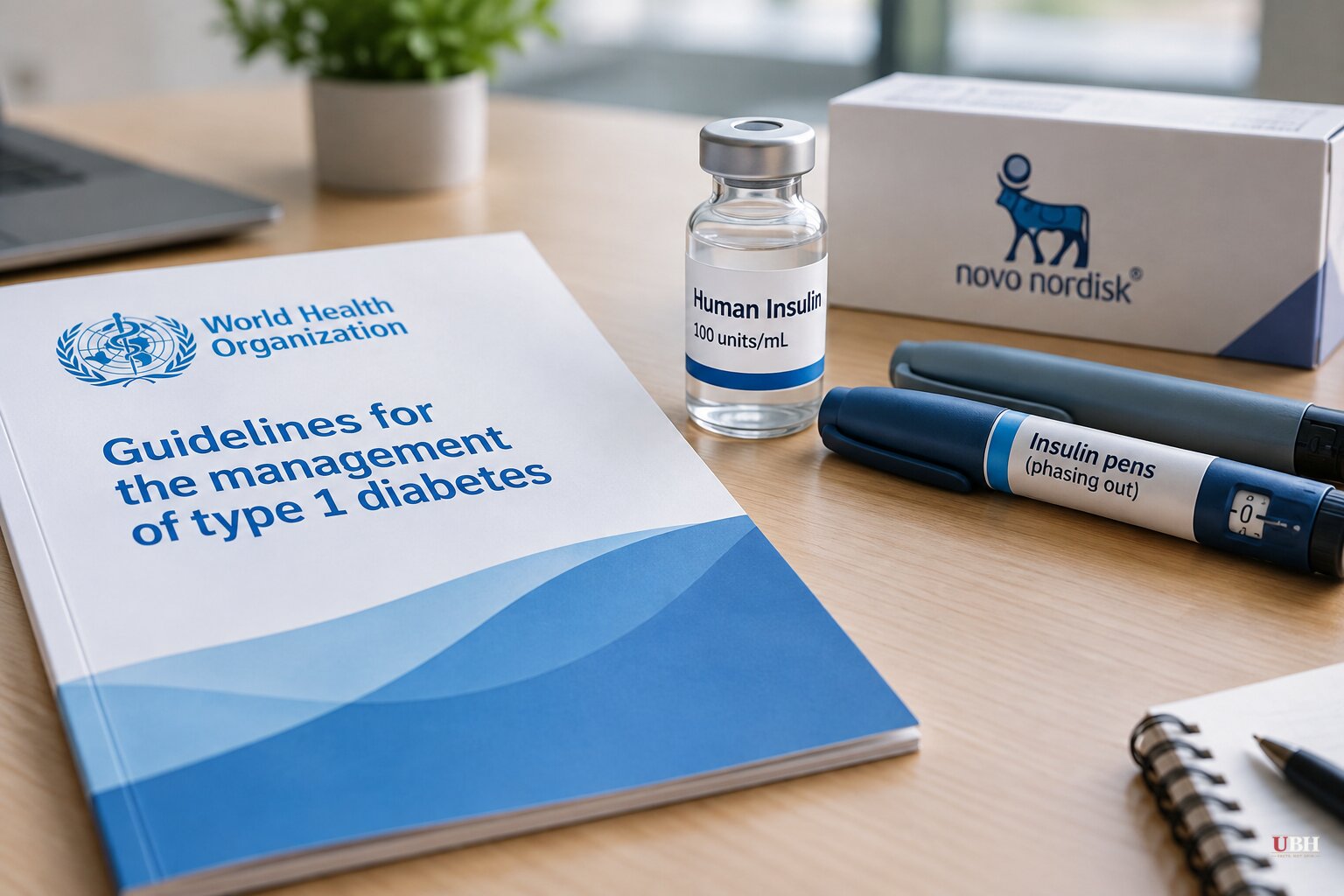
The World Health Organization released its first-ever guidelines on diagnosing and managing type 1 diabetes in adults on Saturday, Nov. 14, timed to World Diabetes Day. They are built to work in low-resource, emergency and humanitarian settings.
The core advice: insulin injections several times a day, with doses adjusted to blood glucose levels. WHO calls human insulin, the manufactured version of the hormone the body makes, "an appropriate and effective option." Other types can be used when needed.
The numbers behind it are large. WHO says about 9.5 million people lived with type 1 diabetes in 2025, with another 500,000 diagnosed that year. The agency notes the condition increasingly affects adults, not just children.
What WHO recommends
Dr. Søren Brostrøm, WHO's director of noncommunicable diseases and mental health, framed the problem as access. "Insulin is a lifesaving treatment, discovered more than 100 years ago. Yet many people with type 1 diabetes do not have access to affordable and high-quality insulin," he said.
A published summary of the guidelines counts 14 recommendations. One is strong: intensified insulin therapy with multiple daily injections. The other 13 are conditional, meaning they depend on circumstances, resources and patient preference.
For both mealtime and background insulin, the summary says WHO allows human insulin or analogues and names human insulin the preferred choice because it is generally cheaper. The guidelines also say to consider ultra-rapid-acting analogues at mealtimes and a once-daily long-acting analogue.
Tech Times, in its reading of the summary, adds that conditional items include insulin pens over syringes and glucose checks at least three times a day.
On monitoring, WHO recommends regular blood glucose checks. That can mean lab tests of average blood sugar over recent months at clinics, and at home a finger-prick test or a continuous glucose monitor. Where blood glucose testing is not available, WHO says urine glucose testing can be considered. Tech Times notes that urine strips cannot show dangerous lows.
WHO's 2018 guideline on insulin type recommended human insulin for adults with type 1 diabetes and suggested long-acting analogues only for people with frequent severe hypoglycemia on human insulin. The 2026 summary lists no such restriction.
WHO's stated goal is that every person with type 1 diabetes has affordable insulin and blood glucose self-monitoring by 2030. It says it will provide tools to help countries track progress.
Novo Nordisk is moving the other way on pens
A Novo Nordisk spokesperson told Reuters in 2024 that human insulin pens would be phased out over time worldwide and that human insulin would be sold only in vials. Reuters tied the move to Novo's push to make more of its obesity and diabetes injections.
Novo also said it understood the effect on patients in South Africa and was in talks with South African health authorities about continued access.
The Access to Medicine Foundation's 2026 Index, released Nov. 10, records that Novo began phasing out human insulin pen production amid manufacturing capacity constraints. The Guardian reported the same day that Novo announced plans to phase out some older diabetes products, including insulin pens.
The phase-out varies by country and product. Australia's Therapeutic Goods Administration lists Actrapid Penfill for December 2026 and Mixtard 30 Penfill for October 2024, while Actrapid vials are expected to stay available. The TGA says Novo told it that it will gradually discontinue some insulin products between 2024 and 2026.
In the U.S., Novo's own site lists Levemir, an analogue, as discontinued after the company cited manufacturing constraints in 2023. Diabetes UK says Levemir is being withdrawn worldwide, with all forms covered by the end of 2026.
Who is affected
Reuters noted that most people with diabetes in wealthy nations like the U.S. now use modern analogue insulin. In low- and middle-income countries, people rely on human insulin because it is cheaper and easier to make.
That is where the two developments meet. The patients WHO's cost-based preference targets are largely the ones using human insulin, and the form Novo says it will keep selling for them is the vial.
WHO's guidelines are not an indictment of vials. They name human insulin as effective and say it works across settings, and the multiple-daily-injection regimen can be delivered with a syringe. Novo's stated position is that it is shifting capacity and staying in talks with health authorities where access is affected.
What remains unsettled is practical. Dosing from a vial with a syringe takes more skill than dialing a pen, and the regimen WHO recommends depends on steady supply and frequent glucose checks. Health ministries that buy insulin, and the clinicians who prescribe it, will decide which formats they procure. South Africa's talks with Novo are the one named negotiation on continued access so far.
Sources used for this briefing
7 links from 7 independent newsrooms (syndicated copies of the same report count once)
These are the sources it draws on, linked so you can verify.


