
Unbiased headlines. Facts, not spin.
Every story is an unbiased news briefing written from 110+ sources across the spectrum — sources linked so you can verify it yourself.
 defense
Notable (5/10)
July 28, 2026 at 01:07 PM
defense
Notable (5/10)
July 28, 2026 at 01:07 PM
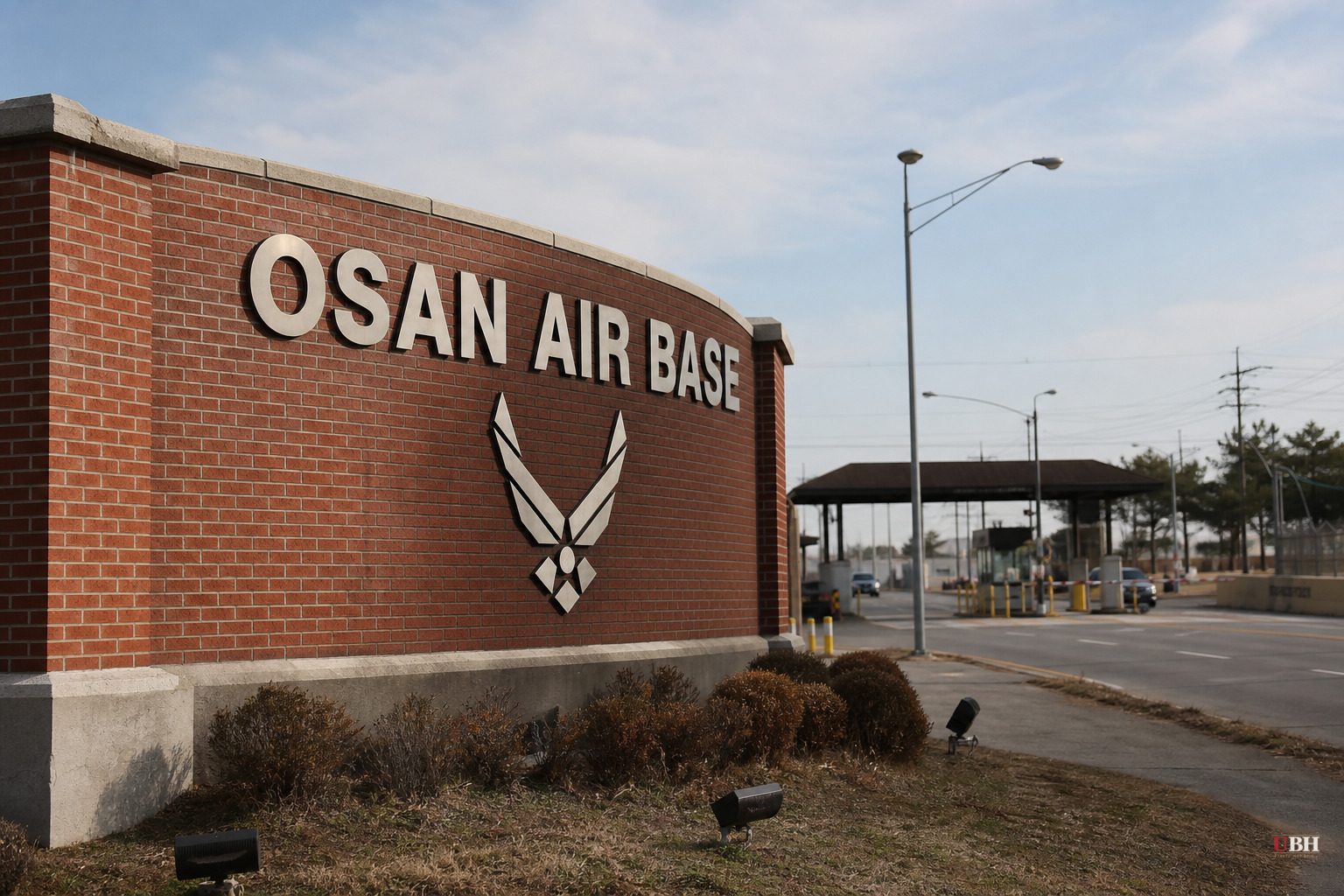
White Phosphorus Leak at Osan Air Base Triggers Brief South Korean Evacuation Order
The Incident
South Korean police got a 112 emergency call at 5:07 p.m. local time Tuesday reporting a possible white phosphorus leak at K-55 Osan Air Base in Pyeongtaek, about 37 miles south of Seoul, according to Yonhap News Agency as reported by Anadolu Agency (aa.com.tr). The base is operated by U.S. Forces Korea and hosts the Air Force's 51st Fighter Wing.
Pyeongtaek city officials sent an emergency alert telling nearby residents to evacuate to a safe location and avoid skin exposure, according to the Associated Press. Police set up a perimeter 300 to 500 meters from the base, blocking pedestrians and rerouting vehicles, AP reported.
The order didn't last long. Anadolu Agency reported the evacuation advisory was lifted just 36 minutes after it went out, with officials saying it was safe to resume normal activity. AP reported the broader lift came several hours later once decontamination work was finished, citing text messages sent by the city. Newsweek pinned the exact lift time at 6:13 p.m. local time, per Pyeongtaek city officials.
What the Military Says Happened
The U.S. 51st Fighter Wing's public account is notably narrower than what South Korean officials described. In a statement carried by the Independent, the unit did not mention white phosphorus at all. It said it established a 1,000-foot safety cordon around the base "due to a ground mishap and out of an abundance of caution" and called reports of a general base evacuation false.
"We are handling this matter with the utmost care and expediency," the statement said. "The safety and well-being of our service members, their families, and our Pyeongtaek neighbors remain our absolute highest priority."
Newsweek reported the base was not fully evacuated and that the U.S. military described it as an "isolated situation." U.S. Forces Korea did not provide further comment beyond that, according to AP.
Anadolu Agency's sourcing filled in the gap the U.S. statement left open. A police official told Yonhap that two munitions leaked an unidentified amount of the substance inside the K-55 munitions depot, and that the chemical is used for cleaning warheads. The U.S. military reportedly told South Korean authorities the leaked substance was about 80% diluted and posed low risk to public health and the environment, per Anadolu's report. No casualties were reported by any outlet.
Why White Phosphorus Matters
White phosphorus ignites on contact with oxygen and burns at extreme temperatures, capable of setting buildings on fire and burning human flesh to the bone, according to AP. Newsweek noted it is not classified as a chemical weapon under the Chemical Weapons Convention, but its deliberate use against civilians as an incendiary weapon is banned under international law. Militaries, including the U.S., use it legitimately in smoke and illumination munitions.
A leak inside a munitions depot, even a diluted one, warrants a straight answer from the U.S. military about what exactly happened and why residents in a foreign country got an emergency phone alert over it.
A Fair Read of Both Sides
South Korean officials treated this seriously enough to issue an emergency alert and stand up a police perimeter. That's a reasonable, cautious response to a chemical leak report near a population center, and nobody should mock Pyeongtaek's government for erring on the side of protecting civilians. The concern from residents and local officials that a toxic substance leaked near their homes is legitimate on its face.
At the same time, the U.S. military's account—that this was a contained "ground mishap" with an 80% diluted substance and zero casualties—is consistent across the reporting. Firefighters and a U.S. explosive ordnance disposal team responded quickly, according to Anadolu Agency, and the evacuation order was lifted within hours, not days. There's no evidence here of a cover-up or of the incident being downplayed to avoid diplomatic fallout. The gap between the U.S. statement and the South Korean police account looks more like the Pentagon being tight-lipped about operational details than dishonesty.
What's Unresolved
The U.S. military has not said how the two munitions came to leak in the first place, or whether this points to a maintenance or storage problem at Osan. U.S. Forces Korea has not offered further comment beyond the initial statement, according to AP. With 28,500 American troops stationed in South Korea and Osan sitting close to Pyeongtaek's civilian population, Congress or Pentagon reporters should ask what caused the leak and what's being done to make sure it doesn't happen again in a depot next door to Korean families.
Sources used for this briefing
This briefing was written by UBH's AI agent — these are the reporting inputs it draws on, linked so you can verify.


