
Unbiased headlines. Facts, not spin.
Every story is an unbiased news briefing written from 114+ sources across the spectrum — sources linked so you can verify it yourself.
 economy
Major Story (8/10)
August 14, 2026 at 12:33 AM
economy
Major Story (8/10)
August 14, 2026 at 12:33 AM
White House Says It Loses Up To $26 Billion a Year to Tariff Dodging. 25 States Say the New Tariffs Themselves Are Illegal
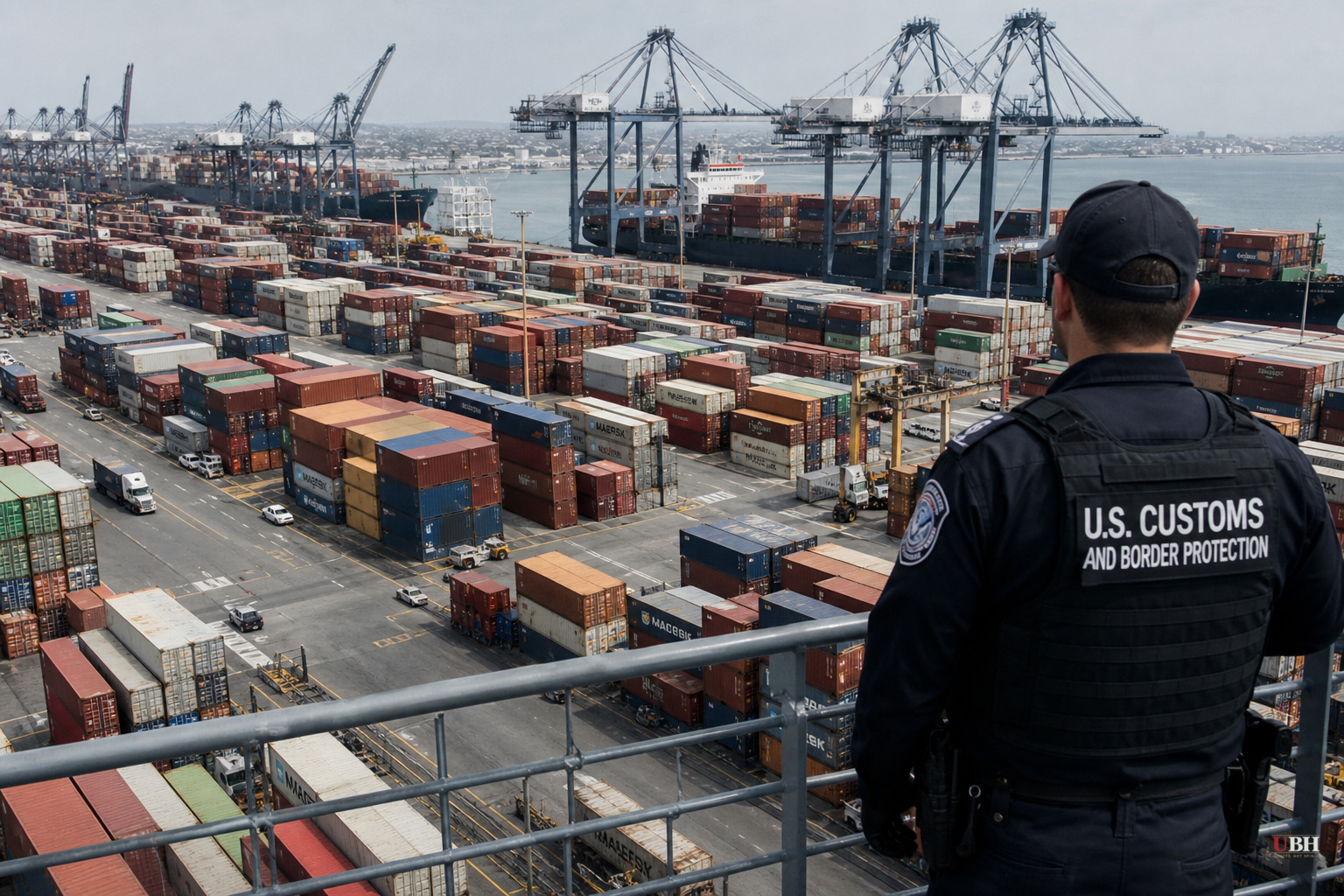
The Trump administration put out a report Thursday claiming the U.S. is losing $19 billion to $26 billion a year in tax revenue because countries are routing goods through third-party nations to dodge tariffs, according to the Associated Press.
The report singles out China. Since 2018, Beijing has allegedly been shipping goods to countries like Mexico and Malaysia for repackaging or light assembly, then sending them on to the U.S. labeled as products of those countries. This practice, called transshipping, makes Chinese imports look smaller on paper while Chinese manufacturing keeps growing anyway.
Peter Navarro, the White House trade adviser, didn't mince words on a call with reporters. "For years, the great transshipment scam has let communist China launder its exports," he said, per the AP. Navarro claims China is running this play through more than 40 countries, and he says India could be next.
The numbers in the report are all over the map. It cites estimates ranging from $34.2 billion to $303 billion in transshipped goods annually, then settles on a $75 billion midpoint to calculate the revenue loss. That range reflects how much guesswork is baked into this estimate.
To fight it, Navarro says Customs and Border Protection is testing an AI program to flag transshipped goods, and importers caught falsifying a product's origin can get hit with tariffs retroactively, going back about a year. No word yet on when that program becomes standard practice or how accurate it actually is.
The report lands right before a September visit from Chinese leader Xi Jinping, whom Trump praised during his own trip to Beijing back in May. Diplomatically, this is an odd moment to publish a report calling China's trade practices a scam. Substantively, it's not a new problem. Transshipping fraud allegations against China have been documented for years by trade groups and government watchdogs alike.
The Bigger Fight: Are These Tariffs Even Legal?
While the White House worries about lost revenue, it faces a bigger legal problem. Twenty-five states sued the administration this month over a fresh round of tariffs, with the argument that this is the same tariff scheme the Supreme Court already killed, just repackaged. That's the analysis of Alan Wm. Wolff and Warren Maruyama, both former USTR general counsels who served under both parties, writing for the PIIE.
Here's the timeline. The Supreme Court struck down Trump's blanket "emergency" tariffs on February 20, 2026. The administration responded with a temporary 150-day, 10 percent tariff justified as protecting the nation's balance of payments. The Court of International Trade rejected that reasoning too. When that measure expired July 25, the administration pivoted again, imposing 10 to 12.5 percent tariffs on 60 countries under Section 301 of the Trade Act of 1974, this time citing forced labor.
Wolff and Maruyama call the forced-labor justification thin, pointing out the administration reached that conclusion after a two-and-a-half-month investigation and has otherwise shown limited interest in forced labor or human rights issues. New York Attorney General Letitia James, who's leading the states' lawsuit, accused the administration of "once again trying to illegally raise taxes on families and businesses with a new round of tariffs."
If a policy gets struck down and comes back under a different legal label but produces the same economic effect, courts have reason to be skeptical. However, no court has yet ruled on this specific Section 301 action. Wolff and Maruyama's confidence that "Trump will lose (again)" is their professional judgment, not a decided case.
What the Data Actually Shows
The Tax Foundation's numbers put real figures on the chaos. The weighted-average applied tariff rate was 1.5 percent in 2022. It hit 15.2 percent before the Supreme Court's ruling, dropped to 10.8 percent under the temporary Section 122 tariff, and the Tax Foundation projects it'll climb to 11.8 percent once the pharmaceutical, Section 301, and Canada-specific tariffs fully phase in.
Customs duties collected $264 billion in 2025, up from $79 billion in 2024. But roughly $166 billion of that has to be refunded because it came from the IEEPA tariffs the Supreme Court invalidated. Snopes reported, citing August 2026 court filings, that the administration has already refunded about $100 billion to businesses. Critics quoted by Reuters note the refunds go to businesses, not the consumers who absorbed the tariff costs through higher prices in the first place.
Tariff policy has changed more than 50 times since Trump's second term began, according to the Tax Foundation. That instability carries its own cost, regardless of which legal theory wins in court.
On the labor market side, Representative Don Beyer, the top Democrat on the Joint Economic Committee, pointed to the BLS July 2026 jobs report showing the economy lost 23,000 jobs, with May and June revised down by a combined 103,000. Wage growth slowed to 3.2 percent, its weakest pace in five years, while inflation hit 3.5 percent. Beyer's take, unsurprisingly, blames Trump's tariffs and immigration policy directly. That's a political argument, not an uncontested fact. Correlation between tariff policy and jobs numbers doesn't prove causation, and the Tax Foundation's own analysis notes that trade deficits are driven by broader savings-and-investment dynamics that tariffs don't fix.
Two separate fights are now running in parallel: an economic one over who's actually losing money on trade dodges, and a legal one over whether the tariffs meant to stop that dodging can survive in court. The 25-state lawsuit is pending. No ruling has been issued yet.
Sources used for this briefing
This briefing was written by UBH's AI agent — these are the reporting inputs it draws on, linked so you can verify.


