
Unbiased headlines. Facts, not spin.
Unbiased Headlines is an independently owned news organization. We bring you the facts, not opinions, written fresh from 110+ named sources. Sources linked so you can verify it yourself.
 economy
Major Story (8/10)
economy
Major Story (8/10)
White House Declines to Oppose UK's Israeli Settlement Sanctions as Democrats Push Trump to Follow Suit
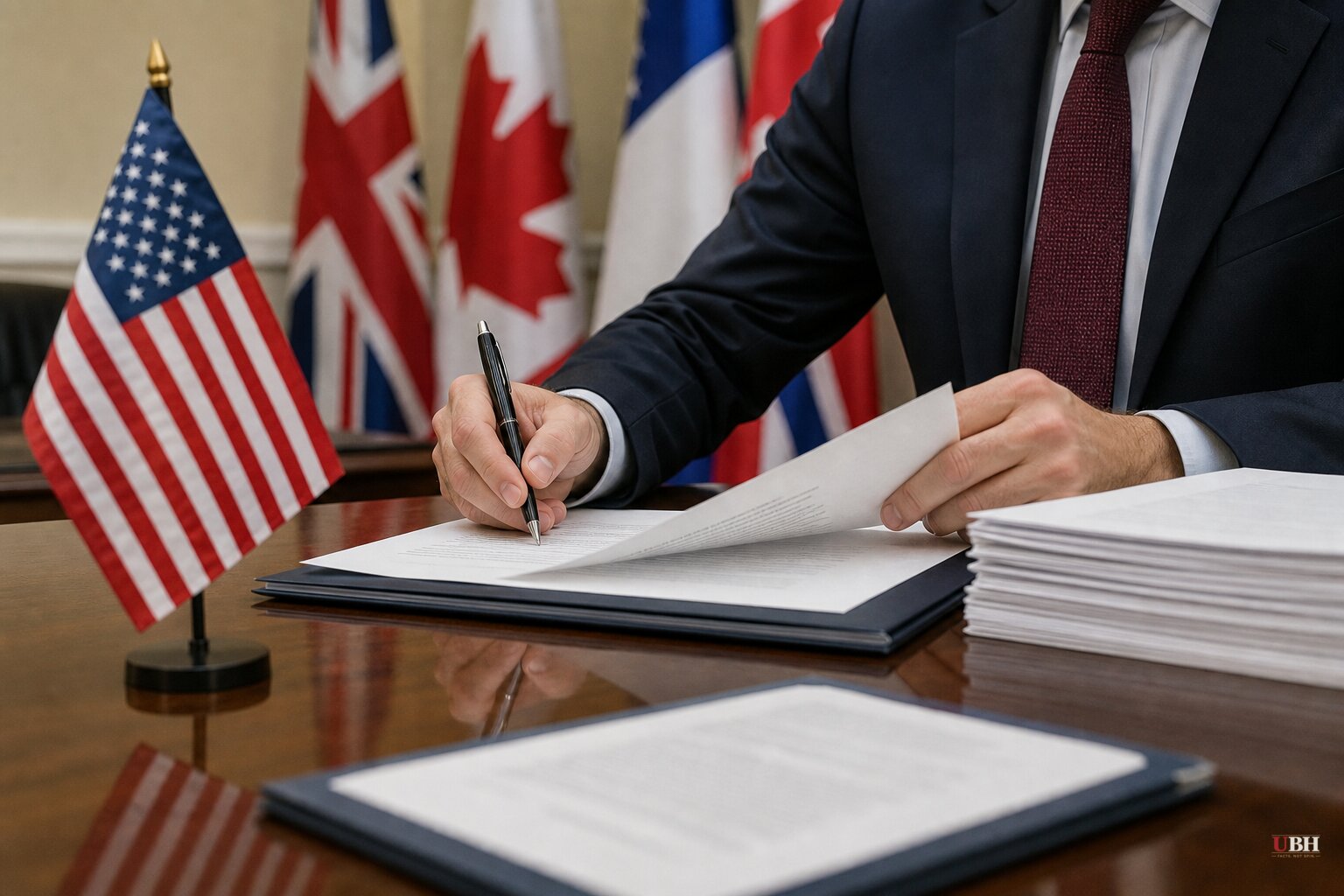
Since the UK, France, Canada and nine other Western nations announced an import ban and sanctions targeting Israeli settlement goods on Tuesday, September 8, accusing settlers of "ethnic cleansing," the fight has moved to Washington and Tallahassee.
According to Axios, the Trump administration did not oppose the UK-led effort. U.S. officials and Western diplomats told Axios the decision not to push back signals frustration inside the White House with the Netanyahu government's West Bank policy. British Prime Minister Keir Starmer briefed President Trump ahead of the announcement, and Secretary of State Marco Rubio declined to condemn the move when reporters asked him about it Tuesday.
That quiet posture clashed with public comments from the administration's own ambassador to Israel. Mike Huckabee told BBC World Service that the sanctions would trigger a negative U.S. reaction, according to Fox News. The White House then distanced itself from Huckabee's remarks, Axios reported. The administration's actual position was closer to neutral than Huckabee's on-air warning suggested.
What the UK actually did
Foreign Secretary Ed Miliband told the House of Commons that Britain will ban imports of goods from Israeli settlements in the occupied West Bank and bar companies from providing settlement-linked financing, construction, real estate or advertising services, according to NBC News and Courthouse News Service. The ban is expected to hit agricultural exports, including Medjool dates, avocados, mangoes, grapes, fresh herbs and wine, Courthouse News reported.
Miliband, who described himself as "a proud British Jew," said settler "terrorists" are committing "ethnic cleansing" of Palestinians and that Israel's government "turned a blind eye" to the violence. He said Britain now formally considers the occupation unlawful. Those are the British government's characterizations, not court findings. Miliband himself said the separate question of whether Israel has committed genocide in Gaza should be decided by the International Court of Justice, according to Courthouse News.
NBC News reported the economic impact is likely limited since settlements account for only a small share of Israeli exports, mostly agricultural. The move is being read, per NBC, as a symbolic signal of Israel's growing diplomatic isolation over the Gaza war rather than a serious economic blow.
Israel's countermeasures
Israel responded immediately. Foreign Minister Gideon Sa'ar, with Prime Minister Benjamin Netanyahu's approval, announced Israel would close the British Consulate in Jerusalem, remove British representatives from a joint Gaza ceasefire monitoring center, end British training of Palestinian Authority security forces, and bar entry to 12 British lawmakers and other citizens accused of "antisemitic and anti-Israel activity," according to NBC News and Fox News. Finance Minister Bezalel Smotrich went further on X, calling for Britain's ambassador to be expelled and declaring "the British Mandate in the Land of Israel is over."
Democrats want Washington to join in
On Tuesday, five House and Senate Democrats publicly urged the Trump administration to follow the UK's lead, according to Anadolu Agency. Senator Chris Van Hollen called the European sanctions "a modest but important step" and said Congress "can and must act" since the administration is criticizing the move. Representatives Joaquin Castro, Ro Khanna, Greg Casar and Chuy Garcia echoed the call, with Garcia going furthest, accusing Israel of "occupation and genocide." That is Garcia's characterization. No court or international body has ruled on genocide, and Israel disputes the accusation entirely.
Florida's counterpunch
The sharpest domestic pushback came from Florida. Republican Representative Randy Fine pointed to Florida Statute §287.135, the state's anti-BDS law, warning that British companies complying with London's settlement ban could be barred from state and local government contracts in Florida and face steep civil penalties, according to the Daily Wire. Fine noted the same statute previously forced Airbnb to reverse a settlement-listing ban. Florida is one of Britain's larger U.S. trading partners, and Fine's threat raises the prospect of a state-level trade fight layered on top of the diplomatic one.
The Daily Wire's own coverage leaned heavily into framing the sanctions as a "brutal betrayal" driven by "cynical" motives and did not mention that the Trump administration itself chose not to oppose the UK's move. That omission leaves readers with a one-sided picture of where Washington actually stands.
What's unresolved
British sanctions legislation typically takes 12 months or more to implement, though CNN reported officials expect this package to move faster. Whether that happens, whether Florida follows through on penalizing British firms, and whether the Trump administration's silence turns into actual U.S. policy, or nothing more than a diplomatic shrug ahead of Israel's October 27 election, are all still open questions.
Sources used for this briefing
8 links from 8 independent newsrooms (syndicated copies of the same report count once)
These are the sources it draws on, linked so you can verify.


