
Unbiased headlines. Facts, not spin.
Unbiased Headlines is an independently owned news organization. We bring you the facts, not opinions, written fresh from 110+ named sources. Sources linked so you can verify it yourself.
 economy
Major Story (8/10)
China Reserves Right to Retaliate Over Treasury Plan to Add Biotech and Widen AI Curbs on U.S. Investment
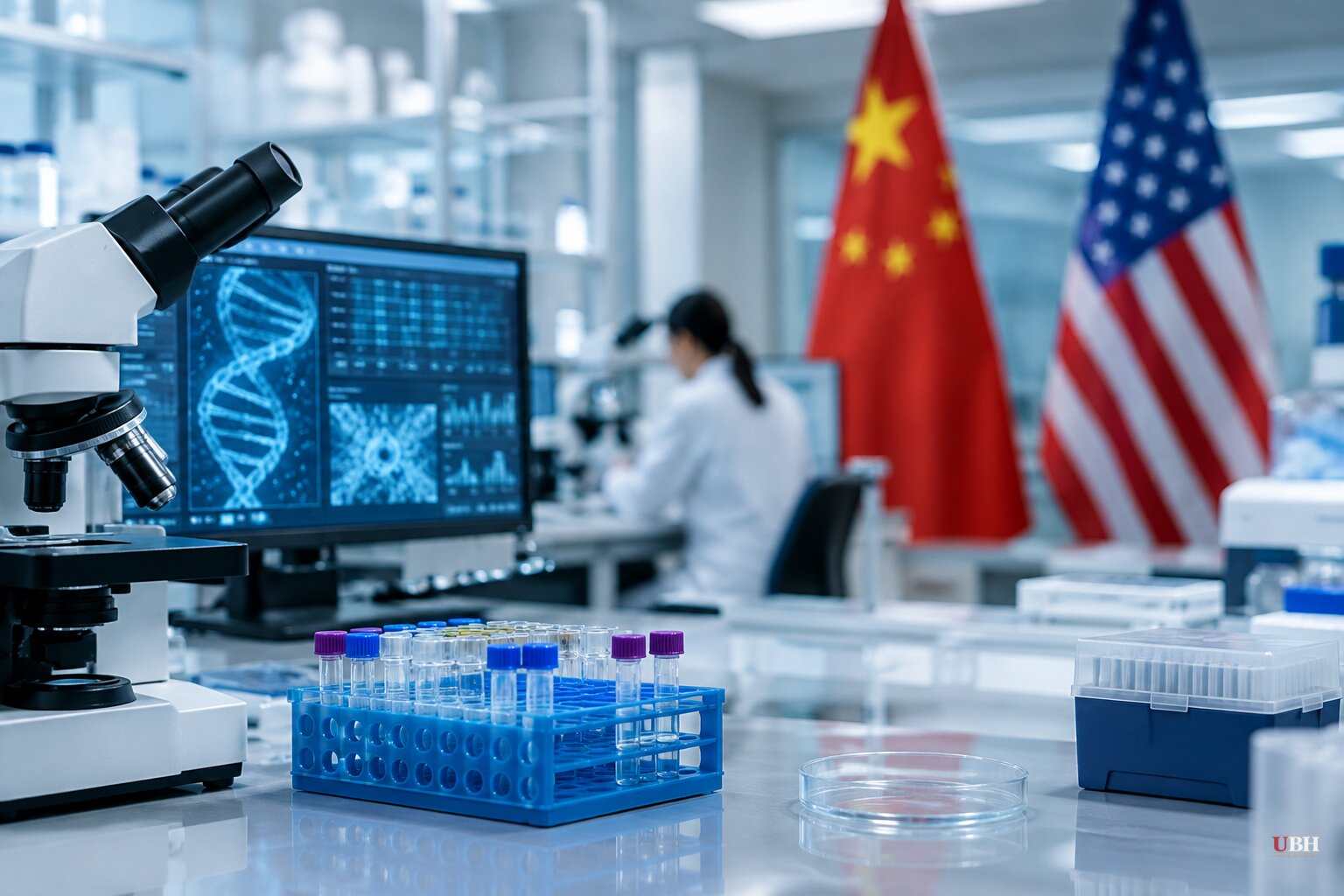
Since Treasury unveiled its proposed outbound investment rules on Thursday, Oct. 22, the fight has moved to Beijing. On Saturday, Oct. 24, a spokesperson for China's Ministry of Commerce expressed "grave concern" and "firm opposition," and said China "reserves the right to take corresponding measures."
The ministry did not say what those measures would be.
What Treasury proposed
The draft would add biotechnology to the list of sectors where U.S. money going into Chinese companies is restricted. It would also widen the existing ban on investing in Chinese AI companies.
The program would extend beyond China to Cuba, Iran, North Korea and Russia. That follows a law Congress passed in December 2025, the Comprehensive Outbound Investment National Security Act, which codified the program and expanded it to more technologies and more countries.
The program itself dates to a 2023 executive order signed by then-President Joe Biden. It took effect in January 2025 and initially covered certain investments in Chinese AI, semiconductor and quantum companies.
Some deals would be banned outright. Others could go ahead but would have to be reported to Treasury, generally within 30 days of completion.
The rule would apply only to investments above $50,000. Ordinary purchases of publicly traded stocks and investment funds would generally stay exempt, subject to conditions.
How the AI language changes
Treasury says it wants to stop American capital, business expertise and connections from helping adversaries build technology that could strengthen their military, intelligence and surveillance capabilities.
On AI, the department would drop the requirement that investors assess the "technical capabilities or thresholds" of a system, Treasury said in an email to The Epoch Times. Its proposed rule says improvements in algorithms and other techniques have made computing-power thresholds increasingly unreliable. It also says general-purpose AI can have national-security uses even if it was not built for the military.
Investments in AI companies in or linked to the targeted countries that now require only a report would become prohibited. Treasury's text uses "superintelligence," or SI, in place of AI, a term associated with President Trump.
The draft also tightens controls on advanced chips, quantum technology, high-performance computing and hypersonic systems.
Companies tied to the Chinese military get tougher treatment. A deal that would otherwise only be reportable could become banned if the target, or an affiliate or subsidiary, appears on the Pentagon's list of Chinese military companies or on a federal list of biotechnology companies of concern.
Treasury estimates about 200 investment transactions a year would fall under the rules.
Beijing's response
The Commerce Ministry spokesperson called the proposal a discriminatory expansion of restrictions and a "typical practice of overstretching the concept of national security."
The spokesperson said the rules "run counter to the important consensus reached by the two heads of state," disrupt normal economic and trade cooperation between Chinese and American companies, and undermine the international economic and trade order.
The ministry also argued the curbs would hurt American businesses. "Investing in China is investing in the future," the spokesperson said, citing the country's consumption and investment potential. China urged Washington to stop "politicizing and weaponizing economic and trade issues."
The Foreign Ministry made similar points earlier. Spokesperson Mao Ning said the U.S. should follow market economy principles and stop interfering in normal business cooperation.
What U.S. specialists say
Craig Singleton, a senior fellow at the Foundation for Defense of Democracies, said the proposal "sends an important signal to markets that Washington is tracking where U.S. capital is flowing and what capabilities it is helping build." Capital, he said, can speed military-relevant capabilities "just as surely as technology transfer can."
Jason Chipman, a WilmerHale partner and former Justice Department lawyer, said the rule "will require more substantial compliance programs to manage risk."
Ryan Majerus, a former U.S. trade official now at King & Spalding, called it "just the first step in a fairly long process" toward more enforcement-minded rules, with "more teeth" behind the program.
The biotech wrinkle
Biotech is the most commercially sensitive addition. Dimsum Daily's analysis notes that U.S. drugmakers have been leaning harder on Chinese companies for licenses on promising drug candidates. Under the draft, deals touching firms deemed sensitive could face heavier paperwork or outright bans. Dimsum Daily also reports the proposal would curb investment in Chinese brain-computer interface companies.
How tightly Treasury defines "sensitive" in the final text will decide how many licensing and investment deals are caught. The proposal's reporting regime and its lists of covered companies are where most of that will be settled.
The Russia piece also carries a political footnote. AP noted that Russia's inclusion comes days after Trump waived sanctions on Russia following a diesel deal with Vladimir Putin. Congress reacted angrily to the waiver, according to AP, but no quick counter was seen.
What happens next
Nothing in the proposal is in force. Treasury is taking public comments through Dec. 7 and will then issue a final rule. Whether Beijing follows its warning with an actual countermeasure, and what form it takes, is the open question. The ministry has not named one.
Sources used for this briefing
6 links from 6 independent newsrooms (syndicated copies of the same report count once)
These are the sources it draws on, linked so you can verify.


