
Unbiased headlines. Facts, not spin.
Unbiased Headlines is an independently owned news organization. We bring you the facts, not opinions, written fresh from 110+ named sources. Sources linked so you can verify it yourself.
 economy
Low Interest (4/10)
Rick Lazio Warns Tariffs Alone Won't Keep China's EV Makers From Overtaking U.S. Automakers
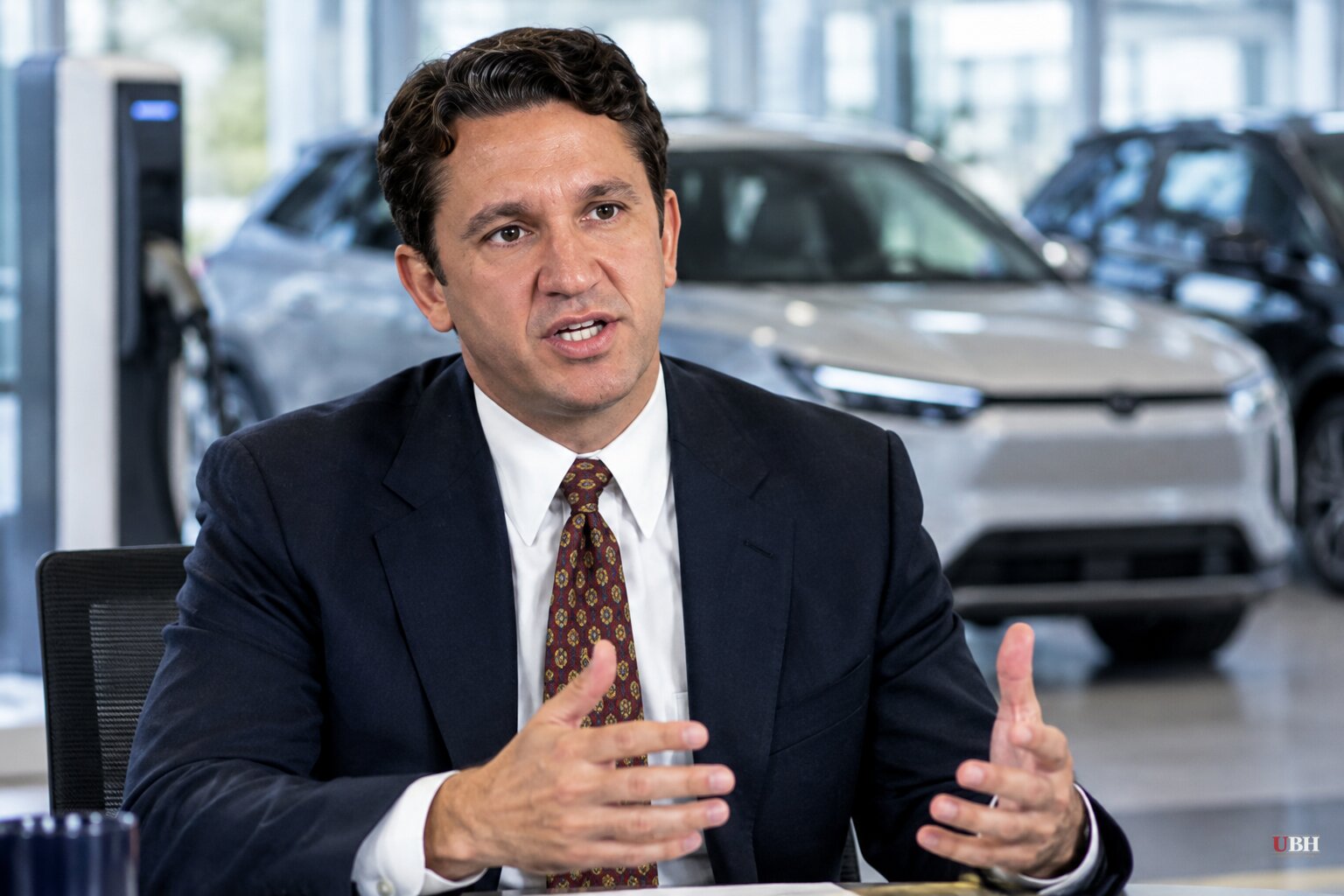
American automakers have been in this fight before, and they lost the first round. That is the core of an op-ed by Rick Lazio published in Fortune on Saturday, Oct. 24, arguing that China's electric-vehicle rise should worry Washington.
The argument is his, not a finding. But the facts he cites are specific and worth laying out.
Britain as a preview
Lazio points to the United Kingdom, where Chinese brands took nearly a quarter of the new-car market in September. The Jaecoo 7, a Chinese-built SUV nicknamed the "Temu Range Rover," was Britain's best-selling new vehicle that month, he writes.
His explanation: Chinese automakers pair advanced technology with aggressive pricing.
Americans have not seen that competition up close. The U.S. imposed a 100% Section 301 tariff on Chinese electric vehicles in 2024, which Lazio says effectively closed the market to them. The goal was to stop heavily subsidized vehicles from undercutting domestic production.
Lazio calls that rationale understandable. In his words, American companies operating in a market economy "cannot compete on equal terms with a state-directed industrial system."
What the tariff does and does not do
His objection is to treating the tariff as a strategy. "Protection alone cannot make an American factory more productive, lower the cost of a battery, or bring a better vehicle to market," he writes.
He cites International Energy Agency data. China is the world's leading EV manufacturing hub, and Chinese shipments made up 40% of global electric-car exports in 2024. Battery pack prices fell worldwide that year. The average drop was about 30% in China, against about 15% in the United States.
Lazio's reading is that the tariff has kept much of China's cost advantage away from American dealerships without erasing the price gap underneath.
The Japan precedent
In the 1970s and 1980s, Japanese automakers won American buyers with better fuel economy, higher quality and more efficient production, Lazio writes. Detroit was slow to respond.
He cites a recent analysis estimating that the Big Three needed 10 to 15 years to catch up with Japan's production-efficiency gains. He does not name the analysis in the portion of the piece available.
Congress's answer came in 1981, when it created the federal research and development tax credit. Lawmakers were worried about falling private-sector R&D spending and U.S. competitiveness. Lazio says the same logic applies now: discoveries matter only if companies have the incentive and the capital to commercialize them.
Tesla's Roadster as the test case
Lazio uses Tesla's newly unveiled Roadster as his example of American ingenuity. As he describes it, the car can go from zero to 60 mph in under a second and perform airborne maneuvers. He gives Tesla "an A for design innovation."
Then he asks the harder question. The base Performance model has a fan-powered suction system but none of the thrusters behind the headline acceleration and airborne feats. Can Tesla commercialize even that version before Chinese manufacturers, backed by state-supported supply chains and generous R&D incentives, make comparable technology affordable?
His conclusion: "American ingenuity is not the problem." The challenge is turning it into affordable products at scale, something he says China has become "remarkably effective" at doing. The next auto race, he writes, goes to whichever country can do both.
Open questions
The piece is a policy argument, and its prescription leans on a government incentive. Lazio points to the R&D tax credit as the model but, in the text available, does not say how large a new incentive should be or what it would cost taxpayers.
He also does not say whether the 100% tariff should stay, shrink or grow. His position is that it is necessary but insufficient.
The facts that can be checked are narrower than the argument. The UK September sales figures and the IEA export and battery-price numbers are data points. Whether a tax credit would close a gap that China's state-backed system has built over years is a prediction, and it rests on one historical analogy.
It remains unclear whether Washington and Detroit will treat the tariff as breathing room or as a finish line. Nothing in Lazio's piece points to a pending bill, vote or agency action on a new incentive.
Sources used for this briefing
5 links from 3 independent newsrooms (syndicated copies of the same report count once)
These are the sources it draws on, linked so you can verify.


