
Unbiased headlines. Facts, not spin.
Unbiased Headlines is an independently owned news organization. We bring you the facts, not opinions, written fresh from 110+ named sources. Sources linked so you can verify it yourself.
 economy
Major Story (7/10)
Event date: October 13, 2026 ·
Moody's Economist Estimates Iran War Has Cost U.S. Households About $2,000 Each Since February
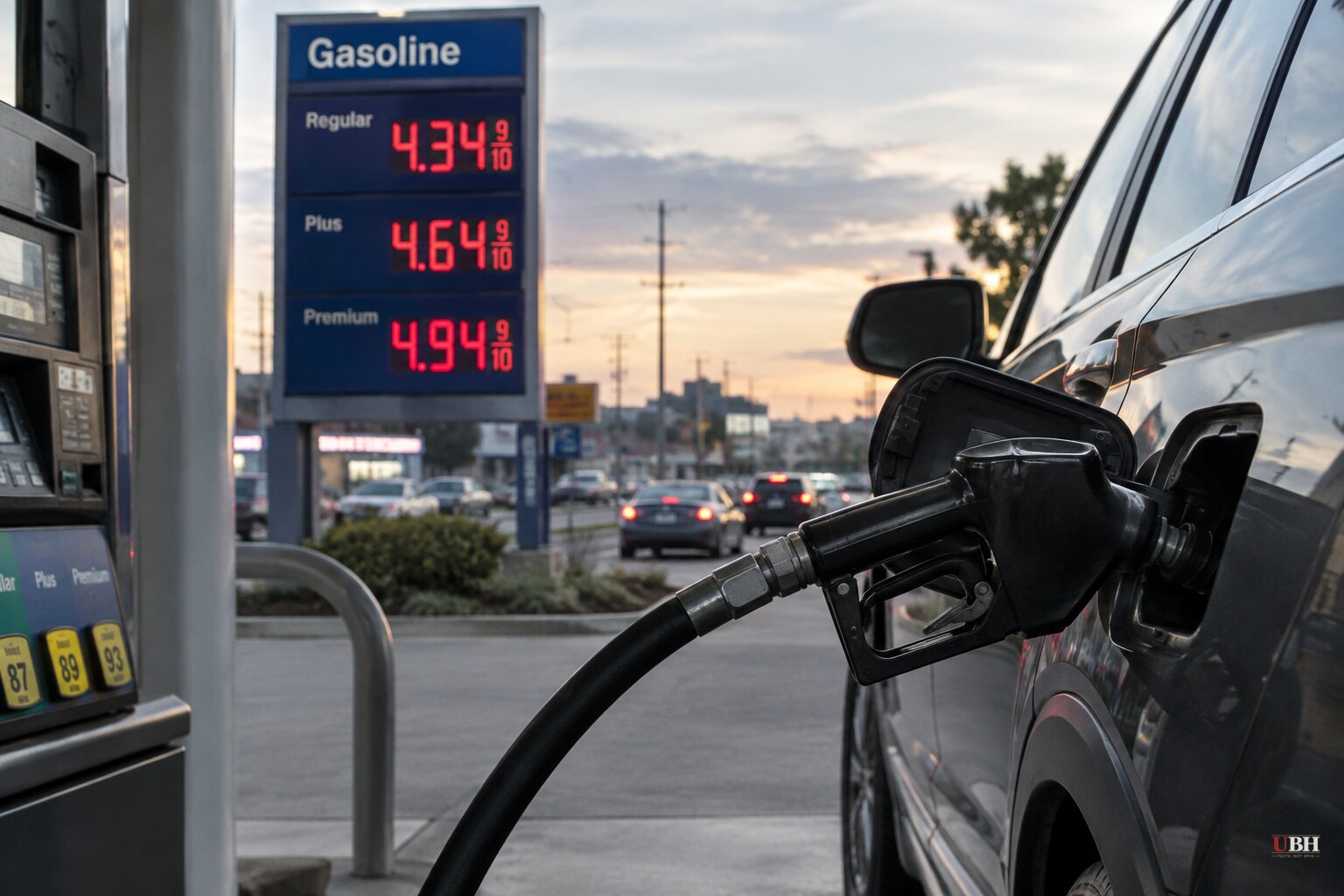
The Iran war has cost American consumers roughly $265 billion since it began in late February, according to an estimate from Mark Zandi, chief economist at Moody's Analytics. That works out to about $2,000 in higher costs for the average household.
It is an estimate, not a measured figure. But the underlying prices are public, and they are ugly.
Gas at $4.34, a record count of $4 days
The national average for gasoline was $4.34 a gallon on Tuesday, according to AAA. Before the conflict it was $2.98.
That day was the 165th of 2026 with the national average at or above $4. CNN's review of AAA data, which goes back to 2000, found no calendar year with more. The prior record was 158 days in 2022, during the Biden administration, much of which was attributed to Russia's invasion of Ukraine. In 2008, the only other year gas topped $4, prices stayed at or above that level for 48 days.
Diesel, the fuel that moves trucks, tractors and trains, remains near all-time highs. Jet fuel has climbed too, and airfare was up 23% year over year as of August, according to the Bureau of Labor Statistics.
Why prices stayed high after oil started moving again
The war paralyzed the Strait of Hormuz for months, bottling up crude, fuel and liquefied natural gas inside the Persian Gulf. Oil flows through the strait have since rebounded.
The cost of getting crude out of the Gulf, however, has skyrocketed. That feeds directly into gasoline, diesel and jet fuel.
Zandi estimates energy costs, including home heating, have taken about $1,100 from the typical family since the war began. At current prices that tally is growing by about $50 a week.
Oil-heat customers face a harder winter. Homes using heating oil are expected to pay 21% more for the fuel than last winter, according to the U.S. Energy Information Administration, and CNN has reported projections of a 30% jump in heating oil costs.
Paychecks are not keeping up
Wage growth slowed in September to a five-year low. Inflation-adjusted wages have fallen in almost every month since the war started.
Some households are drawing down savings or leaning on credit cards to cover the gap. Moody's found that the second-biggest consumer hit from the war is higher borrowing costs: inflation prompted the Federal Reserve to raise interest rates for the first time in three years, and a bond-market sell-off pushed average 30-year fixed mortgage rates to 7.4%, a nearly three-year high. Moody's estimates higher interest rates have cost the typical household about $360.
Zandi did not hedge on the politics. "Many Americans have rightly connected the dots between the Iran War and the painfully high cost of living and thus want the war to end," he told CNN on Tuesday.
The White House response
The administration does not accept Zandi's math or his motives. "Mark Zandi is a Democrat donor who is frequently wrong – including predicting multiple recessions that never happened," a White House spokesperson told CNN. The statement added: "President Trump is rightfully ensuring that Iran, a country that for 47 years chanted 'Death to America,' can never have a nuclear weapon." (Zandi was an economic adviser to GOP presidential nominee John McCain in 2008.)
President Donald Trump has argued in the past that higher gasoline and diesel prices are a small price to pay for keeping Iran from getting a nuclear weapon. That is the administration's stated rationale: the cost is real, and the alternative is worse.
The White House statement challenges Zandi's credibility. It does not offer a competing dollar figure for what the war has cost households.
What the numbers can and cannot show
A $2,000 household figure is a model output. It depends on assumptions about what prices would have been without the war.
The pump prices, the AAA day counts and the wage data are different. Those are recorded numbers, and they show energy costs well above their pre-war levels and pay growth falling behind prices.
The taxpayer bill is separate. The Pentagon told lawmakers in September that the war has cost $45.1 billion, per CNN's earlier reporting, and that estimate does not include the cost of repairing damaged U.S. bases or buildings in the region.
The political damage shows in the polling. Just 27% of Americans approve of Trump on the economy and 28% call economic conditions good, according to a September CNN poll. Gas was a political problem for Biden in 2022 and it is one for Trump now.
Financial markets show no panic: the Vanguard S&P 500 ETF closed on Oct. 23 at $698.58, down 0.53%. Households, though, feel energy prices long before they show up in an index fund. The first hard test comes at the ballot box, with the midterm elections approaching.
Sources used for this briefing
2 links from 2 independent newsrooms (syndicated copies of the same report count once)
These are the sources it draws on, linked so you can verify.


