
Unbiased headlines. Facts, not spin.
Unbiased Headlines is an independently owned news organization. We bring you the facts, not opinions, written fresh from 110+ named sources. Sources linked so you can verify it yourself.
 economy
Notable (6/10)
UN food agency halves West Bank aid rolls to 200,000 and cuts 500,000 from Gaza, citing funding shortfall
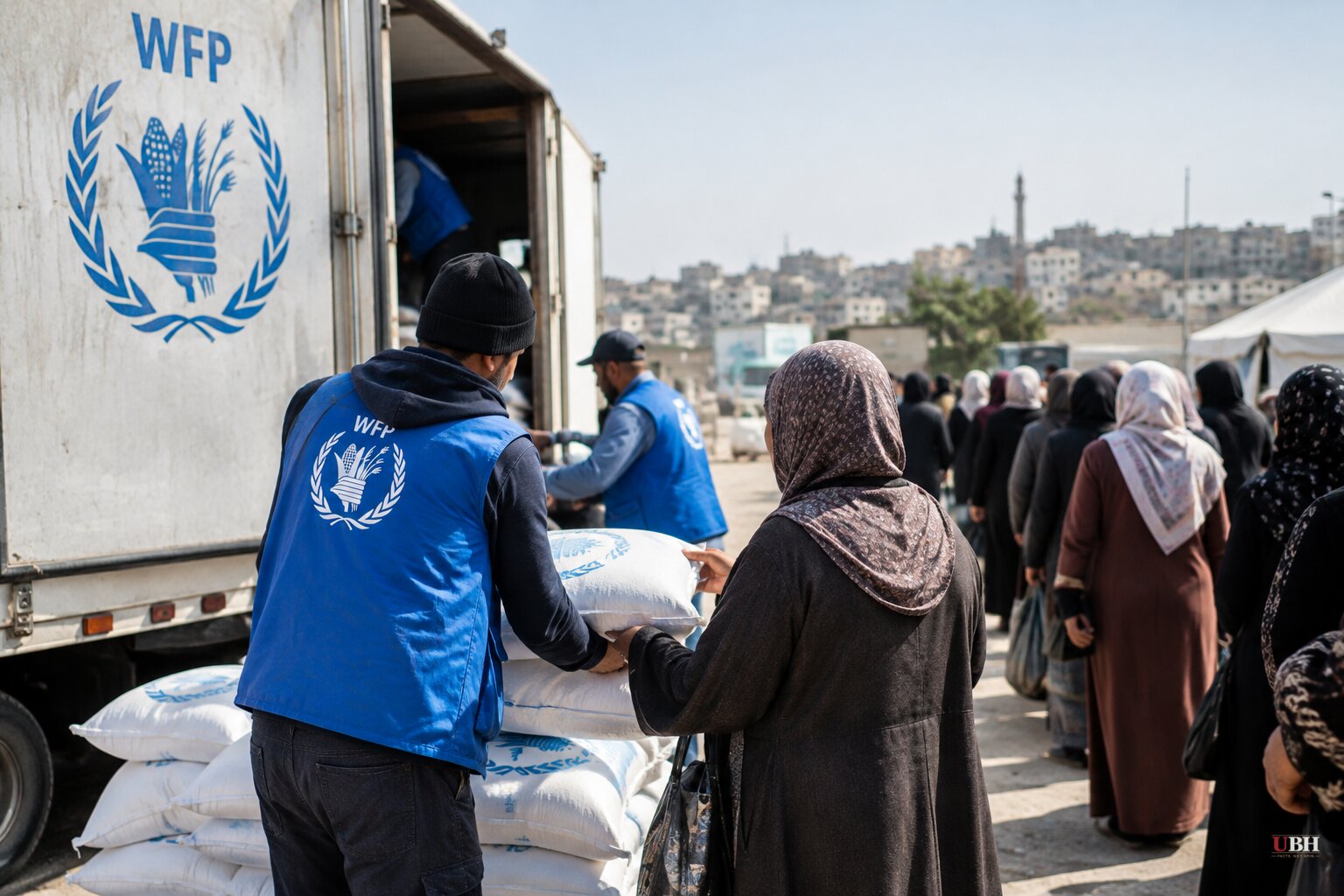
The World Food Programme has cut food assistance to 500,000 Palestinians in Gaza and 200,000 in the West Bank. Carl Skau, the agency's acting head, said so at a briefing from Jerusalem on Monday, Oct. 19, blaming a serious funding shortage.
The numbers: in Gaza, recipients fell from 1.6 million to 1.1 million. In the West Bank, they fell from 400,000 to 200,000. The WFP says its 2026 funding for Palestine is less than half of what it received in previous years.
Skau asked the international community for $450 million to restore the cuts and keep hot meals and food parcels flowing through March.
What changed in Gaza
Rations have been halved. Families now get one food parcel instead of two, plus a smaller bag of wheat flour. The value of cash assistance to 75,000 families has been reduced.
Daily hot meals will drop from 250,000 to 150,000. Families near the "yellow line" of Israeli military control will get a hot meal every other day instead of daily.
The WFP says it can still support bakeries covering a third of Gaza's bread needs. It will also keep nutrition assistance going for 300,000 women and children and school snacks for 200,000 students.
Since the October 2025 ceasefire between Israel and Hamas, the agency says it has reached about 1.6 million people a month. Skau said that since the ceasefire "we have been able to push back on famine."
The WFP estimates 1.4 million people, or 67% of Gaza's population, still face acute food insecurity at crisis levels or worse. That is down from 77% at the end of 2025. About 200,000 people need immediate food aid to prevent death from hunger, and more than 80% of the population is unemployed.
Skau called life in Gaza "absolutely brutal." He said UN teams recorded about 50 attacks per day over the past week. The agency will now prioritize the sick, mothers and children at risk of malnutrition, and people closest to the yellow line.
Commercial food supply
Separately, the Israeli military halted commercial shipments into Gaza, including food, last week. On Monday it said it would resume coordinating commercial truck entry.
It also warned that future reports of merchants paying taxes to Hamas would lead to their licenses being revoked. That is the Israeli military's stated condition, and it frames the restriction as a response to Hamas taxation of commerce.
The West Bank
The WFP announced its West Bank cut in September, citing "critical funding constraints" tied to reduced funding from international funders. The agency estimates roughly 900,000 people in the West Bank are food insecure. Skau put the figure at almost a million needing help, and said food insecurity there has more than doubled in three years.
Skau blamed settler violence. He said escalating attacks have turned what was a human rights and protection crisis "into a hunger crisis." He said he saw burned olive fields, camps and villages. By his count, settler attacks in only the first two weeks of this year's harvest have already surpassed the number for all of last year.
The WFP's latest quarterly food security analysis found that 76% of Palestinian households in the West Bank have seen a significant decline in income, 12% of the population has poor food consumption, and one-third of households cannot afford a healthy diet.
The security picture is also tightening. Israel has imposed widespread closures across the West Bank after Palestinian gunmen killed two Israeli soldiers near Hebron. Prime Minister Benjamin Netanyahu visited the site and ordered security forces to cordon off the city.
Families already without aid
In Tulkarem, the effects predate the official announcement. The WFP confirmed to Al Jazeera that some families stopped receiving aid before September.
Fawza Awad, 75, was displaced from the Tulkarem refugee camp in January 2025 during an Israeli military operation in the northern West Bank. She says she has received no aid for five months. She says her old home was demolished and one son has been detained by Israel since 2024. Her other sons, who worked inside Israel, are unemployed.
She needs asthma and blood pressure medication costing at least 200 shekels ($64) a month. "We used to receive modest food aid barely enough for two or three people, but now that has stopped completely," she said.
At the al-Muwahhad School in Tulkarem's Thannabeh suburb, more than 1,000 people displaced from the Tulkarem and Nur Shams camps are sheltering. Rabab Qasim, 47, lives there with her husband and three children in a 30-square-metre room. She says the family has had no aid for three months. She needs treatment for a herniated disc costing 300 shekels ($96) a month that she says she cannot afford.
In Masafer Yatta, south of Hebron, Said al-Amour, 61, says he and his 14-person family have received no WFP assistance for seven months. He says he was shot by a settler in April 2025 while confronting repeated attacks on his village, an injury that led to the amputation of his leg. He says he has no income beyond a few olive trees, which settlers frequently try to seize.
The WFP says it still assists 200,000 Palestinians in the West Bank through cash transfers, food vouchers, direct food supplies, livelihood programmes and nutritional services, but told Al Jazeera it does not have the resources to cover all families in need. It said the end of aid does not mean a beneficiary is ineligible; it was a broad decision affecting all current beneficiaries. Aid could be reinstated for some, who would be notified by text message.
What comes next
The WFP says the gains made since the ceasefire "remain fragile and could quickly be reversed if humanitarian funding continues to decline." It says additional resources are urgently needed as winter approaches.
The agency has not said which donors reduced their contributions. It is unclear whether the $450 million will arrive before the cold sets in. Until it does, the WFP says it will keep rationing a shrinking supply to the people it considers closest to starvation.
Sources used for this briefing
7 links from 6 independent newsrooms (syndicated copies of the same report count once)
These are the sources it draws on, linked so you can verify.


