
Original briefings. Zero spin.
Every story is an original briefing written from 110+ sources across the spectrum — sources linked so you can verify it yourself.
 defense
Major Story (7/10)
August 22, 2026 at 08:43 AM
defense
Major Story (7/10)
August 22, 2026 at 08:43 AM
West Africa's Terror Fight Fractures as Nigeria and Sahel Juntas Drift Apart
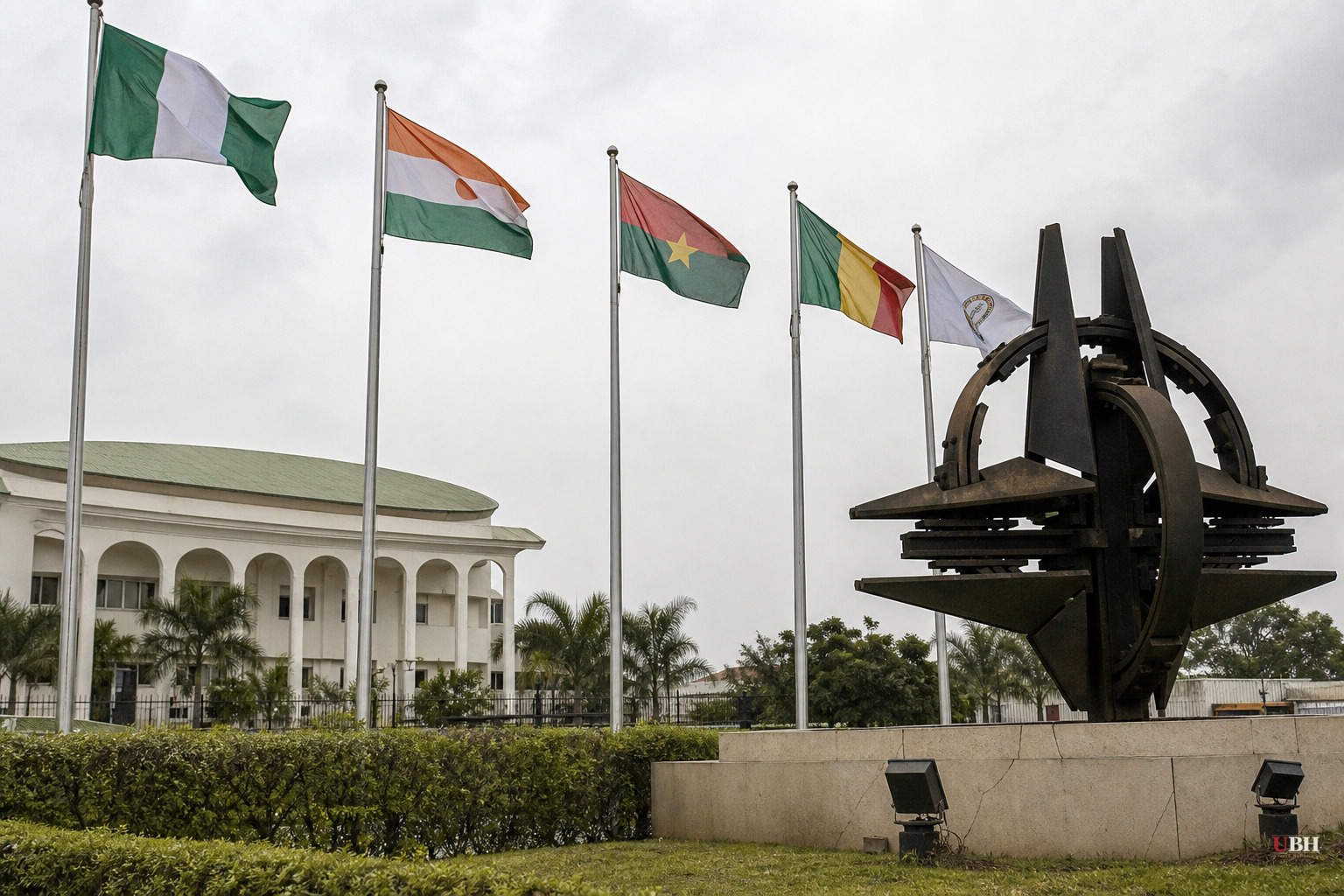
A diplomatic incident exposes a bigger rift
In December 2025, Burkina Faso detained 11 Nigerian Air Force personnel after their C-130 transport plane made an emergency landing in Bobo-Dioulasso en route to Portugal for maintenance, according to Al Jazeera. Burkina Faso said the aircraft entered its airspace without authorization. Nigeria said it was a technical problem and the landing followed standard safety procedure. The crew was released after diplomatic talks on December 17 and flew on to Portugal via Ghana two days later.
Nobody got hurt. But the standoff revealed deeper tensions.
The Sahel states have been walking away from regional cooperation for years
Mali, Burkina Faso and Niger formed the Alliance of Sahel States in September 2023 under the Liptako-Gourma Charter, setting up their own collective-defense pact, according to Al Jazeera. They then quit the Economic Community of West African States, the bloc built to coordinate West African security and trade. That exit became official on January 29, 2025.
Niger went further, pulling out of the Multinational Joint Task Force in March 2025. That's the regional force built specifically to fight Boko Haram and ISWAP around the Lake Chad Basin. Niger's government said it needed to redirect security resources to protect its oil assets, Al Jazeera reported. Nigerian resilience adviser Abiola Sadiq told Al Jazeera the withdrawal blew a hole in cross-border counterterrorism coordination.
Bolaji Akinyemi, a former Nigerian external affairs minister and current director-general of the Nigerian Institute of International Affairs, traces the region's unraveling back further, to the 2011 overthrow of Muammar Gaddafi in Libya. Fighters and weapons scattered south with nowhere else to go, he told Al Jazeera. "This made Nigeria a target," Akinyemi said, adding he hopes "good sense and diplomacy will allow these four countries to show maturity."
The terror groups don't care about the diplomatic fallout
While Nigeria and the juntas argue over airspace and alliances, Boko Haram and the Islamic State in West Africa Province keep operating on both sides of the Nigeria-Niger border, particularly in Niger's Diffa region, according to Al Jazeera.
The African Union's Peace and Security Council has been tracking a sharp deterioration across the wider Sahel. An August 2026 AU briefing document reported that Mali has seen coordinated attacks by the al-Qaeda-linked JNIM and Tuareg separatists from the Azawad Liberation Front, hitting military installations and blockading transport routes.
Burkina Faso is faring no better. JNIM and the Islamic State in the Greater Sahara overran military detachments in the country's north and east in February, and the AU briefing states a large share of Burkina Faso's territory now sits outside government control.
Niger's capital hasn't been spared either. JNIM attacked Niamey's international airport in June, killing more than 30 troops and civilians, five months after a similar January assault on the same airport claimed by the Islamic State Sahel Province, per the AU document. A July 17 ambush on a Nigerien military detachment in the Tillabéri region prompted the AU Commission chairperson to warn of a broader resurgence of attacks across the Sahel.
U.N. OCHA figures cited in the AU briefing put conflict deaths in the Central Sahel at 2,640 in the first quarter of 2026 alone, alongside 1,179 security incidents.
The U.N. is sounding the alarm too
At a Security Council session, U.N. Under-Secretary-General for Counter-Terrorism Vladimir Voronkov warned that ISIS could seize "effective control" over territory stretching from Mali to northern Nigeria if current trends hold, according to Breitbart's coverage of the briefing. Counter-Terrorism Committee director Natalia Gherman told the Council that Africa now accounts for nearly half of all terrorist attacks worldwide, with the central Sahel responsible for roughly a quarter of them.
Gherman also flagged that ISIS affiliates are getting more technologically sophisticated, using drones, cryptocurrency and 3D printing. INTERPOL Secretary-General Valdecy Urquiza told the Council his agency is exam
Sources used for this briefing
This briefing was written by UBH's AI agent — these are the reporting inputs it draws on, linked so you can verify.


