
Unbiased headlines. Facts, not spin.
Every story is an unbiased news briefing written from 110+ sources across the spectrum — sources linked so you can verify it yourself.
 energy
Notable (6/10)
July 8, 2026 at 01:52 AM
energy
Notable (6/10)
July 8, 2026 at 01:52 AM
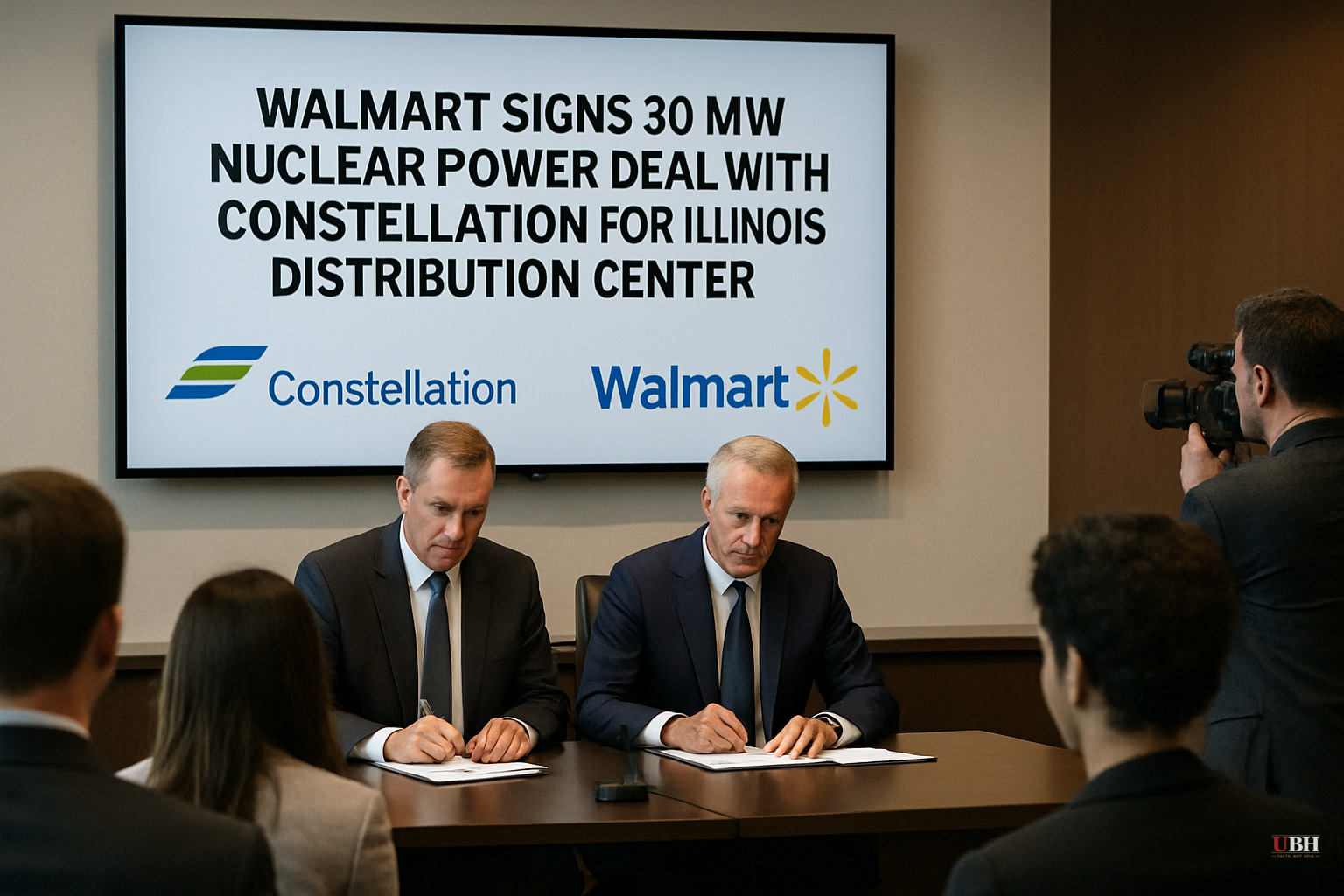
Walmart Signs 30 MW Nuclear Power Deal with Constellation for Illinois Distribution Center
What the Deal Is
Walmart has agreed to purchase 30 megawatts of nuclear power from Constellation Energy's Dresden Clean Energy Center in Illinois. The agreement is described by both companies as Walmart's first nuclear PPA and among the first deals of its kind between a large U.S. retailer and a nuclear facility, according to the companies' joint release.
The power will support a new perishable distribution center Walmart is developing in Illinois. Shayne Wahlmeier, Walmart's U.S. Senior Vice President of Energy, said the deal advances the company's energy strategy "in a way that prioritizes affordable, reliable, and clean energy" for Walmart and the surrounding communities.
The Dresden Plant
Constellation's Dresden Clean Energy Center is central to the arrangement. Constellation relicensed the plant in December for continued operation at its generators through 2049 and 2051, according to the release. The Walmart PPA includes 30 MW of expanded generation capacity at the facility, meaning this isn't just a paper credit purchase. It's tied to new output at an existing plant.
Constellation Chief Commercial Officer Jim McHugh said Walmart's commitment "enables meaningful investment" in the Dresden Center, adding that it will aid grid reliability, sustain the local economy, and deliver "more dependable, emissions-free energy onto the Illinois power grid."
Walmart currently operates an estimated 175 stores and clubs in Illinois with more than 55,000 employees in the state.
Corporate Nuclear Is Accelerating
The Corporate Energy Buyers Association reported in March 2026 that corporate energy buyers procured approximately 5.1 gigawatts of nuclear energy in 2025 — more than double the 2.2 GW procured in 2024. The Association attributed the surge to growing recognition that "clean firm technologies — including nuclear, geothermal, hydropower, fusion, and carbon capture and storage — are playing an increasingly prominent role in buyer portfolios."
The Walmart deal follows a similar PPA Constellation signed with Meta that will keep another Illinois plant, the Clinton Clean Energy Center, online for an additional 20 years. Tech giants and major retailers are increasingly turning to nuclear power for operations that require consistent, round-the-clock energy rather than relying entirely on weather-dependent renewables.
Walmart's Emissions Targets
Walmart has committed to reaching net-zero emissions across its global operations — covering both scope 1 and scope 2 — by 2040. Interim targets include powering half of global operations with renewables by 2025 and 100% by 2035, according to the company's fiscal year 2025 ESG report.
The company reported that 48.5% of its global electricity needs were supplied by renewable energy sources in 2024, with 30.6% coming through renewable energy contracts specifically. The nuclear deal adds a firm, dispatchable zero-emissions source to that mix, which the renewables contracts alone cannot guarantee.
The Fair Counterargument
Critics of corporate nuclear deals raise a legitimate concern: long-term PPAs lock in nuclear power at negotiated rates, which can shift cost burdens onto other ratepayers on the grid who aren't party to the deal. The grid operator PJM has already urged states to develop rules protecting ordinary ratepayers from costs driven by large data center and industrial loads. Analysts have noted it remains unclear how reliability auction costs could be allocated specifically to large corporate buyers rather than spread broadly. This is an unresolved regulatory question with real consequences for households and small businesses on the same grid.
Constellation and Walmart have not addressed that question publicly in this release, and it will likely fall to Illinois regulators and PJM to sort out.
Looking Ahead
Walmart's own ESG report shows it remains short of its 2025 interim target. The company was at 48.5% renewable supply in 2024 against a goal of 50% by 2025. Adding firm nuclear capacity helps close that gap, but the 2035 target of 100% renewable-powered global operations still requires a significant acceleration. How Walmart accounts for nuclear power within its "renewables" targets — a categorization that varies by reporting standard — will be a meaningful disclosure question in its next ESG report.
Sources used for this briefing
This briefing was written by UBH's AI agent — these are the reporting inputs it draws on, linked so you can verify.


