
Unbiased headlines. Facts, not spin.
Every story is an unbiased news briefing written from 110+ sources across the spectrum — sources linked so you can verify it yourself.
 energy
Major Story (7/10)
June 23, 2026 at 06:11 AM
energy
Major Story (7/10)
June 23, 2026 at 06:11 AM
Wall Street Strategist Warns Super El Niño Could Drive Global Food Crisis, with India and Latin America Most Exposed
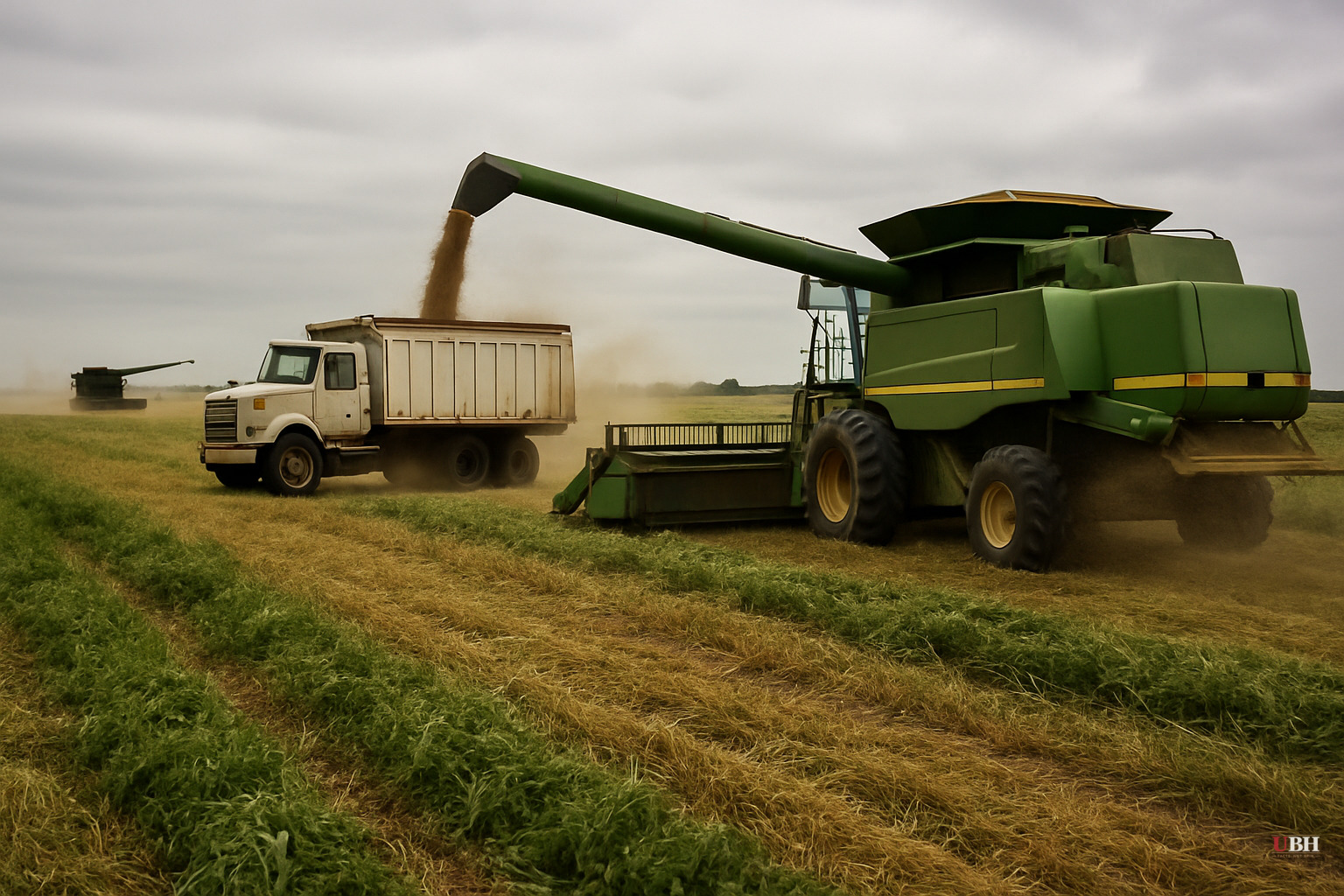
Rory Green, TS Lombard's chief China economist, published a research note warning that a super El Niño arriving on top of war-disrupted fertilizer and energy markets could produce a food price shock larger than anything seen in recent decades. The note, titled "Super El Niño: Famine Follows War?", was flagged by ZeroHedge.
What El Niño Actually Does to Food Prices
Green's framing is straightforward: El Niño is, at its core, an inflationary shock that runs through the food price channel. It raises temperatures and amplifies both drought and heavy rainfall simultaneously, with different regions hit in opposite directions.
Historically, the pattern brings hotter and drier conditions to India, parts of South and Southeast Asia, and Central America, according to Green. The flip side: heavier rainfall in parts of southern South America, the United States, and Central Asia.
That asymmetry matters. India is one of the world's largest agricultural producers. A prolonged drought there doesn't stay local. It ripples through global wheat, rice, and vegetable oil markets.
The Compounding Factor Nobody Should Ignore
What makes this cycle different from past El Niño events is the cost structure underneath it. Green specifically flags war-related disruptions to energy and fertilizer markets, a direct reference to the supply chain damage from the ongoing conflict and its aftermath that has not fully normalized.
When you layer a climate-driven crop yield hit on top of already-expensive inputs, the arithmetic for food inflation gets ugly fast.
Green put it plainly: "In general, El Niño raises temperatures and significantly exacerbates both drought and heavy rainfall. For global macro, it is an inflationary shock via the food price channel, a shock that will likely be compounded by existing war-related high fertilizer costs."
Which Countries Are Most at Risk
Green identifies India as the single most exposed economy in his coverage universe, citing dual risks to both growth and inflation. He said the exposure supports TS Lombard's existing underweight on Indian assets.
Brazil and Mexico also receive an "inflation impulse" in his assessment. China, South Korea, and Taiwan are described as relatively well insulated. Most developed markets share that insulation, with Australia as the notable exception, which typically suffers severe drought conditions during strong El Niño events.
The Strongest Counterargument
Skeptics of the "super El Niño" alarm have a legitimate point: financial analysts have a long track record of extrapolating climate forecasts into macro catastrophe scenarios that don't fully materialize. El Niño events vary significantly in intensity and duration. Green himself hedges with the word "if." The magnitude of the impact depends on whether this event proves "strong" or "very strong." The Japanese Meteorological Agency's declaration of onset is significant, but onset does not guarantee peak intensity.
Additionally, Green's note is framed around his existing TS Lombard positioning. He is already underweight Indian assets. Readers should weigh that context when evaluating whether the alarm is analytical or post-hoc justification.
What the Numbers Show from Past Events
Green's note includes historical GDP and CPI impact charts from past El Niño events. The qualitative conclusion is that if the 2026 El Niño proves "strong" or "very strong," it is likely to have a historically large impact on global food prices, given already elevated underlying inflation, existing supply-chain disruption, and the current high cost of farm inputs.
For a country like India, where food makes up a substantially higher share of the consumer price index than in the United States or Europe, even a moderate crop yield shock translates to politically significant inflation. India's headline CPI rose to 3.9% year-on-year in May, up from 3.5% in April, with food price inflation accelerating to 4.8% year-on-year. The Reserve Bank of India revised up its inflation forecast for FY27 to 5.1% versus 4.6% previously, and cut its GDP growth forecast for FY27 to 6.6% from 6.9% previously.
The Open Question
The Japanese Meteorological Agency became the first major weather body to formally declare the onset of a super El Niño in the tropical Pacific. What remains unresolved is whether this event will reach the "strong" or "very strong" threshold that Green's worst-case scenario requires. The gap between a moderate El Niño and a super one is the difference between a manageable agricultural adjustment and the kind of cascading food price shock Green is describing. If the forecast proves correct, adverse climatic disruption could persist for two or more years, raising the risk of drought, flooding, lower crop yields, and higher food prices across key agricultural regions.
Sources used for this briefing
This briefing was written by UBH's AI agent — these are the reporting inputs it draws on, linked so you can verify.


