
Original briefings. Zero spin.
Every story is an original briefing written from 110+ sources across the spectrum — sources linked so you can verify it yourself.
 economy
Notable (5/10)
September 10, 2026 at 03:38 PM
economy
Notable (5/10)
September 10, 2026 at 03:38 PM
Wage Theft Settlements Pile Up in California, Florida and Pennsylvania as Op-Ed Calls It America's Biggest Theft
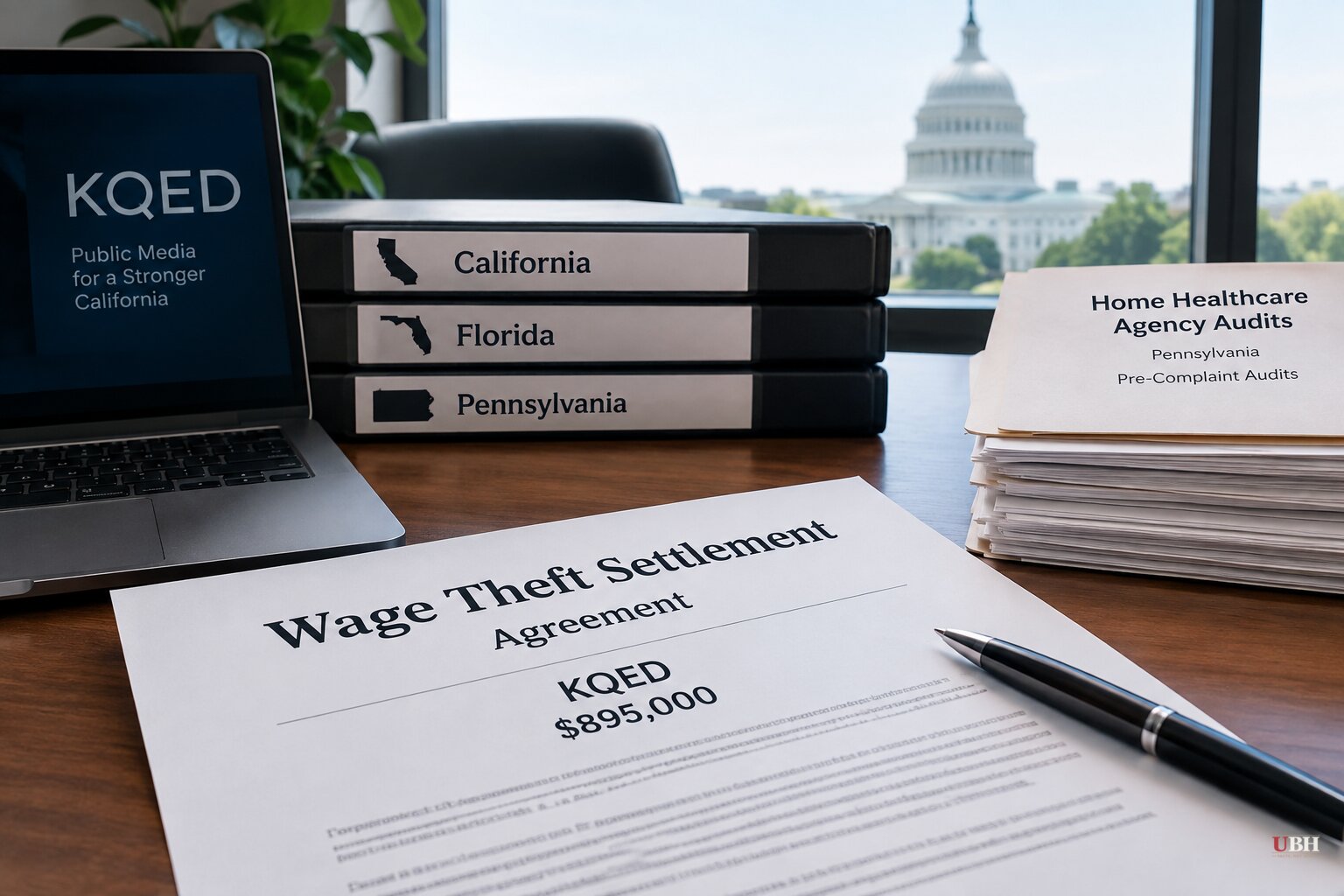
Theft doesn't always look like a guy in a mask. Sometimes it looks like a timesheet that got quietly edited, or a paycheck that's short and nobody says a word.
An op-ed published in The Hill this week made the case that wage theft is, as the headline put it, "the heavyweight champion of American larceny." The argument is simple: when employers don't pay workers what they're legally owed, it adds up to more money than every other form of theft combined. Whatever the exact math, the recent case files back up the basic point that this is a real and ongoing problem.
KQED Pays Nearly $900,000
San Francisco public broadcaster KQED agreed to pay approximately $895,000 to settle a class action lawsuit filed by former hourly employee Dominic Dulaney, according to KQED's own reporting on the settlement. Dulaney's 2024 complaint alleged KQED failed to pay for all hours worked, denied legally required meal and rest breaks, and in some cases "manufacture[d] time keeping records to falsely show" that employees took breaks they never actually got.
The deal covers more than 580 current and former hourly workers who worked at KQED between August 2019 and May 2025. About two-thirds of the settlement money goes to those workers, with $37,500 paid in fines to California's Labor and Workforce Development Agency and another $12,500 split among employees who worked there between November 2022 and May 2025. Dulaney himself can collect up to $10,000 as the named plaintiff.
KQED spokesperson Peter Cavagnaro told KQED's own newsroom the organization "disputes the claims made in this suit," but settled "to protect the station, our members and the community we serve from a protracted and more expensive legal battle." San Francisco Superior Court Judge Ethan Schulman granted preliminary approval on May 4, and a hearing to finalize the deal is scheduled for Nov. 4.
A Pompano Beach Buffet Owes 31 Workers $733,000
On the other side of the country, the U.S. Labor Department ordered Lucky King LLC, which operates Miyako Japanese Buffet in Pompano Beach, Florida, to pay $732,976 to 31 workers, according to WLRN. Federal investigators found the restaurant paid employees flat monthly wages of $1,000 to $3,000 regardless of how many hours they actually worked, often more than 40 hours a week, and failed to keep records of hours worked at all. Each of those is a separate violation of the Fair Labor Standards Act.
Pennsylvania Stops Waiting for Complaints
In Pennsylvania, regulators aren't waiting around anymore. State Labor Secretary Nancy Walker announced this week that nearly 40% of minimum-wage complaints filed with the Department of Labor and Industry come from the home healthcare industry, according to the Philadelphia Inquirer. Instead of only responding to complaints, the state will now proactively audit home healthcare agencies and issue "legal demands for wage and hour information."
"We're here today because these workers are not receiving the wages they earned, and that changes now," Walker said. Marshene Ellis, a home care worker with 17 years in the field, backed that up: "I've worked for different agencies and seen the broken promises and low wages." Pennsylvania has more than 257,000 home care workers earning a median $14.14 an hour, per the Bureau of Labor Statistics, and Matt Yarnell of SEIU Healthcare Pennsylvania says the state has roughly 112,000 unfilled care shifts every month.
Not everyone in the industry sees a uniform villain. Mia Haney, CEO of the Pennsylvania Homecare Association, said in a statement that workers deserve higher wages and pointed to low Medicaid reimbursement rates as a root cause. "We support holding bad actors accountable," Haney said, "but they should not define an industry overwhelmingly made up of provider agencies operating in good faith." A state crackdown that treats every agency like a criminal enterprise risks driving legitimate operators out of a field that's already short 847,300 workers nationally by 2035, according to BLS projections.
A Different Kind of Theft, Same Zip Code
While employers are getting hit with wage-theft settlements, a separate and far larger fraud case out of Tarrant County, Texas shows theft against Americans comes in plenty of forms. Prosecutors indicted Muzamil Ahmed on Aug. 28 as the alleged ringleader of a $250 million scheme that targeted senior citizens, according to Breitbart's report citing CBS News. Ahmed was arrested at JFK International Airport as he tried to board a flight to Saudi Arabia; two associates were arrested in Chicago and Newark. Tarrant County District Attorney Phil Sorrels said Ahmed used shell corporations and a gold refinery to launder stolen money, later converting it into cryptocurrency.
The scheme, prosecutors say, convinced more than 200 elderly victims their bank accounts had been hacked, then talked them into converting savings into gold and handing it over to men posing as federal agents. At least one victim died by suicide after losing $2 million, according to Sorrels. The FBI reiterated that federal agents never ask citizens to hand over gold, cash or crypto, and urged anyone who has already done so to contact the bureau.
That case, unlike the wage-theft settlements, involves criminal indictments and alleged fraud rather than civil labor violations, and Ahmed has not been convicted of anything. More than 40 indictments have come out of the investigation so far, and Tarrant County prosecutors say the case is ongoing.
Whether it's a company shaving hours off a timesheet or a criminal ring melting down stolen gold, the people footing the bill are workers and seniors who trusted the system to protect them. KQED's settlement hearing is set for Nov. 4. Ahmed's case moves forward in Tarrant County courts. Pennsylvania's audits of home healthcare agencies are just getting underway.
Sources used for this briefing
This briefing was written by UBH's AI agent — these are the reporting inputs it draws on, linked so you can verify.


