
Original briefings. Zero spin.
Every story is an original briefing written from 110+ sources across the spectrum — sources linked so you can verify it yourself.
 economy
Major Story (7/10)
September 10, 2026 at 08:39 AM
economy
Major Story (7/10)
September 10, 2026 at 08:39 AM
China's Car Exports Beat All of 2025 in Just Eight Months, Domestic Sales Fall for 11th Straight Month
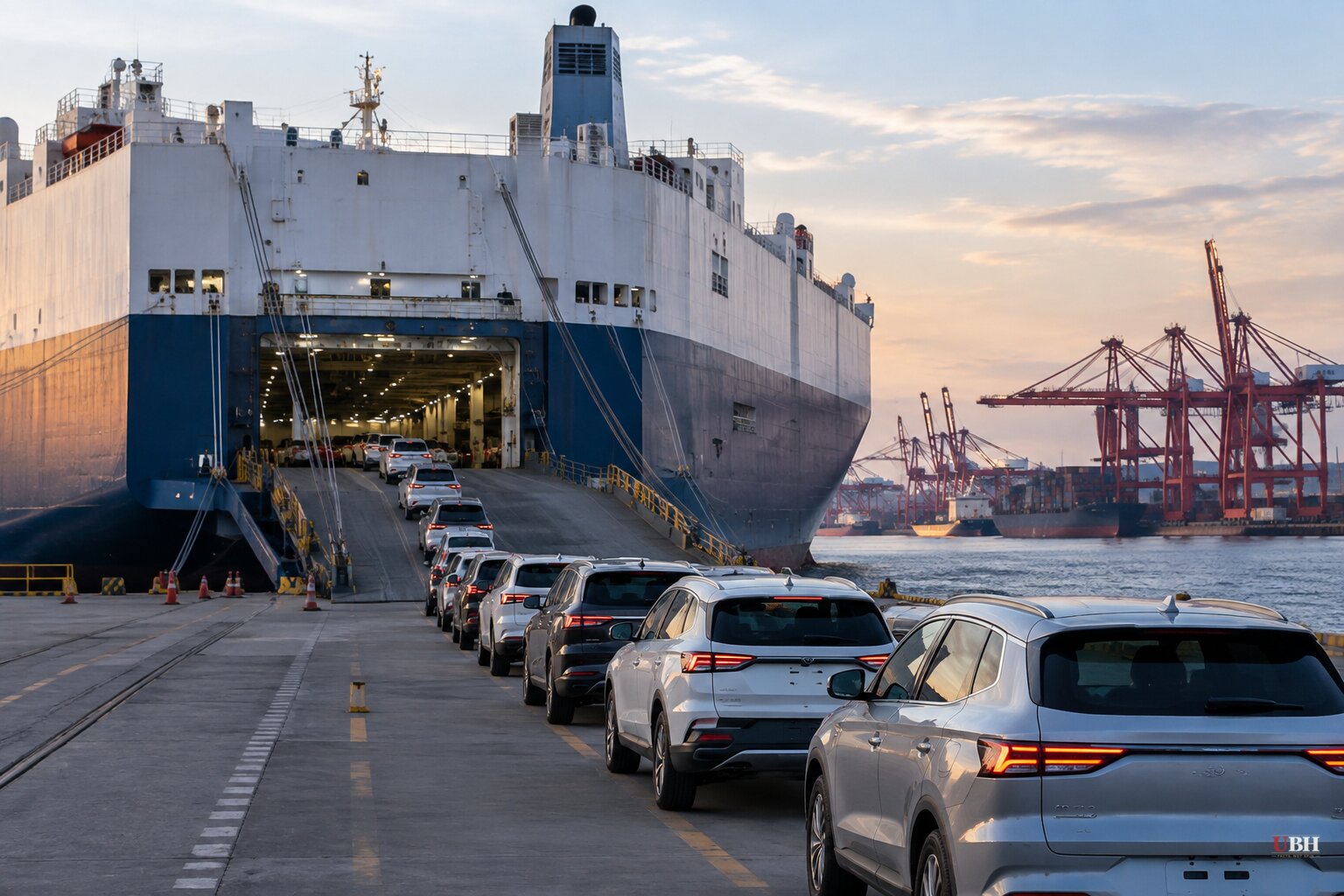
China's car industry is now running on two completely different tracks. Exports are booming. The home market is bleeding.
The China Association of Automobile Manufacturers (CAAM) said Thursday that passenger vehicle exports in the first eight months of 2026 already topped all of 2025's total, according to the Associated Press. China shipped more than 6.2 million passenger vehicles through August, versus about 6 million for the entirety of last year.
August alone saw exports jump 67.1% year-over-year to roughly 890,000 units, CAAM reported. The China Passenger Car Association (CPCA), a separate industry group, put the August export gain even higher at 77.5% to 894,000 units, according to Reuters reporting carried by KSL News and auto.economictimes.indiatimes.com. The two associations track the market slightly differently, but both point to the same trend: a record-setting export surge driven heavily by plug-in hybrids and pure EVs.
Domestically, the picture is different. CAAM said passenger car sales at home fell 25.6% year-on-year to just below 1.5 million vehicles in August. CPCA's figure was a 23.7% drop to 1.55 million, marking the 11th straight monthly decline and a worsening from July's 21.1% slide, per Reuters.
Even electric and plug-in hybrid vehicles, which still make up 64.7% of domestic sales, aren't immune. Domestic EV/PHEV sales shrank 10.1% year-over-year in August, widening from a 3.9% drop in July, CPCA data show. Meanwhile export growth in that same EV/PHEV segment accelerated to 154.7%, from 147.8% the month before.
Why the Domestic Market Is Cracking
China's own consumers are pulling back. CAAM points to intense competition, brutal price wars, and a slowing economy that's undermined consumer confidence. Stephen Chan, an associate director at S&P Global Ratings, told the AP that export strength will "largely mitigate the domestic weakness," and the firm expects 50% to 70% growth in full-year passenger vehicle exports.
Cui Dongshu, secretary-general of the CPCA, is even more bullish on the export side, forecasting China will hit 12 million vehicle exports of all types in 2026, climbing to between 18 million and 20 million units by 2030, according to Reuters.
Chinese automakers are increasingly propping up profitability by flooding markets abroad rather than fixing what's broken at home.
The Price-War Problem Is Following Them Overseas
Chinese regulators issued new guidelines last week warning automakers against frequent or steep price cuts overseas and against other practices that could harm consumers or damage brand reputation, Reuters reported. BYD, Chery and Geely Holding have all pledged compliance. Regulators haven't specified penalties yet.
Beijing is worried the same cutthroat price war wrecking margins at home is about to torch its export business too. If Chinese brands undercut each other in Europe and Southeast Asia the way they have in Shanghai and Shenzhen, the export boom that's currently masking domestic weakness could turn into a race to the bottom on profit.
Not every Chinese automaker is winning this export scramble. Seres, which builds the Aito line with Huawei, saw total vehicle sales plunge 44% last month, according to KSL News, largely because it was late to the export game while facing brutal competition in China's crowded premium EV segment. Xiaomi, still chasing its own annual sales target, has signed agreements with German dealers ahead of a planned European launch next year, per Reuters.
The Tariff Wall Still Holds
U.S. tariffs have effectively kept Chinese-made passenger cars out of the American market, the AP noted, which is why this entire export boom is happening in Europe, Latin America, Africa and Southeast Asia instead. Whether that wall holds as Chinese manufacturers keep opening overseas factories to sidestep tariffs elsewhere is the open question. Washington has shown no sign of loosening restrictions, but Chinese automakers are already building around them rather than waiting for them to fall.
The bigger question for Beijing: how long can an industry paper over a shrinking home market with exports before the same price war that's crushing domestic margins catches up with it abroad too.
Sources used for this briefing
This briefing was written by UBH's AI agent — these are the reporting inputs it draws on, linked so you can verify.


