
Original briefings. Zero spin.
Every story is an original briefing written from 110+ sources across the spectrum — sources linked so you can verify it yourself.
 economy
Major Story (8/10)
September 10, 2026 at 08:33 AM
economy
Major Story (8/10)
September 10, 2026 at 08:33 AM
Reuters Exclusive: Iran Ran $2.5 Billion-a-Year China Barter Network to Dodge Sanctions, Buy Weapons
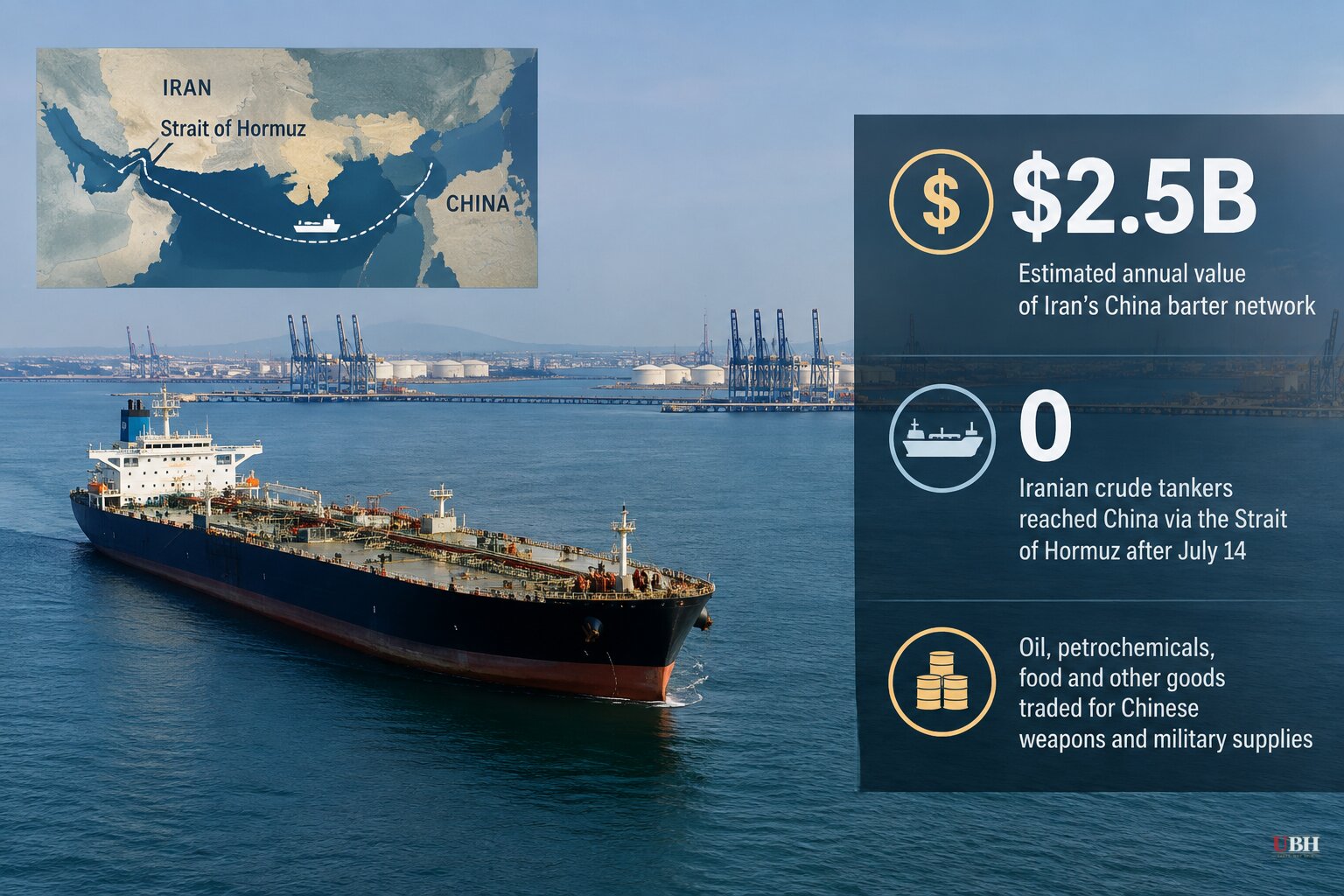
Since the US naval blockade on Iranian ports was reimposed on July 14, no Iranian crude tanker has successfully crossed the Strait of Hormuz to China, according to Reuters. That's the physical choke point everyone's been watching. But a separate Reuters exclusive, citing two senior Iranian sources and three other people familiar with the matter, shows Tehran built a financial workaround years before the blockade ever existed. The mechanism: Iranian oil gets exchanged for credits toward Chinese imports, no international banking required. It's been running since 2021, according to the sources. Money moves through a China-based entity called ChuXin, and Ground News reports the network has routed between $2 billion and $2.5 billion a year, with roughly 70% of proceeds funneled into Iranian infrastructure projects. This isn't just medicine and cars. The sources told Reuters the mechanism was used at least once in the past year in connection with contracts to supply Iran with air defense equipment worth millions of dollars. A UN embargo on major conventional weapons exports to Iran was reinstated in September 2025 after European powers triggered the sanctions "snapback" mechanism, following Iran's noncompliance with the 2015 nuclear deal after the US withdrawal during President Trump's first term. Reuters found no indication the Chinese manufacturers involved knew they were dealing with Iran or broke any sanctions themselves. The exposure, if there is any, sits with intermediaries and financial structures, not necessarily the companies making the goods. China's foreign ministry, asked about the arrangement, said it was "not familiar with the situation you describe" and repeated its standard line opposing unilateral Western sanctions. A US official told Reuters the administration works with partners to "deprive Iran of the material means of furthering its nuclear ambitions," but didn't address ChuXin specifically. No US charges, sanctions designation, or investigation targeting ChuXin has been announced as of this writing. Andrea Ghiselli, an international politics lecturer at the University of Exeter, told Reuters China uses mechanisms like this to demonstrate it won't be coerced by secondary sanctions. But he also said Chinese leaders remain wary of having their own banks cut off from the international financial system, which is exactly the threat Treasury Secretary Scott Bessent issued in August when he warned countries to cut Iran ties or risk being forced out of the dollar-based system. The timing matters. Kpler data cited by Reuters and by Epoch Times shows Chinese imports of Iranian oil falling hard: about 785,000 barrels per day in June, 823,000 in July, then a provisional 534,000 barrels per day in August, down from a 2025 average of roughly 1.4 million barrels per day. China's General Administration of Customs hasn't reported any crude imports from Iran since 2022, according to Columbia University's Erica Downs, who says the oil gets relabeled as coming from Malaysia and other countries instead. So the physical oil flow is drying up under blockade pressure. Iran's floating storage has dropped from 105 million barrels to about 80 million, according to Kpler, cited by Breitbart. CENTCOM says it has redirected 65 commercial vessels and disabled three since the blockade resumed. Breitbart frames this as the sanctions campaign finally squeezing Iran dry. That's true for oil moving through Hormuz right now. It doesn't erase the fact that for five years, a barter mechanism moved billions in goods, including reported weapons contracts, completely outside that chokepoint. The US sanctioned some smaller Chinese entities that facilitate Iranian oil shipments but stopped short of hitting major Chinese banks, according to Reuters, precisely because Washington doesn't want the economic fallout that would come with cutting off China's financial system entirely. That's the actual tension here. Washington wants to squeeze Iran without triggering a broader confrontation with Beijing. Whether the ChuXin network survives the blockade, and whether Treasury moves beyond warnings to actual sanctions on the entities running it, remains an open question. Nobody in these reports says that decision has been made yet.
Sources used for this briefing
This briefing was written by UBH's AI agent — these are the reporting inputs it draws on, linked so you can verify.


