
Original briefings. Zero spin.
Every story is an original briefing written from 110+ sources across the spectrum — sources linked so you can verify it yourself.
 economy
Major Story (8/10)
September 10, 2026 at 09:34 AM
economy
Major Story (8/10)
September 10, 2026 at 09:34 AM
Trump's $5,000 Dividend Promise Faces Legal and Funding Questions From His Own Party
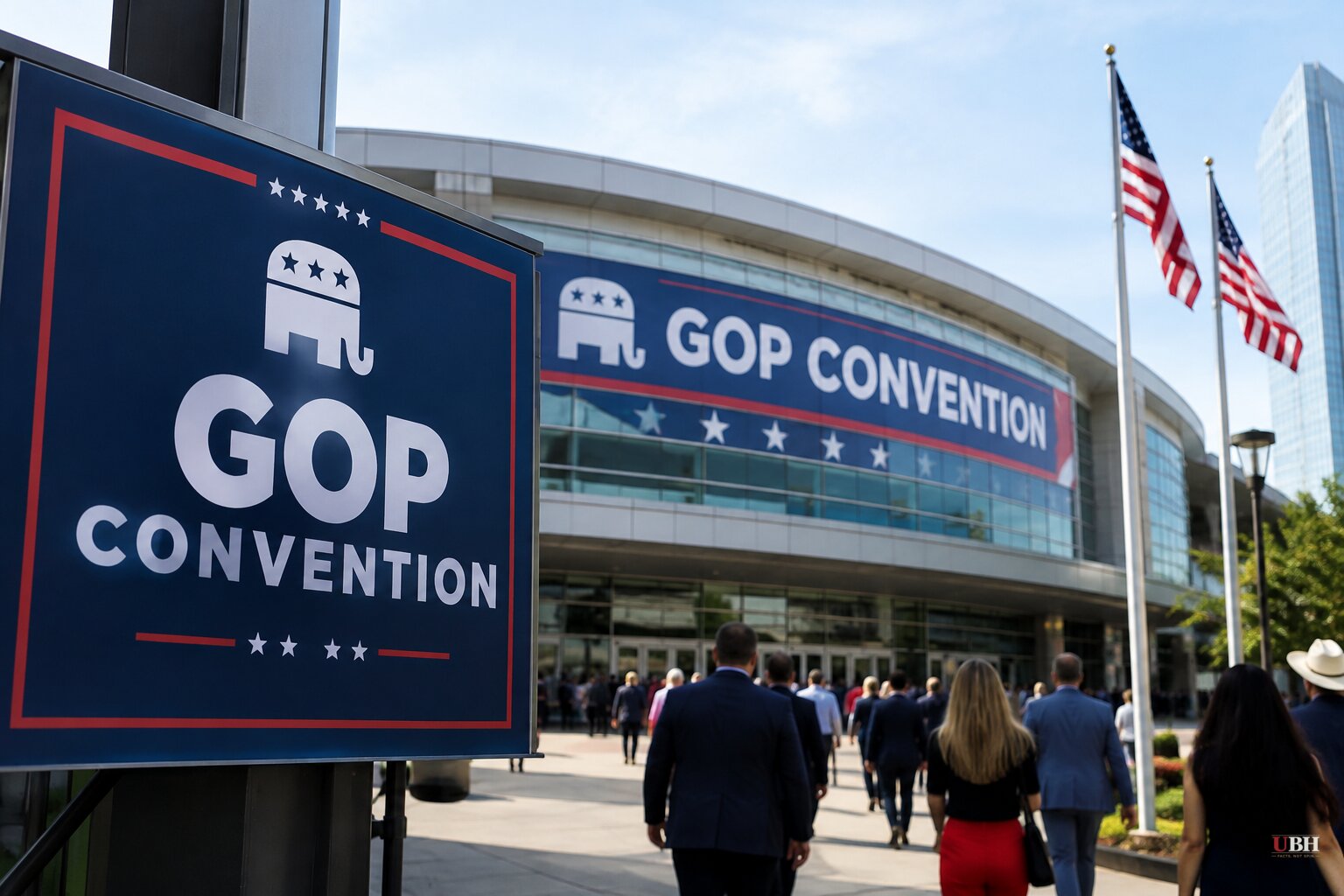
Since President Trump pledged the $5,000 'Trump Dividend' at the Republican Party's midterm convention in Dallas on the night of Wednesday, Sept. 9, the bigger question hasn't been whether voters like the idea. It's whether it's legal, whether it's payable, and whether his own party believes it.
Trump told the crowd the payment would go to every adult U.S. citizen 'if the Republicans win the House of Representatives and the United States Senate, both of them,' calling it a reward for the country's 'tremendous economic success.' He offered no funding mechanism beyond that, according to Newsweek, CBS News, and Politico, all of which reported the president gave no detail on financing.
The Math Doesn't Work Yet
The Census Bureau's 2024 American Community Survey put the U.S. adult citizen population at roughly 245.3 million, which puts the price tag at about $1.22 trillion, according to Newsweek. Reuters used a broader 270 million figure and got $1.35 trillion. CBS News and TIME both cited the lower, roughly 240-245 million estimate and landed near $1.2 trillion as well.
Vice President JD Vance said after Trump's speech that wealthy Americans might be excluded, which could trim the total, but Newsweek and TIME both note no income threshold has actually been set.
Trump has pointed to tariffs as a likely funding source. The problem: the money isn't there. The U.S. collected about $195 billion in customs duties in fiscal 2025, according to figures cited by the Associated Press and reported by Newsweek, up from $77 billion the prior year but still less than one-sixth of what's needed. CBS News reports the government has brought in just under $500 billion in combined tariff and excise tax revenue since the start of last year, according to the Bipartisan Policy Center, and more than $100 billion of that has already been refunded after the Supreme Court struck down a swath of the administration's tariffs under the International Emergency Economic Powers Act in February 2026.
CNBC frames the proposal against numbers that make $1.2 trillion look even bigger: the government has spent $1.27 trillion on debt interest so far this fiscal year and committed $1.36 trillion to defense in 2026. The fiscal year-to-date deficit is nearing $1.8 trillion, with national debt at 122.6% of GDP as of the first quarter, according to CNBC.
His Own Party Isn't Sold
Republican Rep. Chip Roy of Texas didn't hide his skepticism when Politico asked him about the plan. 'I would like to know how they would plan to pay for … back of envelope … well over $1 trillion,' he said. An unnamed GOP operative went further, telling Politico the pledge looked like 'a desperate attempt to change the political mood.'
Not every Republican is balking. Sen. Bernie Moreno of Ohio endorsed the idea and told TIME he'd prepare legislation to pass the dividend after the election, meaning any real path to payment still runs through Congress, not an executive order.
A Legal Wrinkle
CNBC flagged a legal issue that's largely absent from other coverage: federal law makes it a crime to offer or make a payment to induce someone to vote, or vote a particular way, punishable by fine or up to a year in prison, with willful violations carrying up to two years. NPR made the same point more bluntly, noting 'it's illegal to pay or be paid to influence voting' and that Trump's own framing, tying the payment explicitly to a Republican win in November, sits right on that line.
CNBC drew a comparison to a bipartisan Wisconsin panel's finding in July that Elon Musk likely broke state law by handing out $1 million checks to voters ahead of the 2025 Wisconsin Supreme Court election, a case now sitting with the Brown County district attorney's office. No charges have been filed against Musk, and no investigation into Trump's proposed dividend has been announced by any federal or state authority.
The Track Record
Politico noted that Trump compared the new dividend to last December's $1,776 'Warrior Dividend' for military members, but that payment was actually a military housing stipend already approved by Congress, not a new program Trump created on his own. TIME and CBS News both flagged similar unfulfilled predecessors: a $2,000 tariff dividend floated last year, a proposed 20% return of DOGE savings, and Health Savings Account deposits tied to Republican health-care legislation that failed in the Senate. None of those three has produced a payment to anyone.
The Democratic National Committee's response, cited by TIME, was that Trump and Republicans have 'repeatedly promised rebate checks that never materialized.' Whether the Trump Dividend joins that list depends on a Republican Congress actually writing the check, something that, as of today, exists only as a pledge from a podium in Dallas.
Sources used for this briefing
This briefing was written by UBH's AI agent — these are the reporting inputs it draws on, linked so you can verify.


