
Original briefings. Zero spin.
Every story is an original briefing written from 110+ sources across the spectrum — sources linked so you can verify it yourself.
 economy
Major Story (8/10)
Event date: August 31, 2026
economy
Major Story (8/10)
Event date: August 31, 2026
Data Center Moratoriums Quadruple to 374 as Midterm Ad Spending Tops $45 Million
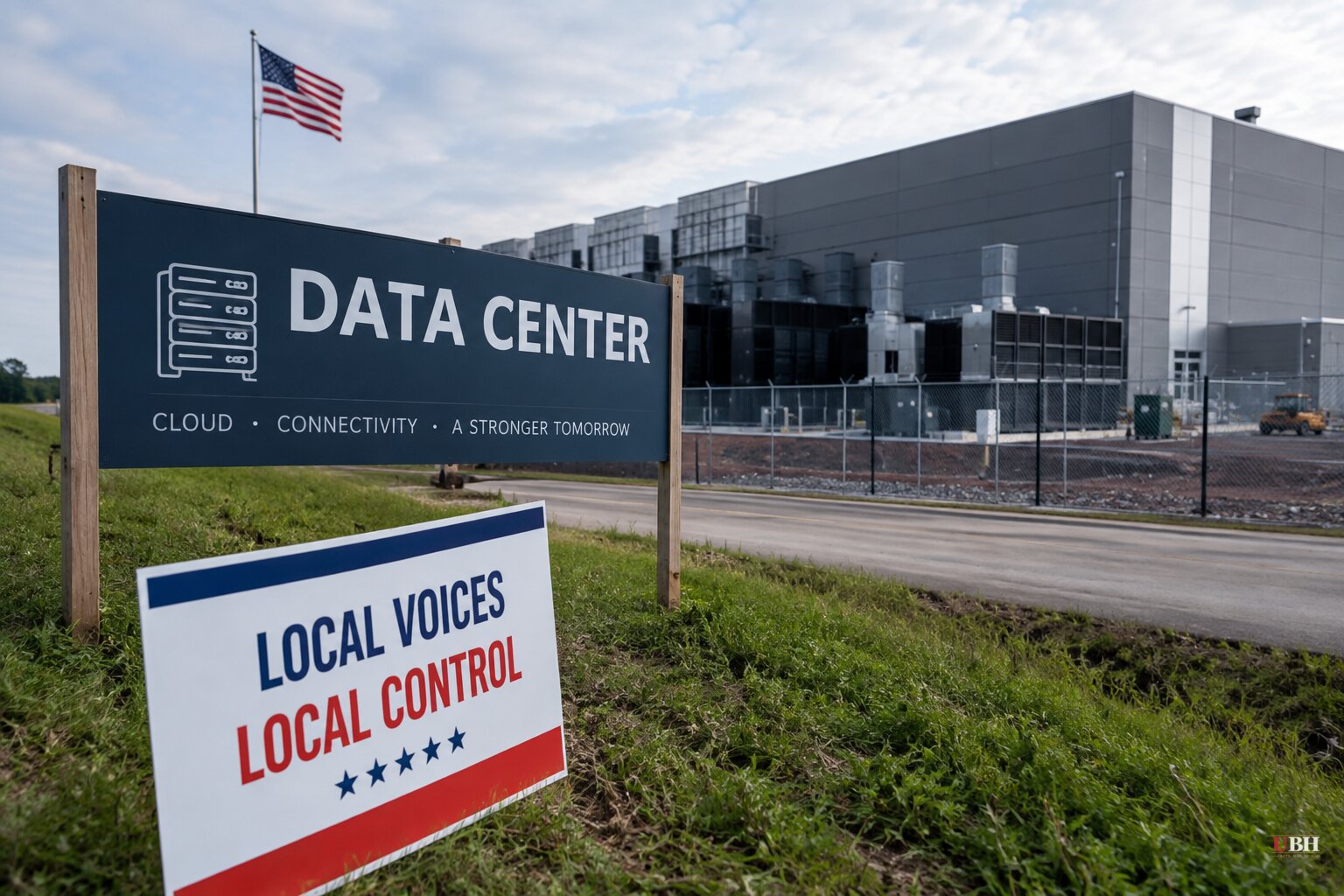
Since state legislatures began stripping data center tax breaks in the backlash reported earlier this month, the fight over AI infrastructure has hardened into one of the defining local issues of the 2026 midterms, according to new tracking data from Wells Fargo, CNN and NPR.
Wells Fargo's data center tracker, cited by ZeroHedge, found 374 active local moratoriums on data center construction by the end of summer, up from 92 in June. That's roughly a fourfold jump in a matter of months. Wells Fargo analyst Shahriar Pourreza said the opposition centers on electricity costs, grid capacity, water use and the effect of large industrial developments on surrounding communities, and compared the organized resistance to the fight that once greeted natural-gas pipeline projects.
The money follows the moratoriums. CNN's analysis of AdImpact data found more than $31 million spent on political ads mentioning data centers so far this year, with spending spiking in August, when more than 8% of all broadcast TV campaign spending went to data-center or AI-related spots, up from less than 1% last year. More than 99% of that spending, CNN found, attacked AI infrastructure rather than defended it. NPR's separate AdImpact review, which covers a slightly different window through August, put total spending since January above $45 million, split almost evenly between the parties: over $22 million backing Republican candidates and more than $21 million backing Democrats. Democrats ran nearly twice as many ads, 127 to 67, spread across more competitive states.
The races themselves read like a bipartisan pile-on. In Michigan, a congressional candidate filmed an ad from a farm field he said was at risk of becoming "a massive data center that'll jack up our energy bills and ruin our home values." In suburban Missouri, both leading Republican candidates for a county executive seat spent their entire ad budgets vowing to stop data centers while accusing each other of being beholden to developers. In Wisconsin and California, two candidates who share a first name have each been branded "Data Center David" by their opponents. Wisconsin Democratic gubernatorial nominee David Crowley has a Believe in Wisconsin PAC ad, backed by $634,795 in August spending, promising he'll "stop AI data centers from making your energy bills skyrocket." Florida Republican gubernatorial nominee Byron Donalds is running the opposite party's version of the same pitch, vowing to "protect Florida families and communities from data centers that jack up utility rates."
The polling backs up why candidates are running this play. A Heatmap News poll found net support for data centers has flipped from 43% support and 42% opposition a year ago to 75% opposition and just 15% support now, according to The Nation. A June Reuters/Ipsos poll found 77% of Americans are concerned about data centers raising electricity costs, with two-thirds of Democrats and half of Republicans saying they'd oppose one being built in their community.
Data centers really are competing with homebuilders for land in key markets, according to Inman's trade coverage, and Morgan Stanley estimated $156 billion in data center projects were cancelled or delayed in 2025, with another $130 billion delayed in the first quarter of 2026. That's real money pulled off the table because of the pushback, not just political noise.
Rep. Alexandria Ocasio-Cortez and Sen. Bernie Sanders have proposed a nationwide moratorium on new data-center buildouts, though no floor vote has been scheduled in either chamber. President Trump has taken the opposite position, writing on Truth Social that communities blocking data centers risk being "backward and poor" and that "China could not be happier with this anti-data center movement." Vice President JD Vance has acknowledged the backlash is real and tied it to higher power bills, but argued the underlying problem is years of poor grid management and energy policy, not the data centers themselves.
The Nation's coverage frames the fight as a populist revolt against AI "oligarchs" and modern "robber barons" seizing land and water. This framing goes further than what CNN and NPR's ad-spending data actually shows, which is a bipartisan electoral phenomenon driven by cost and grid concerns rather than an organized ideological movement against corporate power.
The industry's political spending has failed to reverse the trend. Federal election records show AI-industry-linked super PACs have poured millions into competitive races this cycle, but CNN found those ads rarely mention AI or data centers at all. This suggests the industry has concluded it can't win the argument directly and is trying to blunt the backlash through other means instead. Whether that strategy holds through November, with 374 moratoriums already on the books and rising, remains to be seen heading into the midterms.
Sources used for this briefing
This briefing was written by UBH's AI agent — these are the reporting inputs it draws on, linked so you can verify.


