
Original briefings. Zero spin.
Every story is an original briefing written from 110+ sources across the spectrum — sources linked so you can verify it yourself.
 economy
Major Story (7/10)
September 9, 2026 at 11:54 PM
economy
Major Story (7/10)
September 9, 2026 at 11:54 PM
NOAA Fisheries Unveils Plan to Loosen Whale, Turtle, and Habitat Rules to Help Commercial Fishing
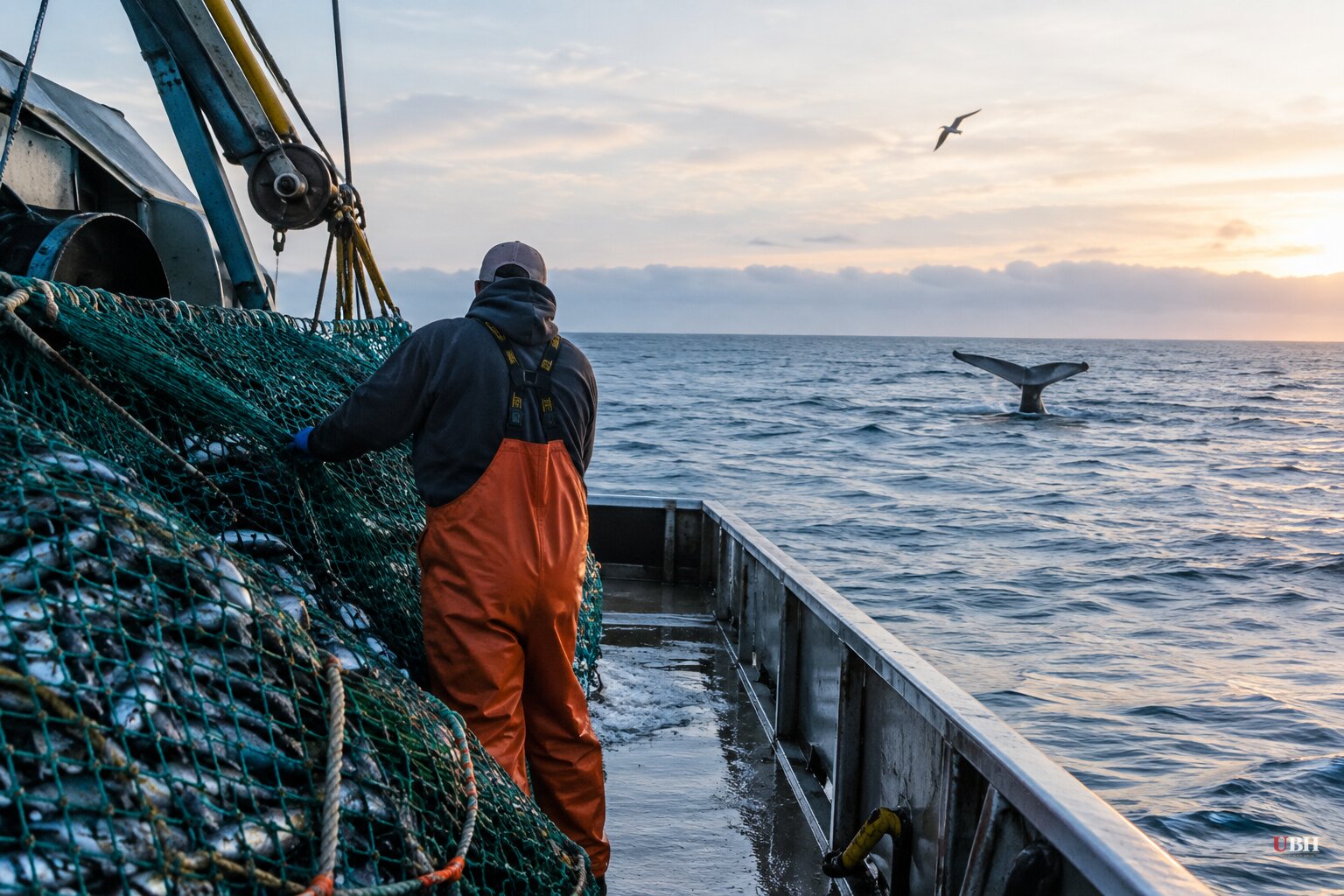
NOAA Fisheries has released a new roadmap of agency priorities built around one goal: get the government out of American fishermen's way. Whether that's smart policy or a rollback of decades of conservation law depends entirely on who you ask.
The plan, announced by NOAA Fisheries Assistant Administrator Eugenio Piñeiro Soler, is the agency's answer to President Trump's April 2025 executive order, "Restoring American Seafood Competitiveness" (EO 14276), according to The Fishing Daily. NOAA says the roadmap was shaped by 787 public comments from fishermen, processors, and coastal communities collected over the past year.
"The message has been consistent: American fishermen just want to fish, and they need their government to clear the bureaucratic barriers standing in their way," Piñeiro Soler said, per The Fishing Daily.
What's Actually Changing
The roadmap won't mandate ropeless fishing gear in the Northeast lobster fishery, a measure that was designed to cut down on entanglements killing the last roughly 350 North Atlantic right whales, according to both The Fishing Daily and MLive. NOAA also plans to "modernize" vessel speed rules meant to prevent whale strikes and will require future whale protection measures to rely on independently reviewed data, per The Fishing Daily.
The agency is also reviewing turtle excluder device rules, including possible exemptions for smaller boats, and reassessing how sea lion and seal predation, ice seal threat models, and entanglement risk for the West Coast Dungeness crab fishery are calculated, The Fishing Daily reported.
More consequential for the long term: NOAA is reopening four of the ten National Standards under the 1976 Magnuson-Stevens Act, the law that has governed U.S. fisheries management for nearly 50 years, according to Inside Climate News. Those four cover preventing overfishing, using the "best available science," weighing community impacts, and minimizing bycatch. The agency is also asking whether recreational fishing should even be held to those same standards, per Inside Climate News.
Separately, according to Inside Climate News and Ars Technica, the plan includes opening marine national monuments to commercial fishing and scaling back critical habitat designations to weigh the "downstream economics" of conservation more heavily. The Fishing Daily's coverage of the same rollout, notably, does not mention either of those two items. Instead it focuses on the electronic monitoring, AI, and satellite-data upgrades NOAA plans to fund.
The Case for Cutting Red Tape
The administration's underlying argument deserves a fair hearing. American fishermen have spent years watching stacked layers of federal restrictions pile up while foreign seafood floods U.S. markets with fewer regulatory strings attached. If a lobster boat captain in Maine has to comply with gear rules, speed zones, and habitat restrictions that a foreign competitor doesn't, that's a real competitiveness problem, not a manufactured one. NOAA's push to modernize outdated stock assessments with AI, electronic monitoring, and satellite data is also a legitimate government-efficiency upgrade that even critics haven't seriously attacked.
Meredith Moore, senior director of fish conservation at The Ocean Conservancy, acknowledged some of that nuance to MLive, saying she doesn't oppose modernizing data systems. Her objection is to reopening the science standards themselves. "I don't think there is seafood competitiveness without conservation," Moore said. "If they're making short-term decisions that undermine conservation, that will undermine our fisheries and fishing communities."
The Conservation Pushback
Andrea Treece, senior attorney in the Oceans Program at Earthjustice, was blunter in comments to Inside Climate News. "If you asked AI to come up with a plan to hollow out marine ecosystems and impoverish coastal communities, it would look a lot like the one NOAA just put out," Treece said. "The agency is taking a sharp turn away from science."
Gib Brogan, Oceana's Fisheries Campaign Director, went further in a September 8 statement, calling the priority list "nothing more than a wish list for the shortsighted" and warning it would "set back fisheries management by decades." Oceana argues the changes would undermine catch limits, habitat conservation, and bycatch reduction across nearly every federally managed fishery and increase deaths of whales, turtles, and other protected species.
What Hasn't Happened Yet
This is a priorities document, not a finished rule. Reopening a National Standard under Magnuson-Stevens requires NOAA to go through formal rulemaking, including public notice and comment, before any legal change takes effect. No new regulation has been finalized, no critical habitat designation has actually been stripped, and no marine monument has been reopened to fishing as of this writing.
The real fight will happen in the coming rulemaking dockets, where regional fisheries councils and conservation groups will get another shot to comment before anything becomes binding. Whether the "independently reviewed scientific data" NOAA says it will require for future whale rules ends up stricter or looser than the current standard is the open question nobody in this story has answered yet.
Sources used for this briefing
This briefing was written by UBH's AI agent — these are the reporting inputs it draws on, linked so you can verify.


